[Ongoing] A Documentation on Malaysian Durian Cultivars
October 12, 2025
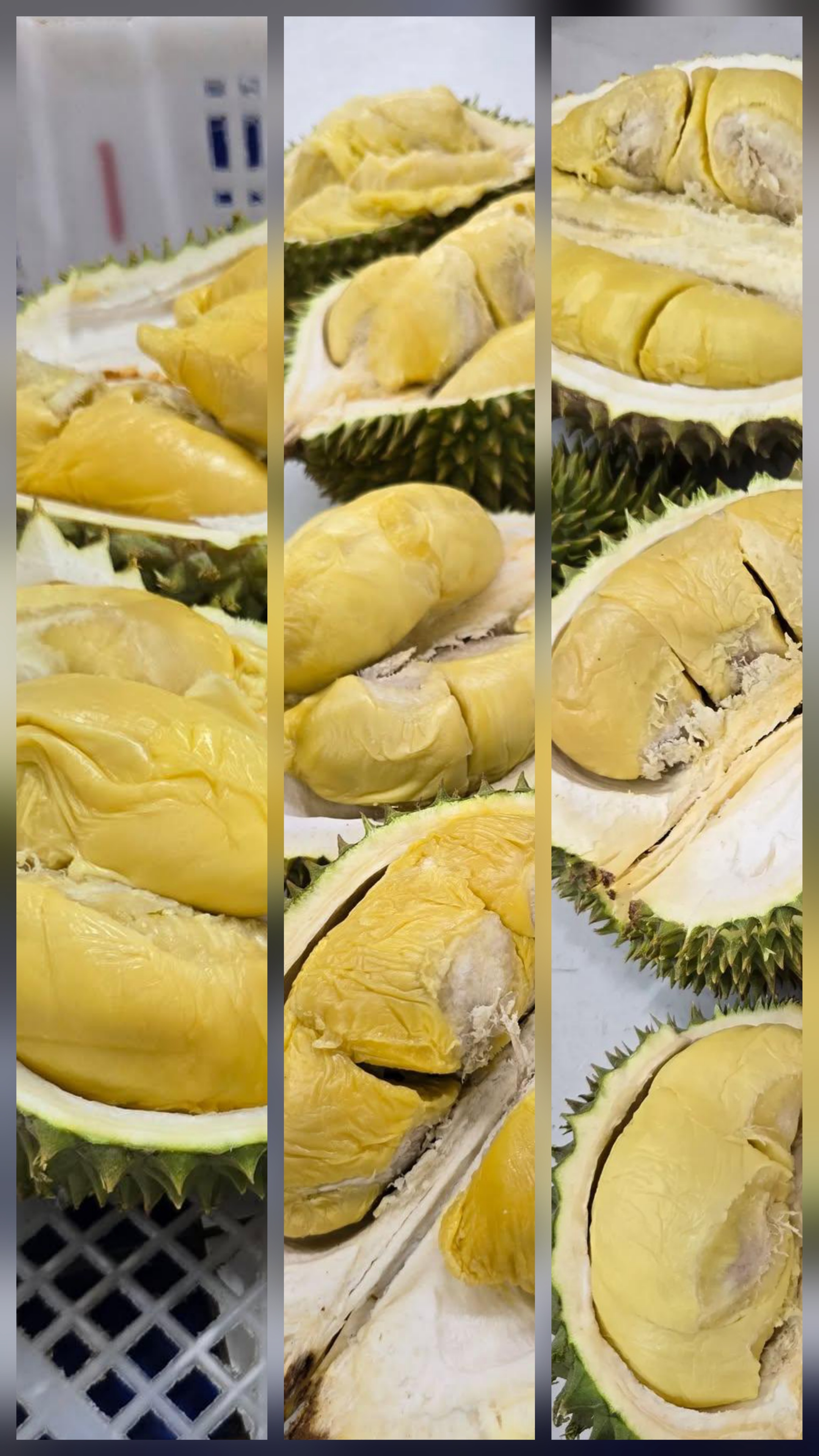
This is an ongoing WIP document, mainly for my own personal records of what Malaysian durian cultivars I’ve personally tried.
And also easily lets me see what I haven’t tried (which is the massively longer list). If I lived in Malaysia, it would be much easier to complete this list haha.
Starts in numerical ‘D’ order, followed by other varieties not registered with the Malaysian Agricultural Research and Development Institute (Mardi). Mardi records are mainly with regards to only 1 species, durio zibethinus. Other species like the red orange Sabah Sarawak durio graveolens, are not part of Mardi D number scheme.
Since listed here are those I have personally tried, I also give my own personal views on each variety. Take it with a pinch of salt; naturally everyone has their own opinions and taste preferences.
D2 Dato Nina
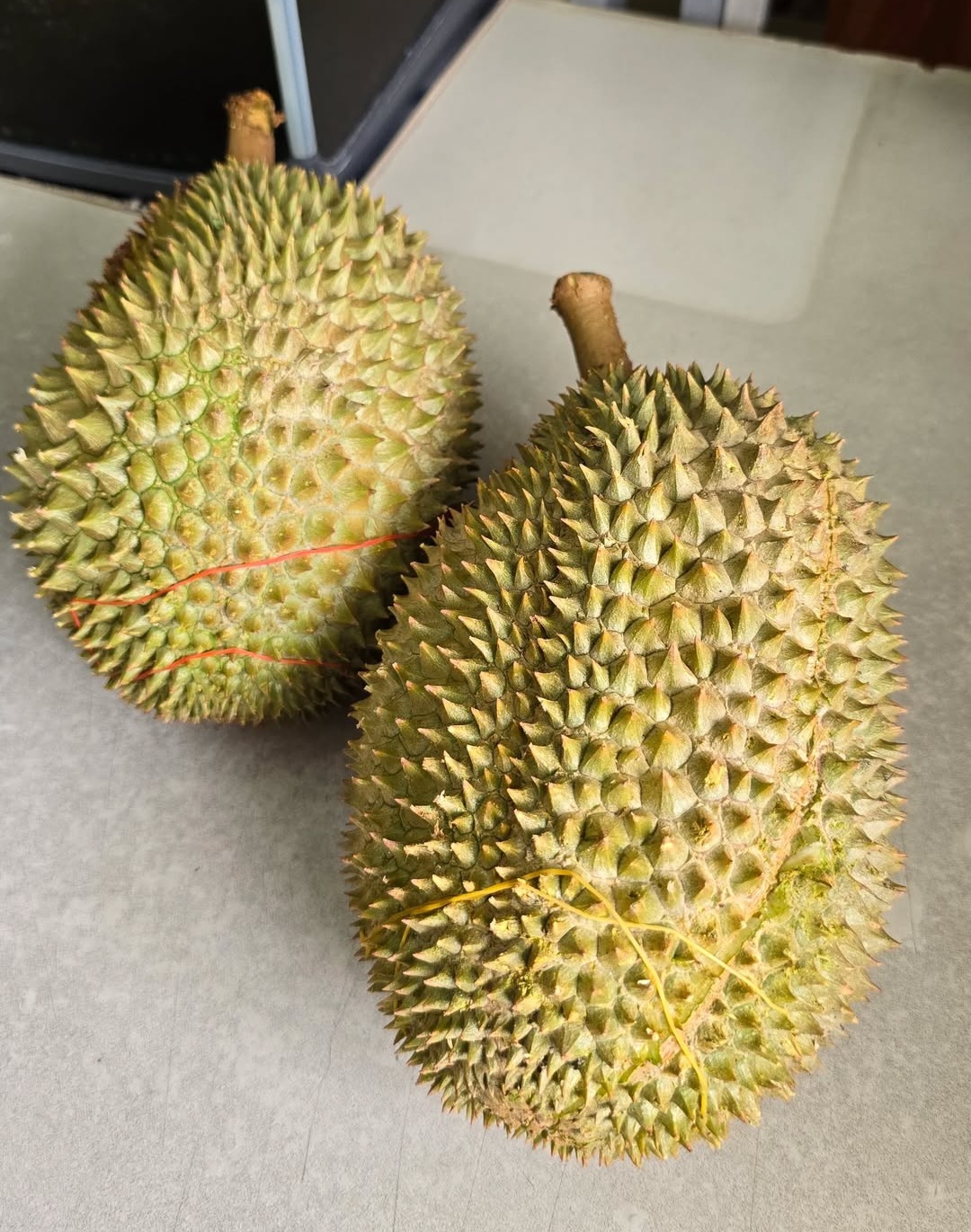
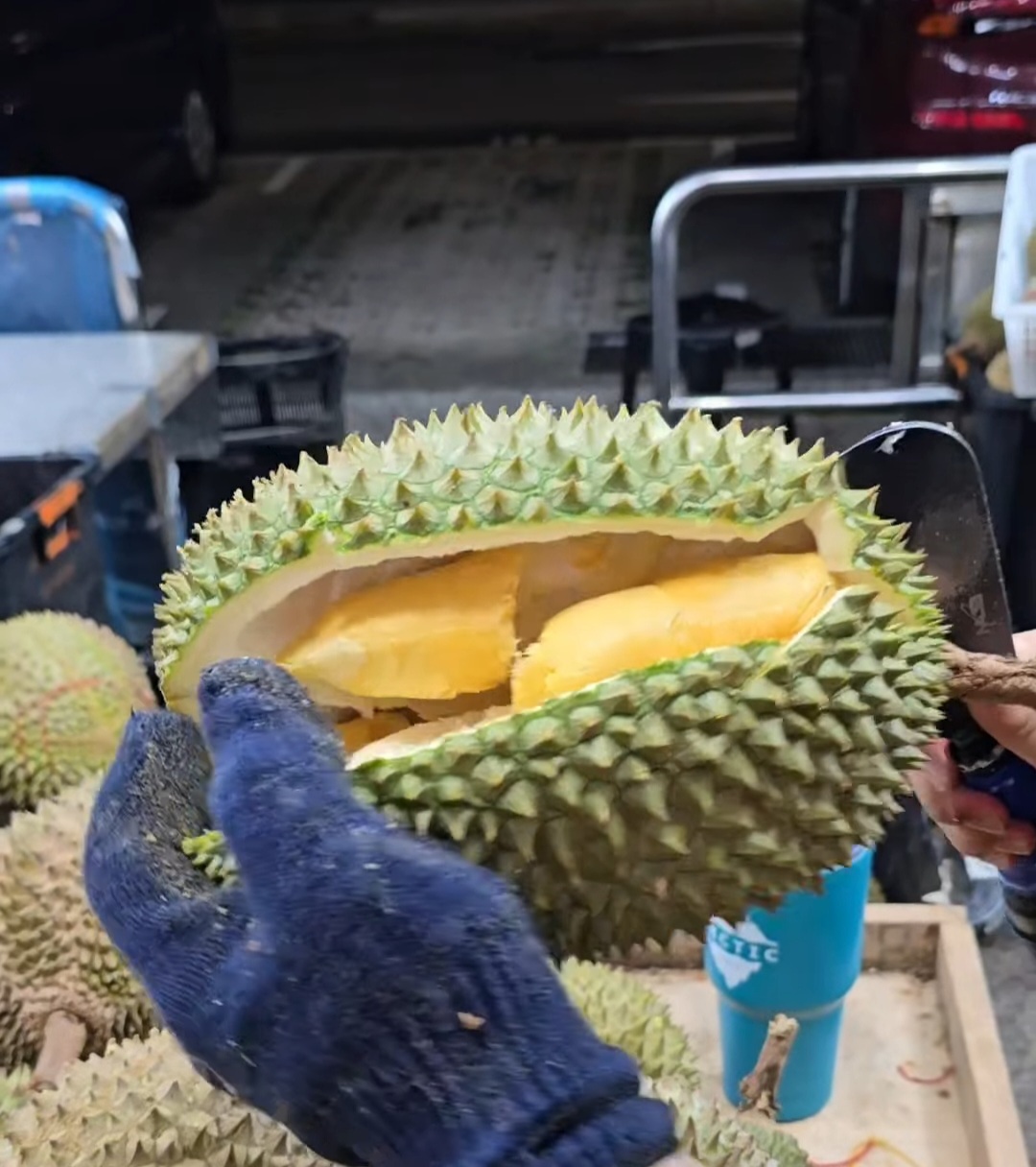
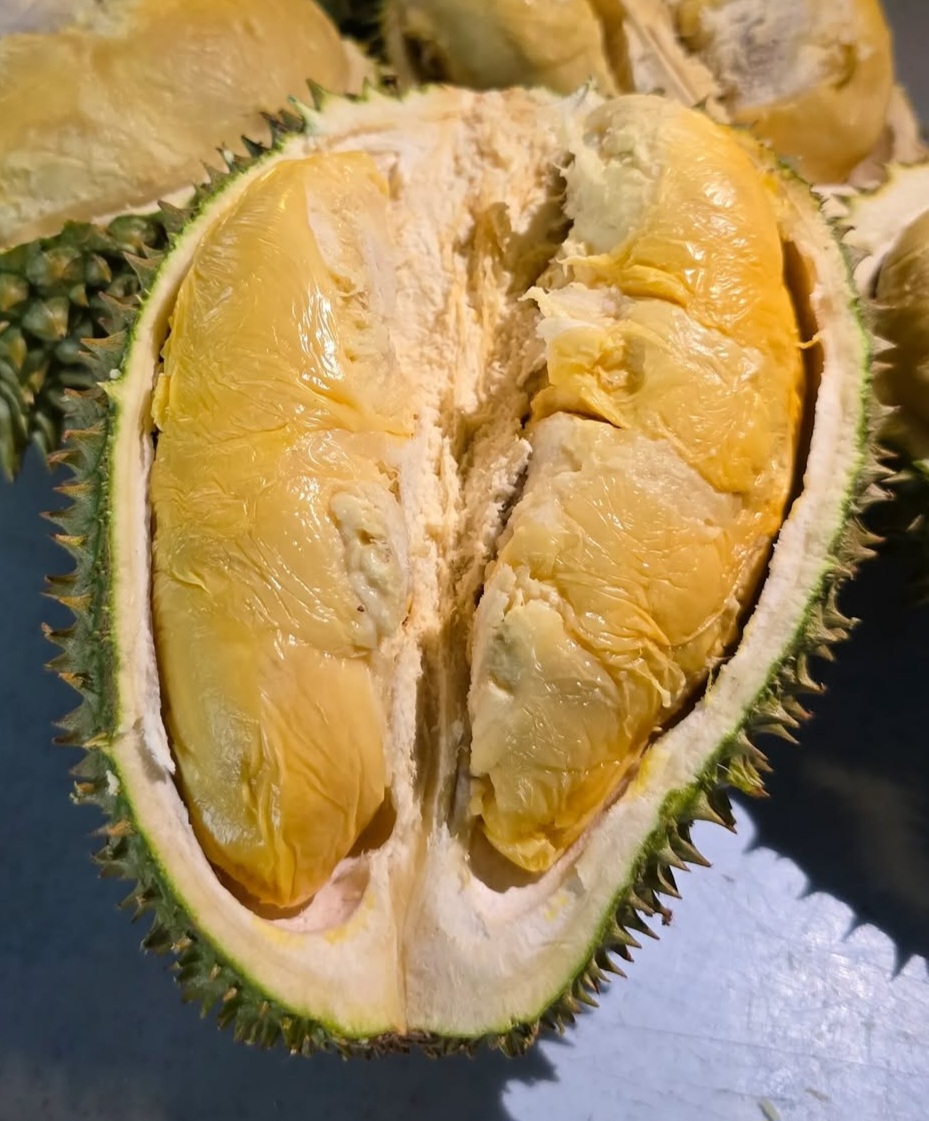
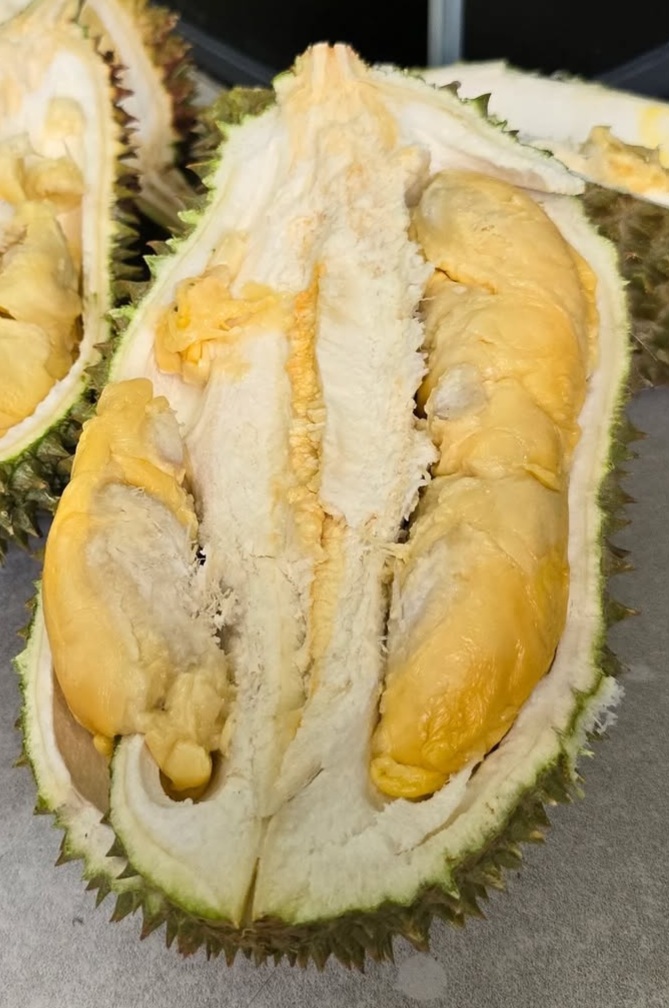
Also known as Dream Lover.
- Long-ish shape
- Difficult to open, just like D160 Tekka
- Seems generally quite wet-ish flesh
- Good ones are quite fermented
- Medium bittersweet
D24 Sultan
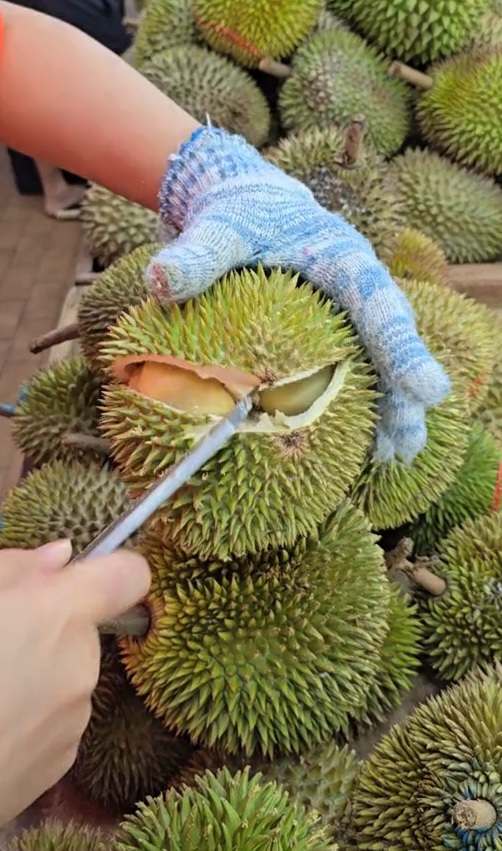
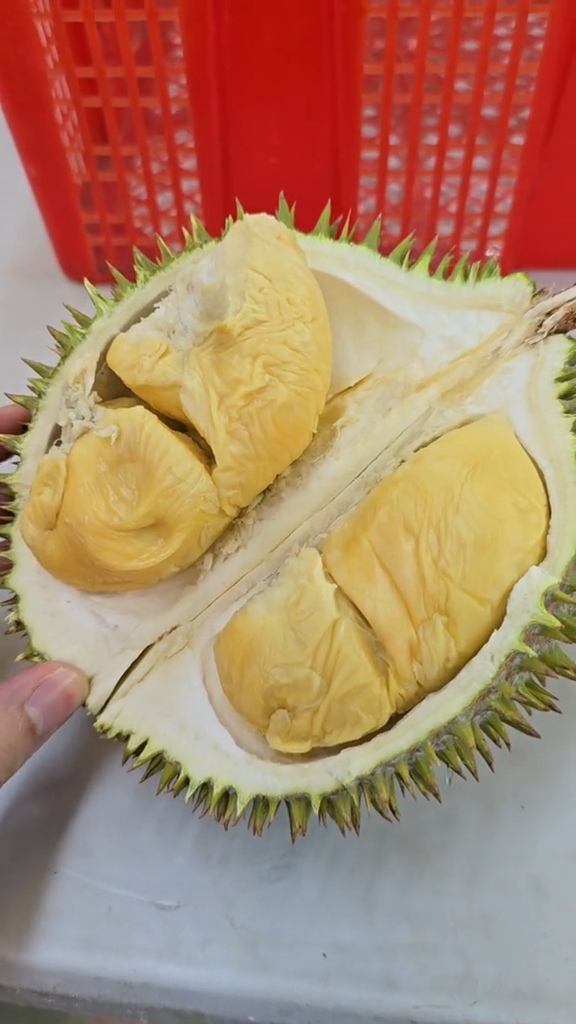
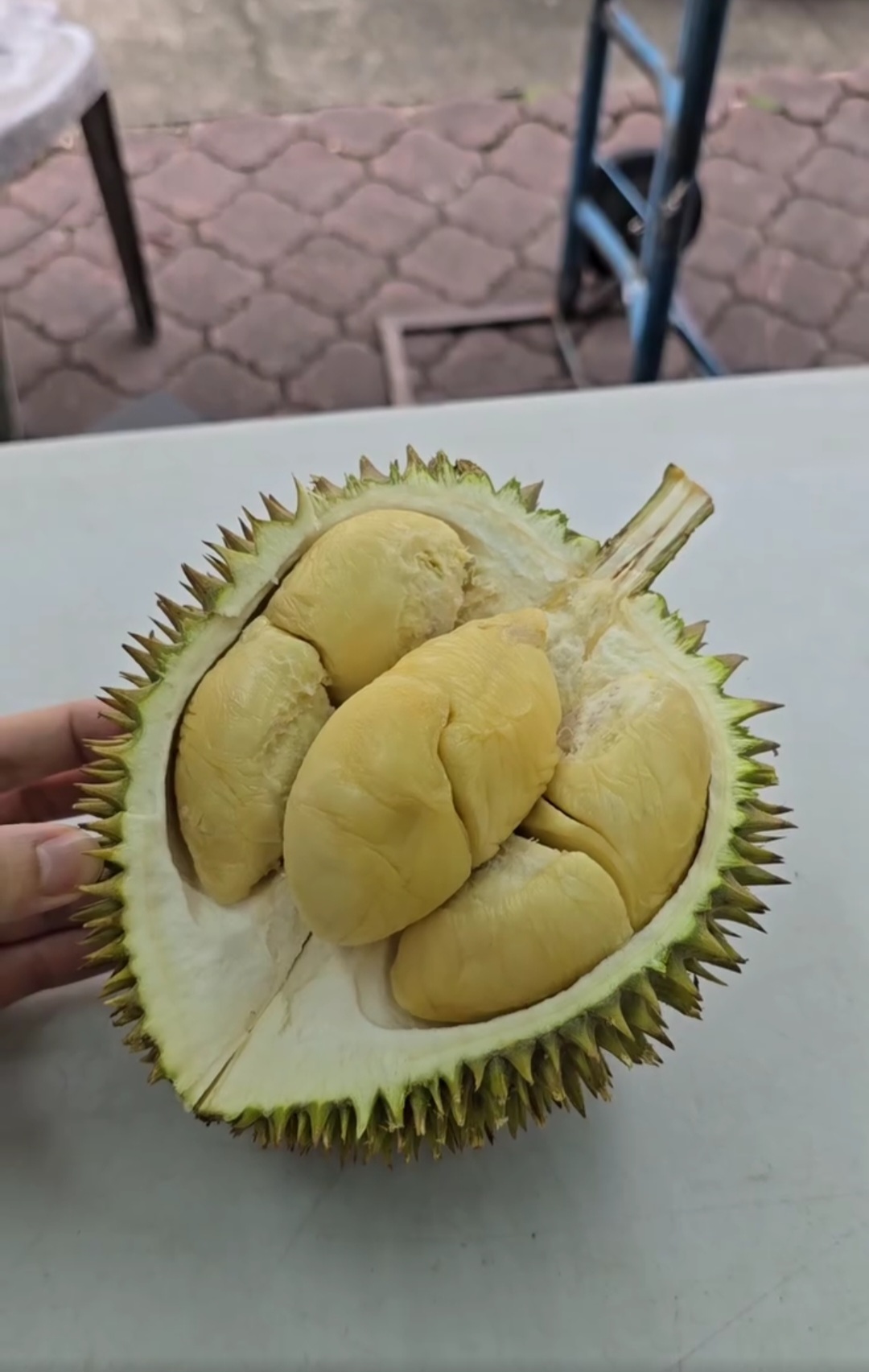
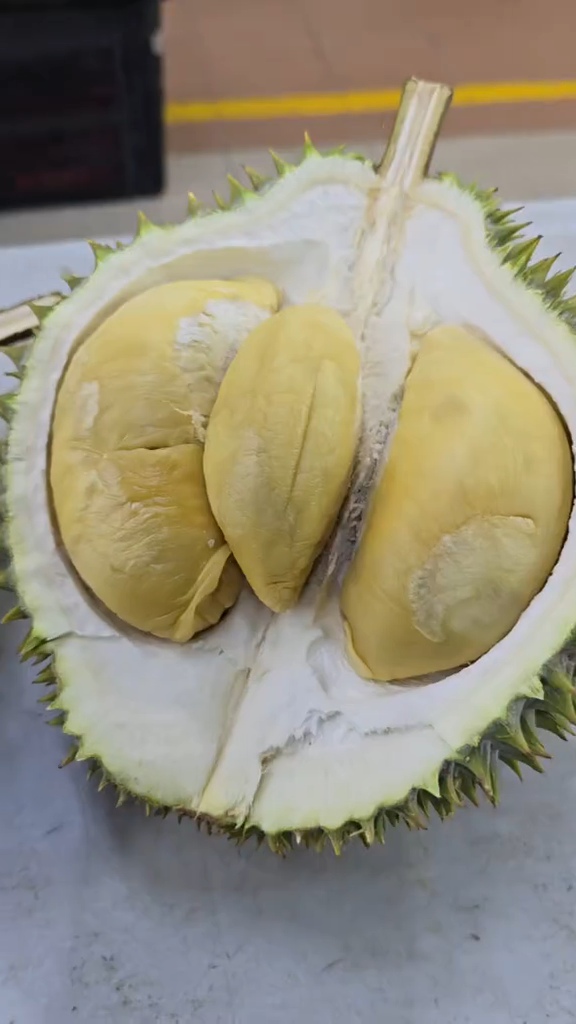
Also known as Sultan King, “XO”, D24XO, XOD24. But there is a distinction between D24/D24XO and Johor XO. Apparently, Johor XO is possibly a different cultivar. As for D24, it is grown everywhere. And used to be the old ‘Musang King’ before Musang King was created.
Wrote a much longer article on it here: Read my post about D24/XO
- D24 has very sharp thorns; if your hands slip you will probably bleed
- Stereotype is that D24 ranges widely in quality and attributes; flesh can be yellow or white; taste can be very bitter or mild; and apparently tastes better during rainy season and when the fruit is smaller
- The better quality D24 I’ve had were very bitter, with aftertaste of vanilla
- Usually bigger seeds
D78 Sweetie
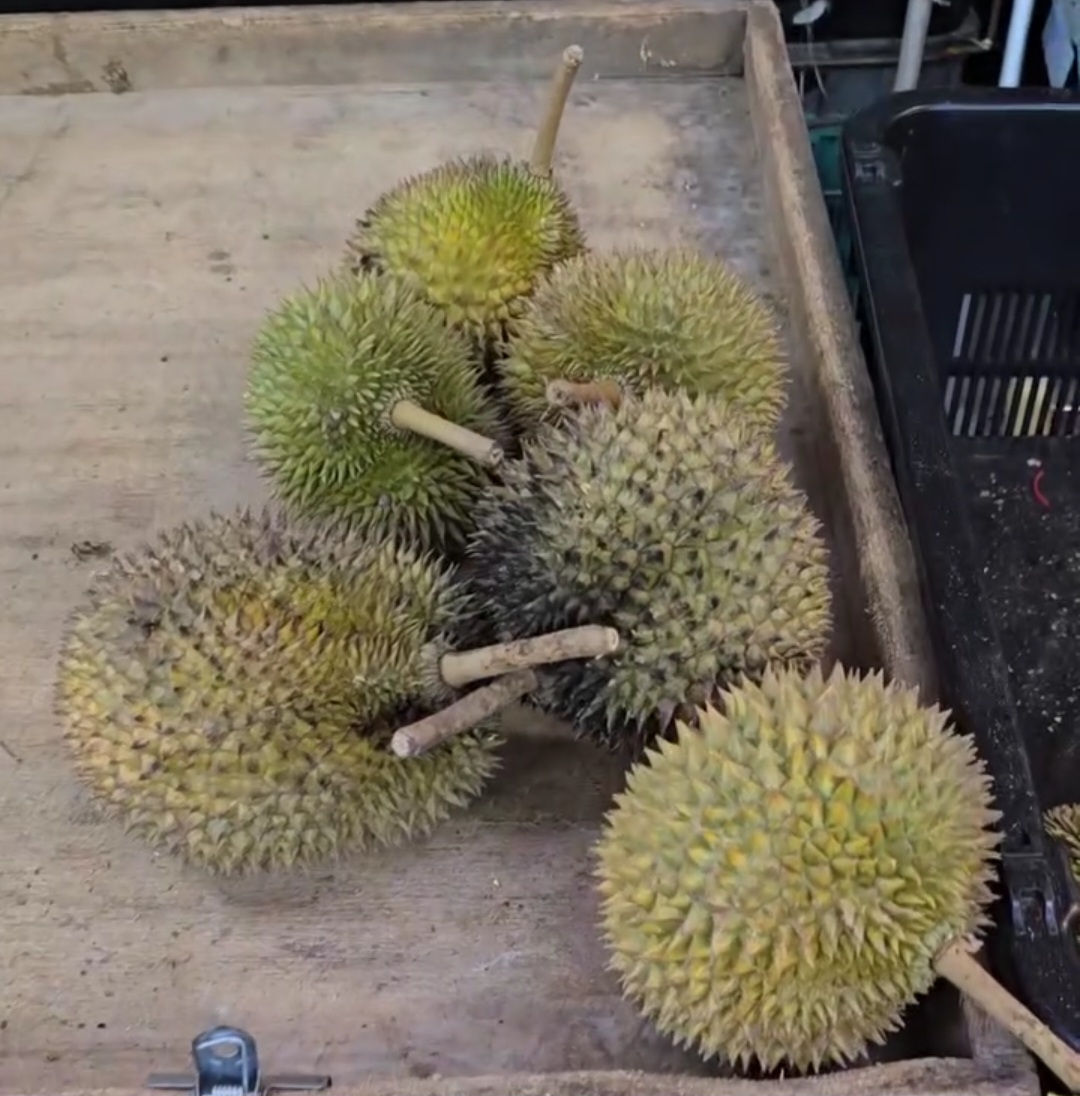
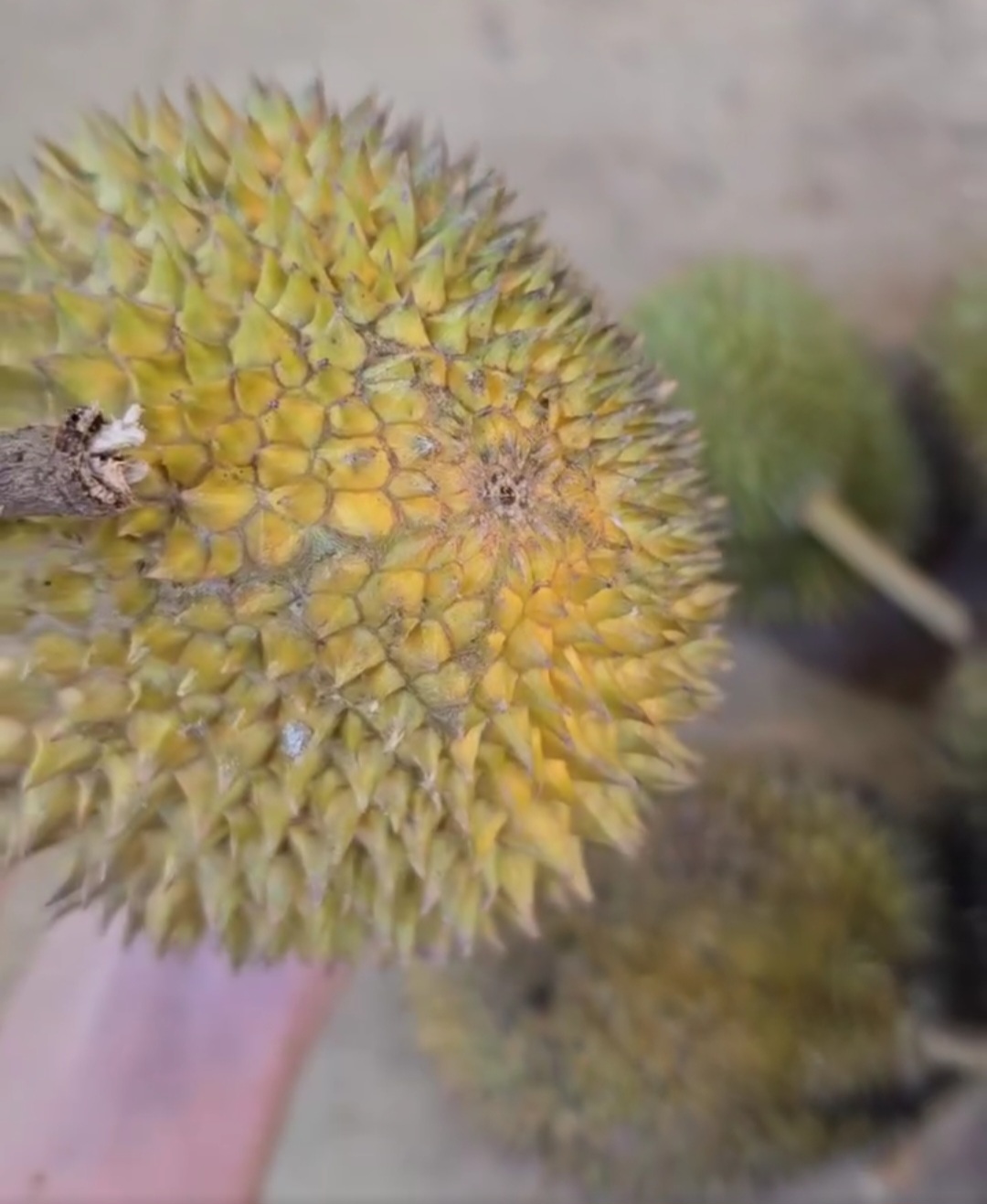
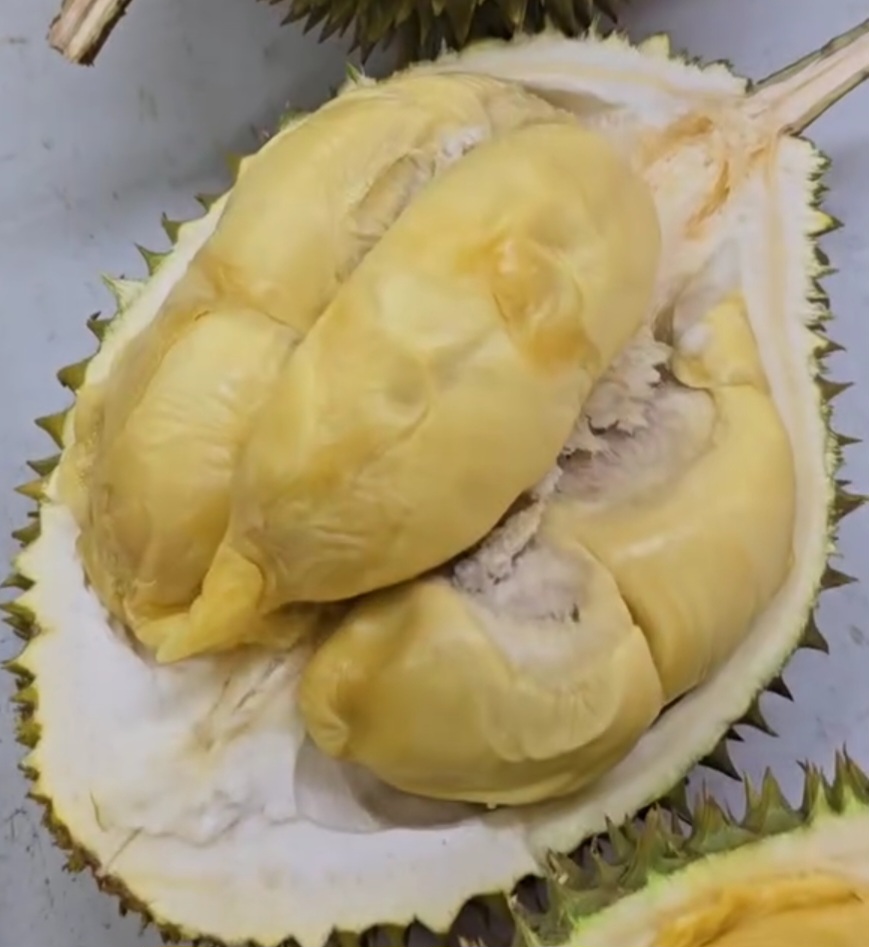
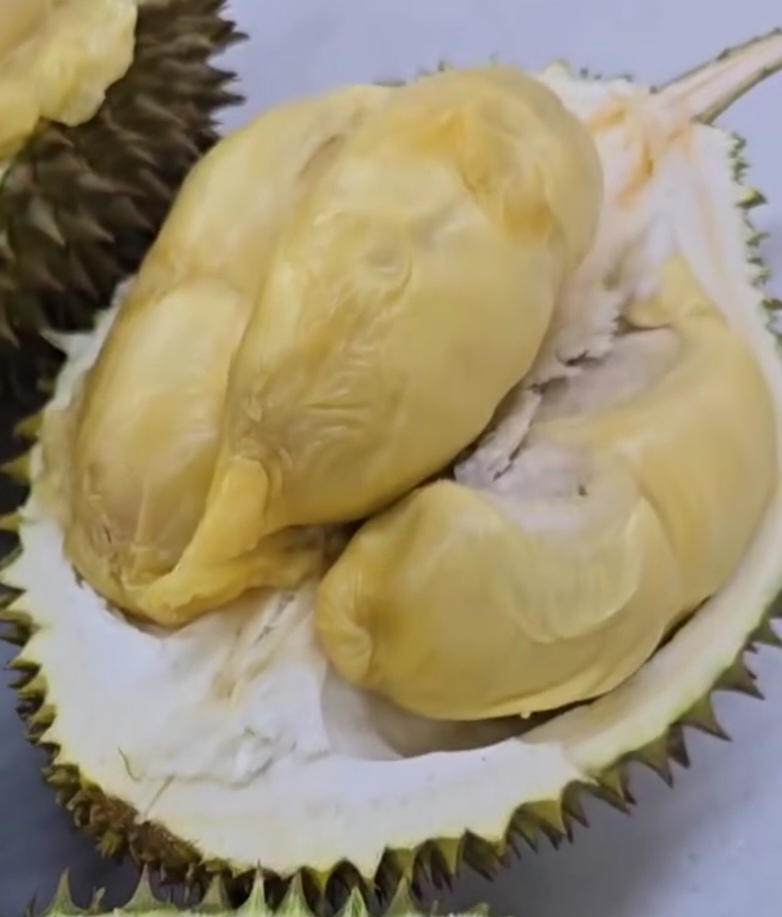
- Bittersweet
- Slightly fermented
D88
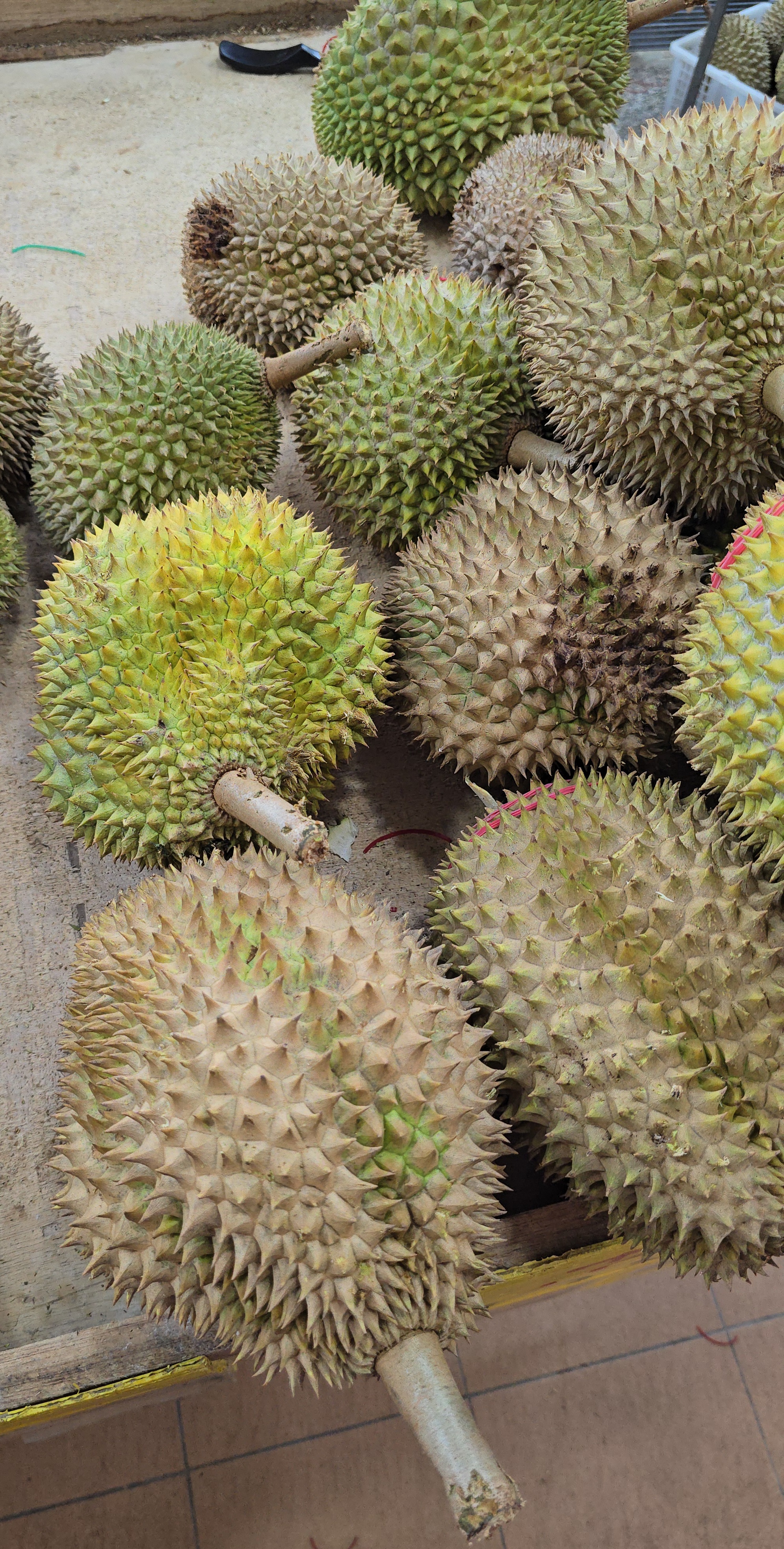
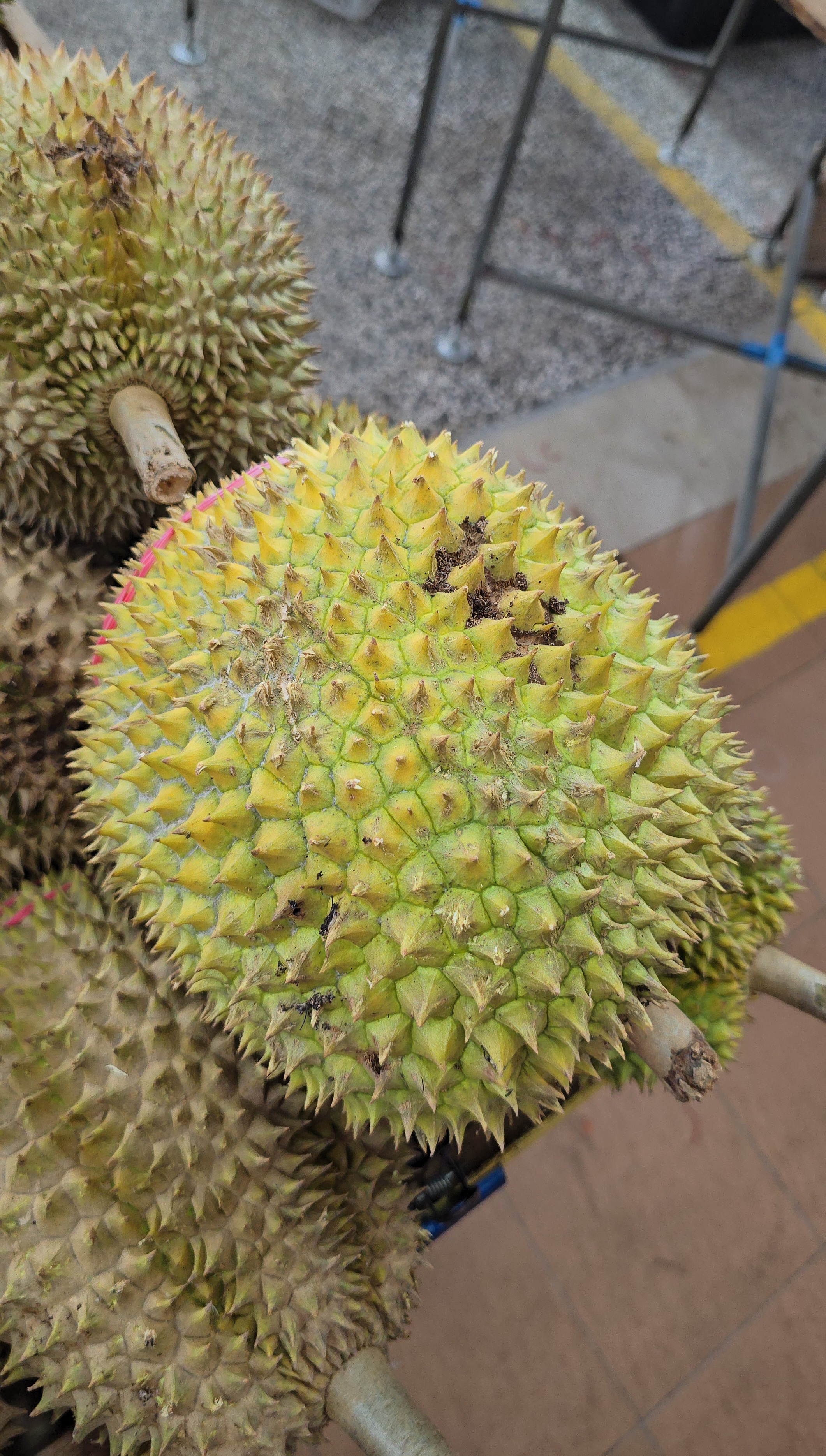
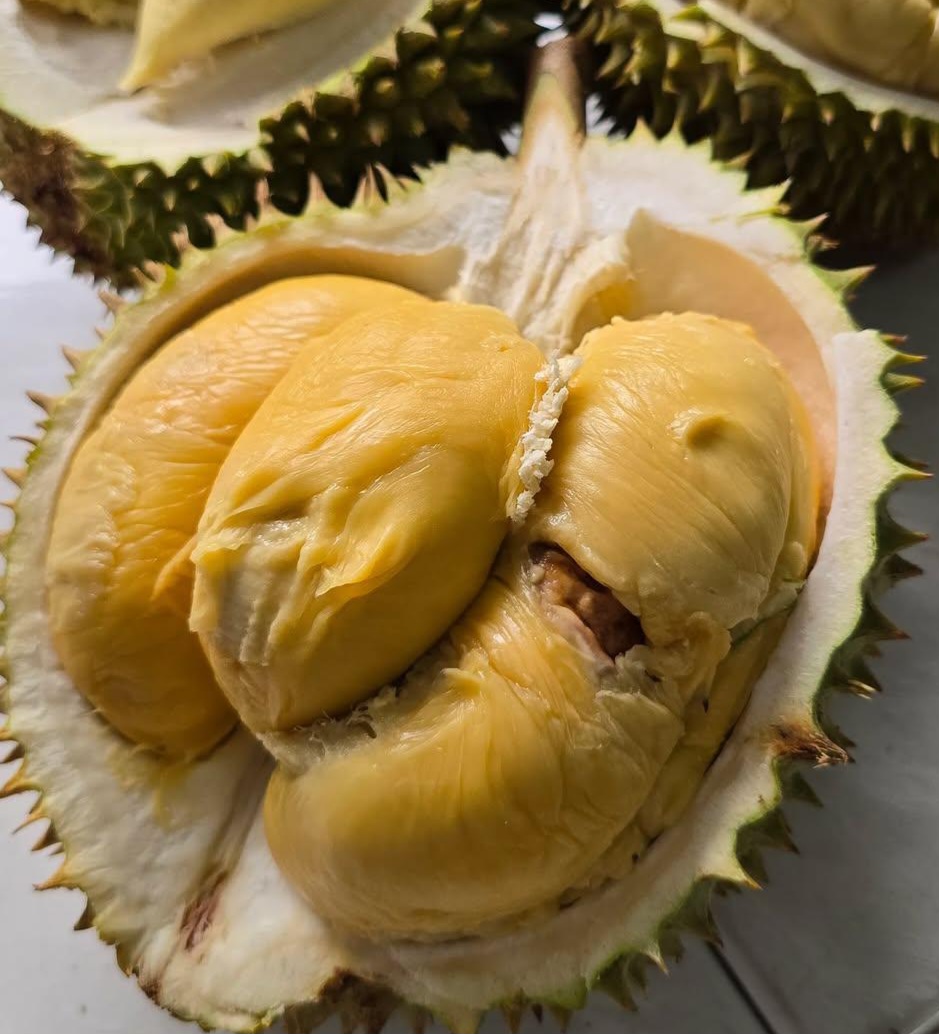
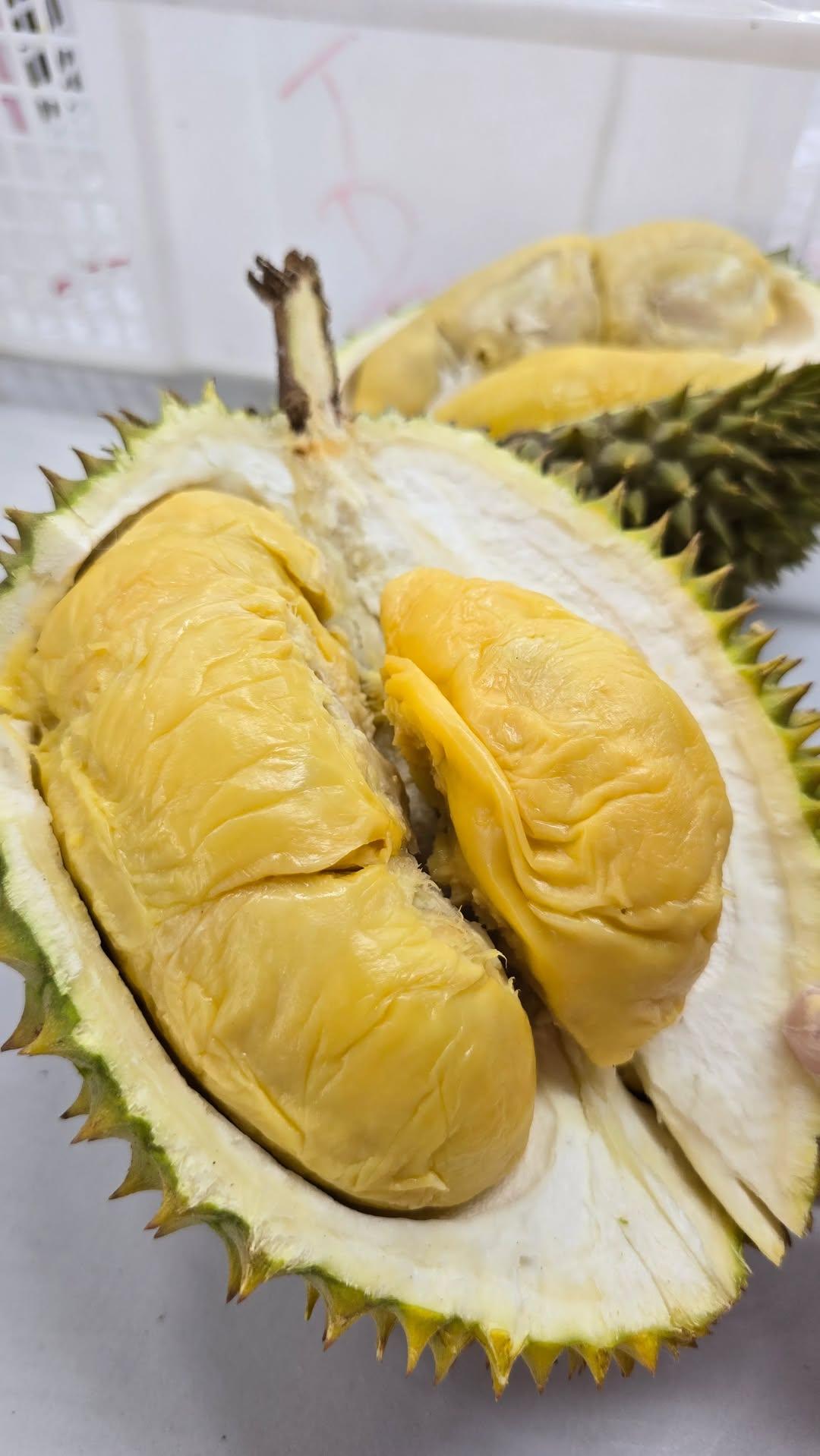
Apparently not to be confused with MDUR88 (Mardi Durian 88), which is registered as D190 in 1992. So far I’ve heard D88 being compared to D24 quite a bit in taste. Having tried it, taste profiles are sort of similar I guess.
- Very fleshy and meaty; you will likely be full just from 1 fruit (that is a very distinctive feature of this cultivar for me, very value-for-money)
- Yellow meat in general (whereas D24 is more white-ish)
- Can be fermented sometimes
- Bittersweeet to medium bitter
- Does not have the vanilla taste of D24, in my opinion (that would be a key difference to D24, besides the sharpness of D24 thorns)
D123 Chanee
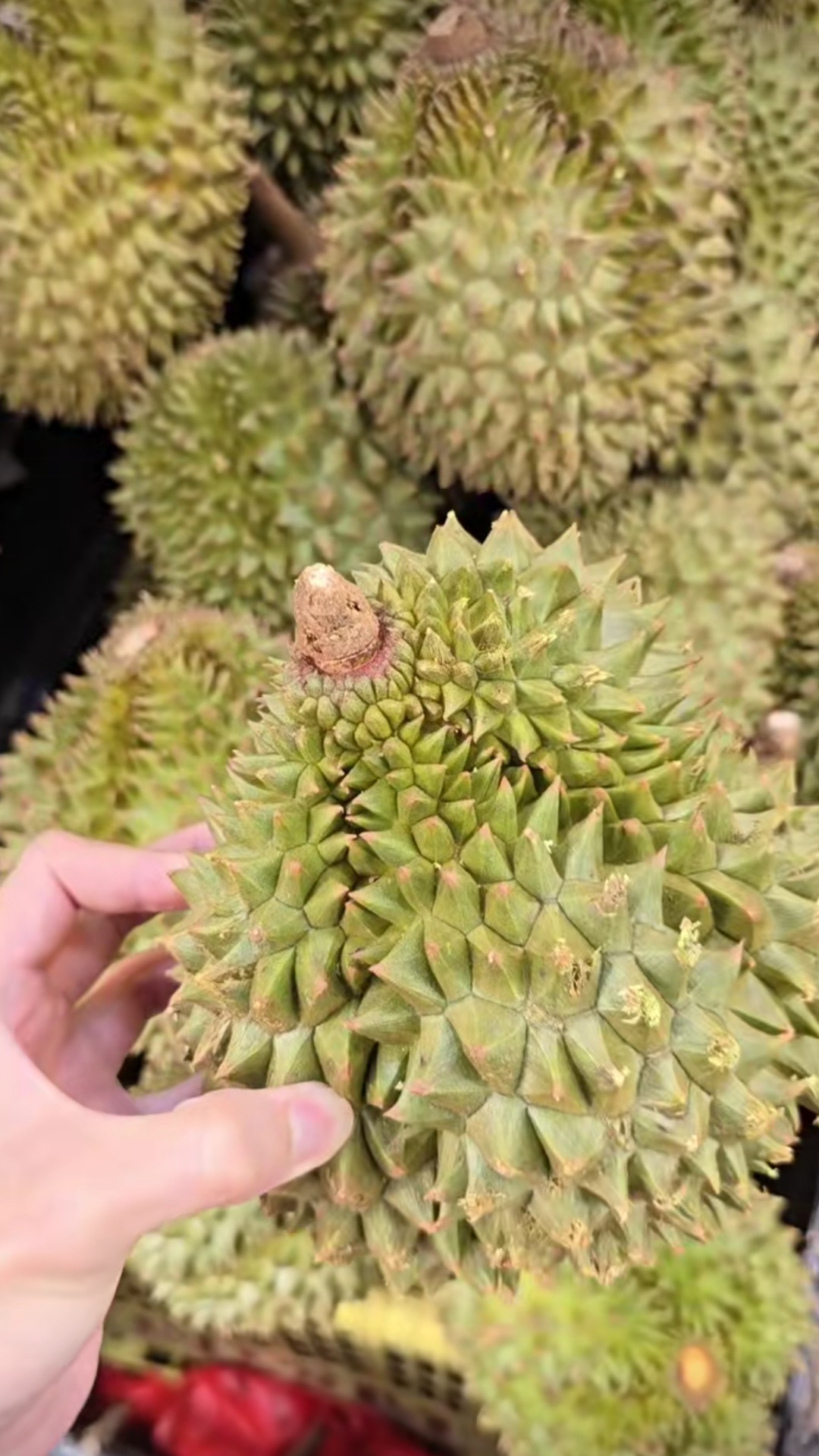
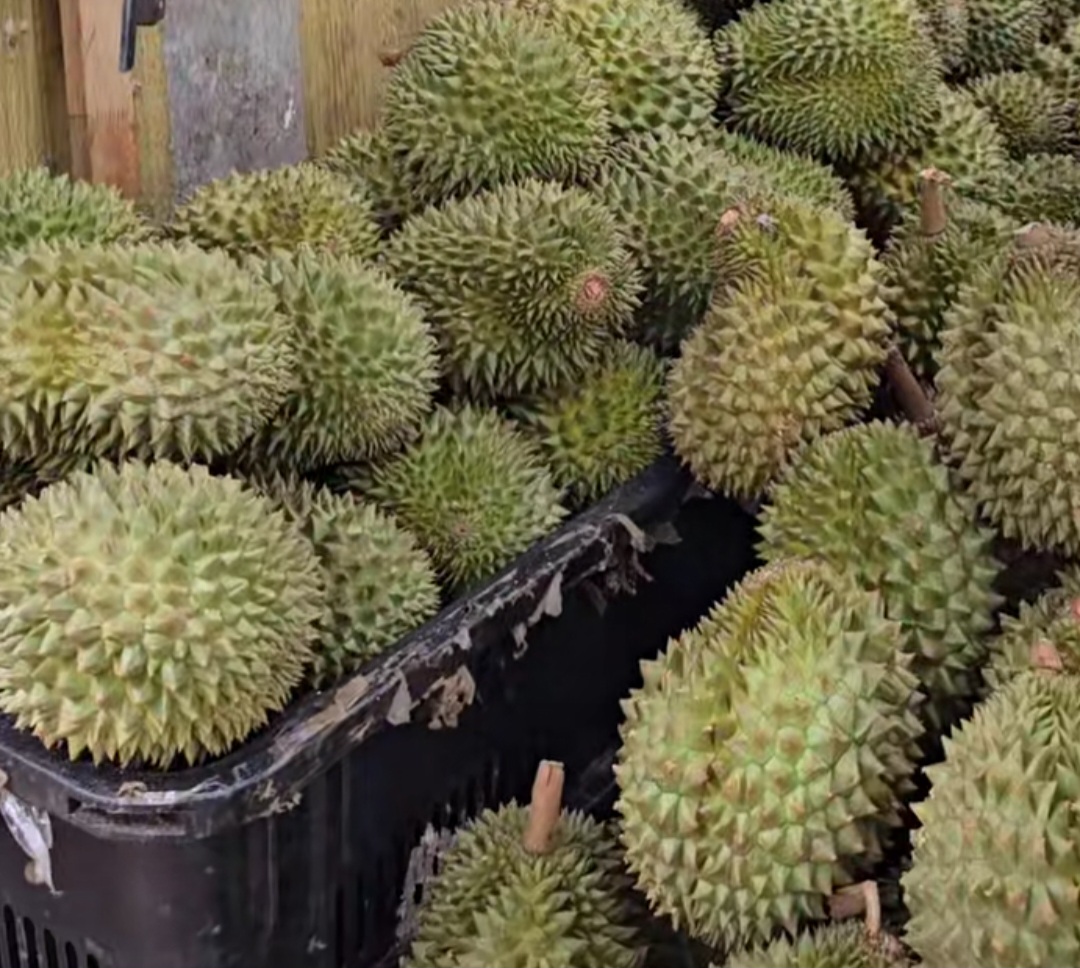
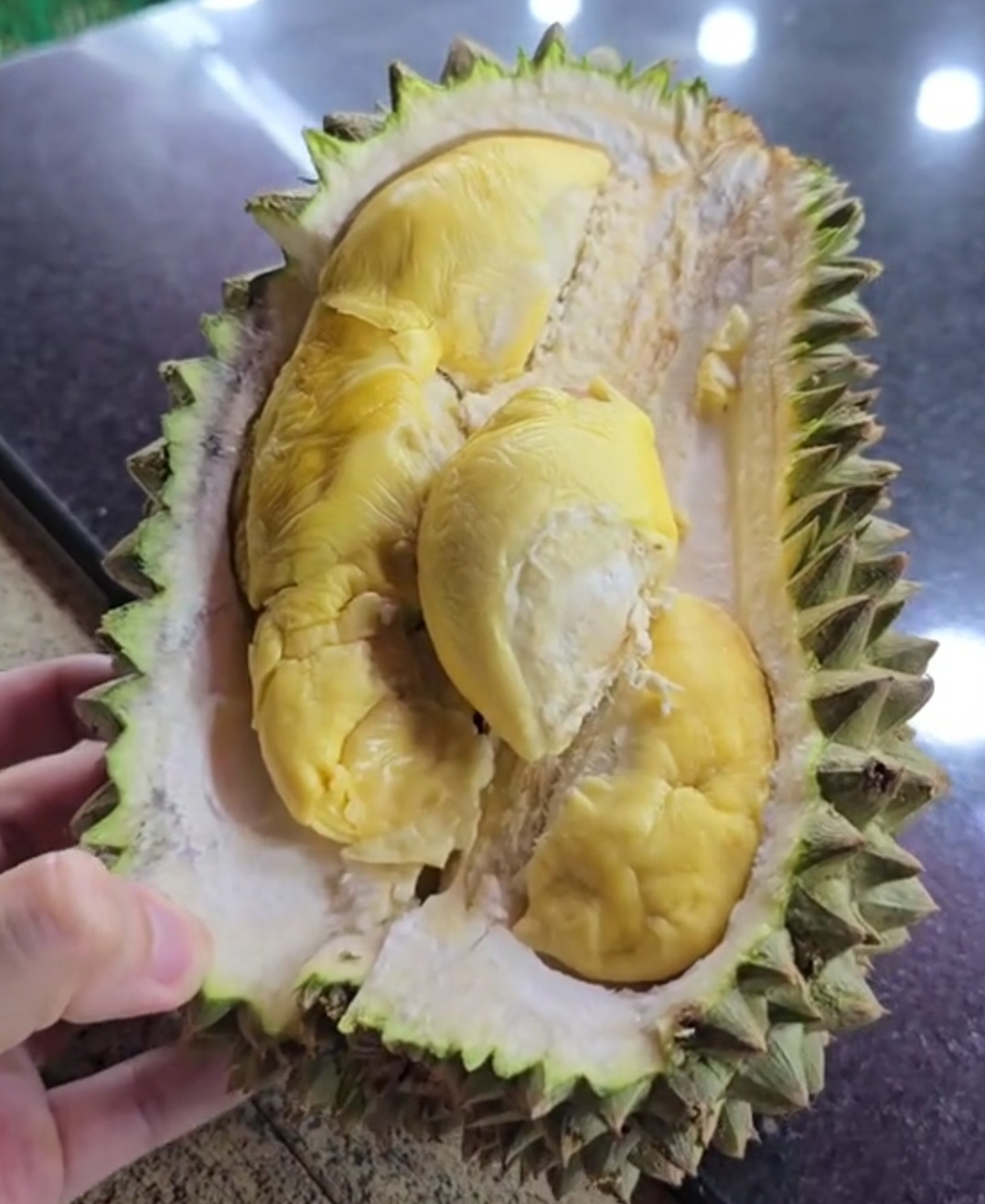
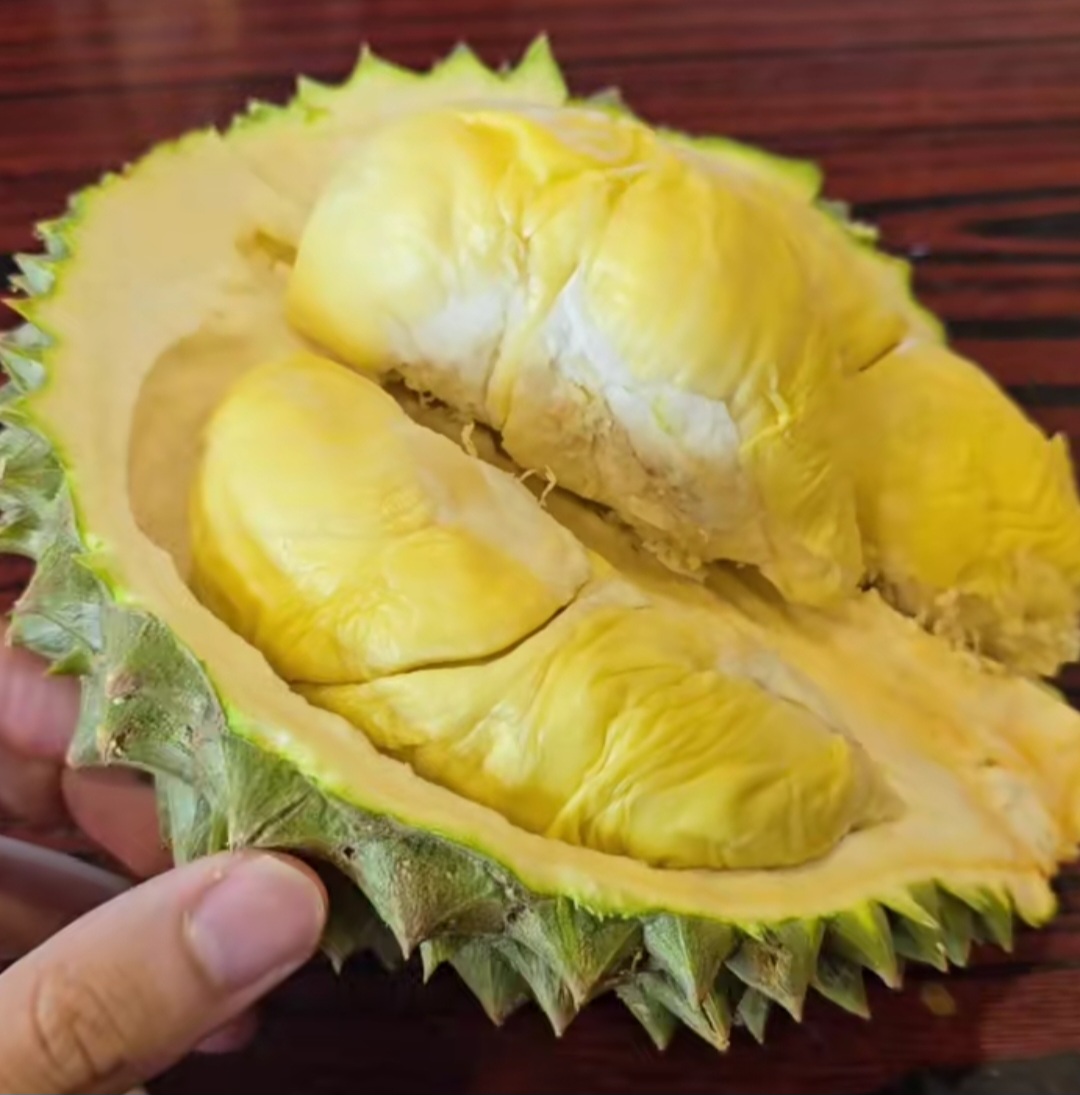
Actually a Thai durian and originates from Thailand, but seems it also has a Mardi registration, as it can also be grown in Malaysia and tree-dropped the usual Malaysian harvesting way. In fact, there are Malaysian varieties that have origins and offshoots from Chanee, e.g. D165 Green Skin 15. Regarding Chanee, those from Thailand are green, and have a very aggressive rugged shape. While Chanee grown in Malaysian are apparently more brown in colour with a ‘softer’ look, and usually grown in Penang, but I have yet to try those.
- For Thai version: rugged and gourd-like looking (slightly like S17), and tree-cut meaning uneven ripeness or unripe even with ripening agents (even if ripe tastes flat non-complex bitter)
D160 Tekka
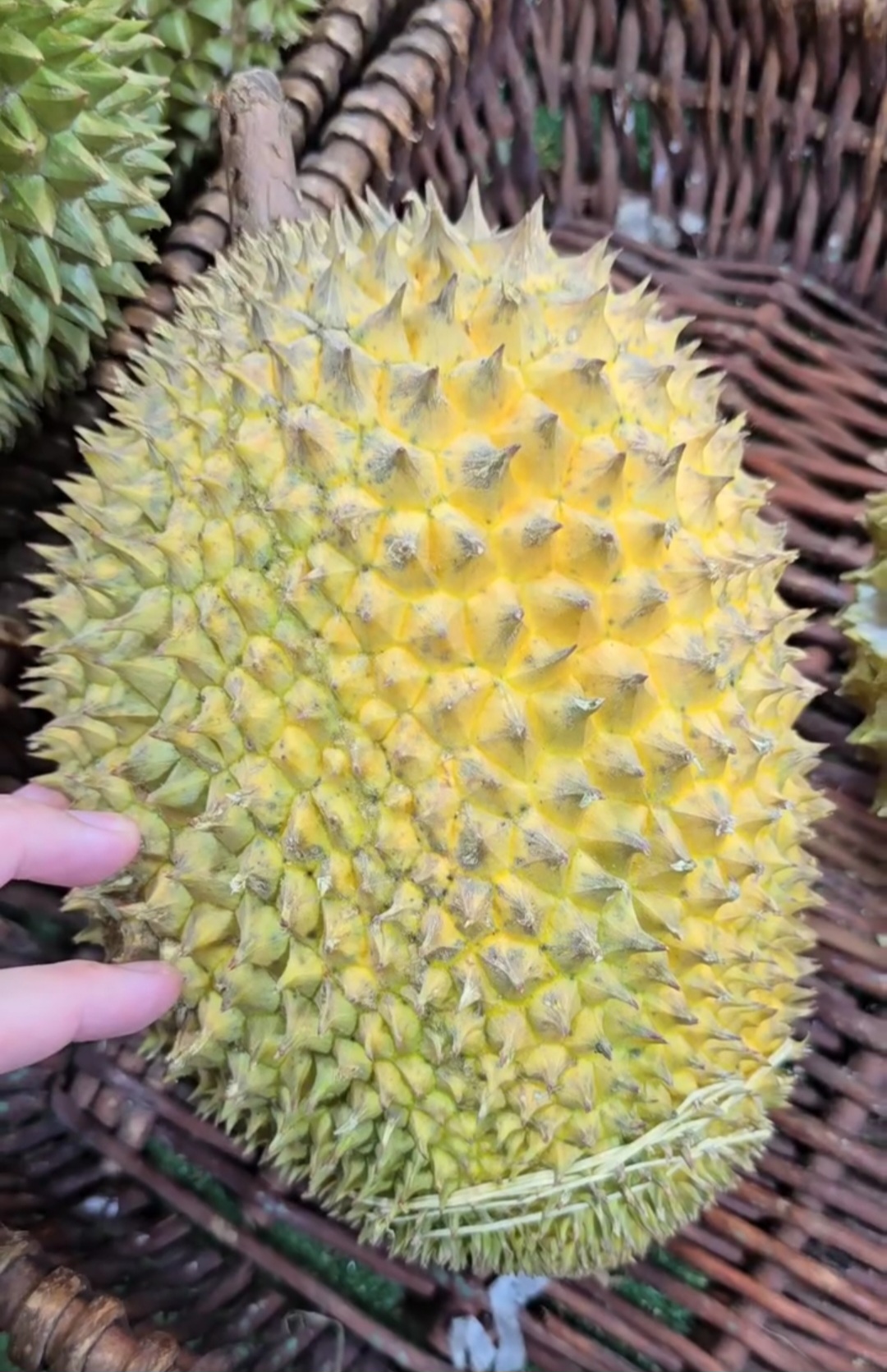
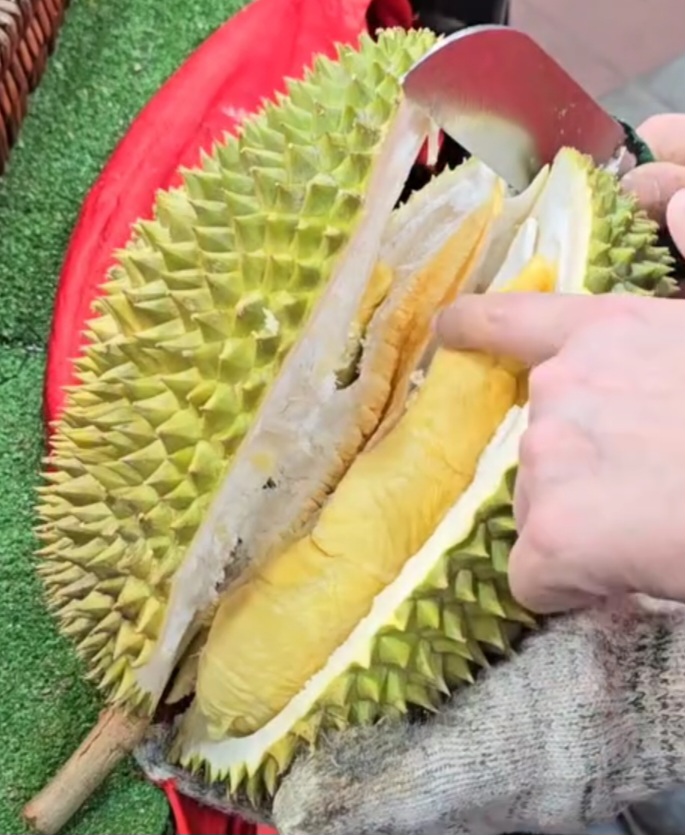
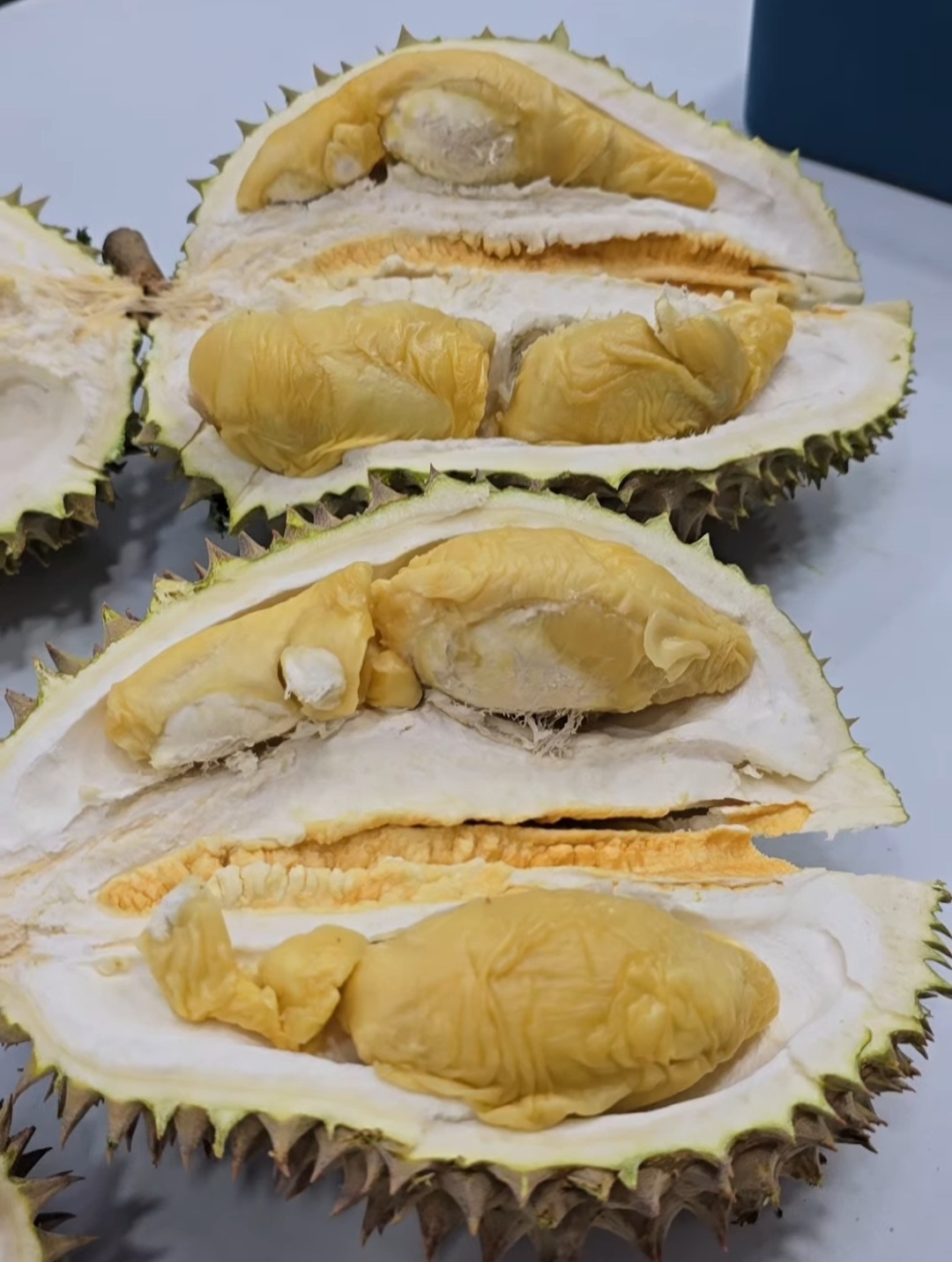
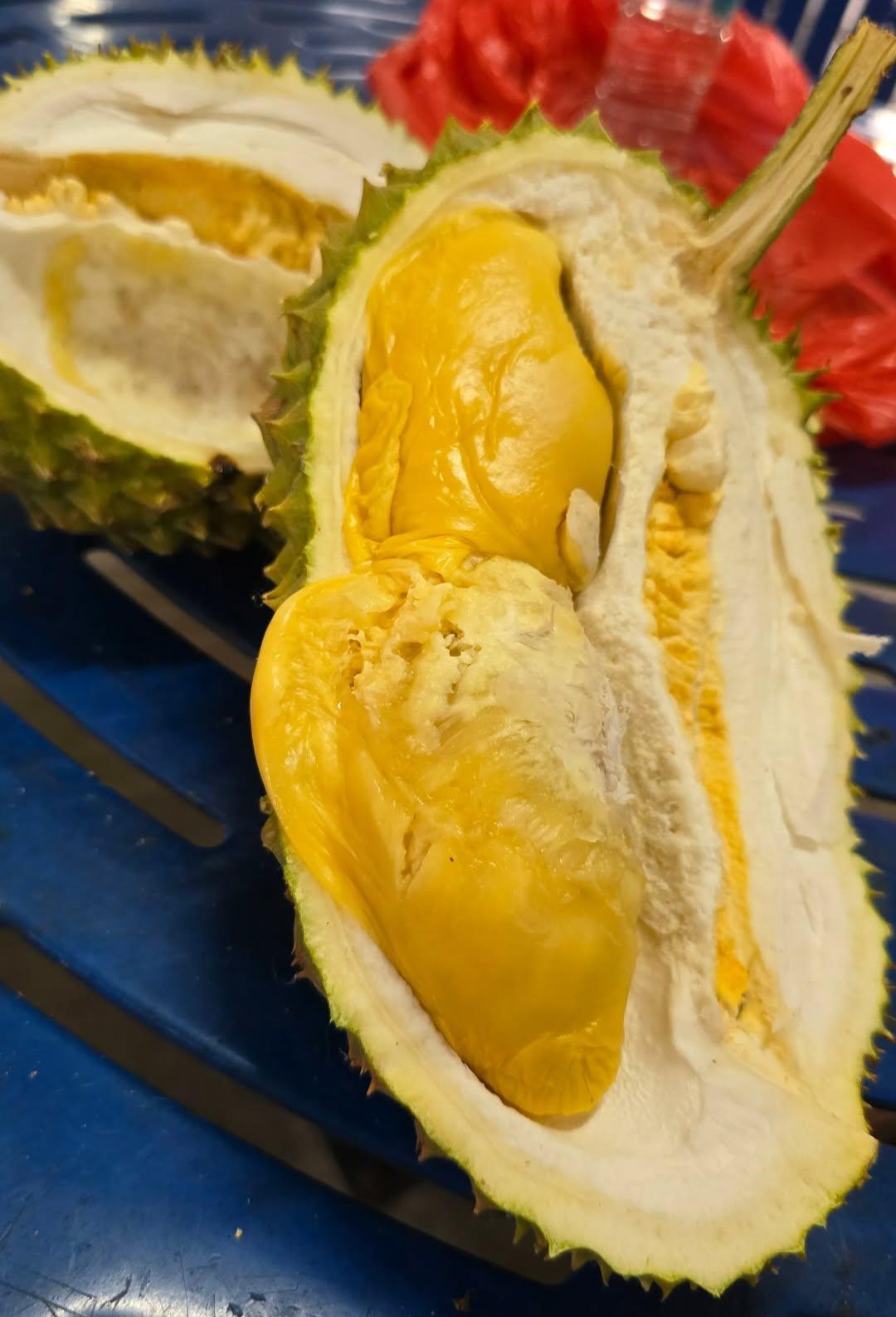
Also known as Green Bamboo (Tekka in Hokkien), Musang Queen. Popular among durian enthusiasts.
- Bumpy orange inner stem fibre, similar to D200 Black Thorn
- Extremely difficult to open, if not the most difficult, due to said inner stem fibre
- Floral
- Taste profile ranges from bittersweet to medium bitter
D162 Tawa
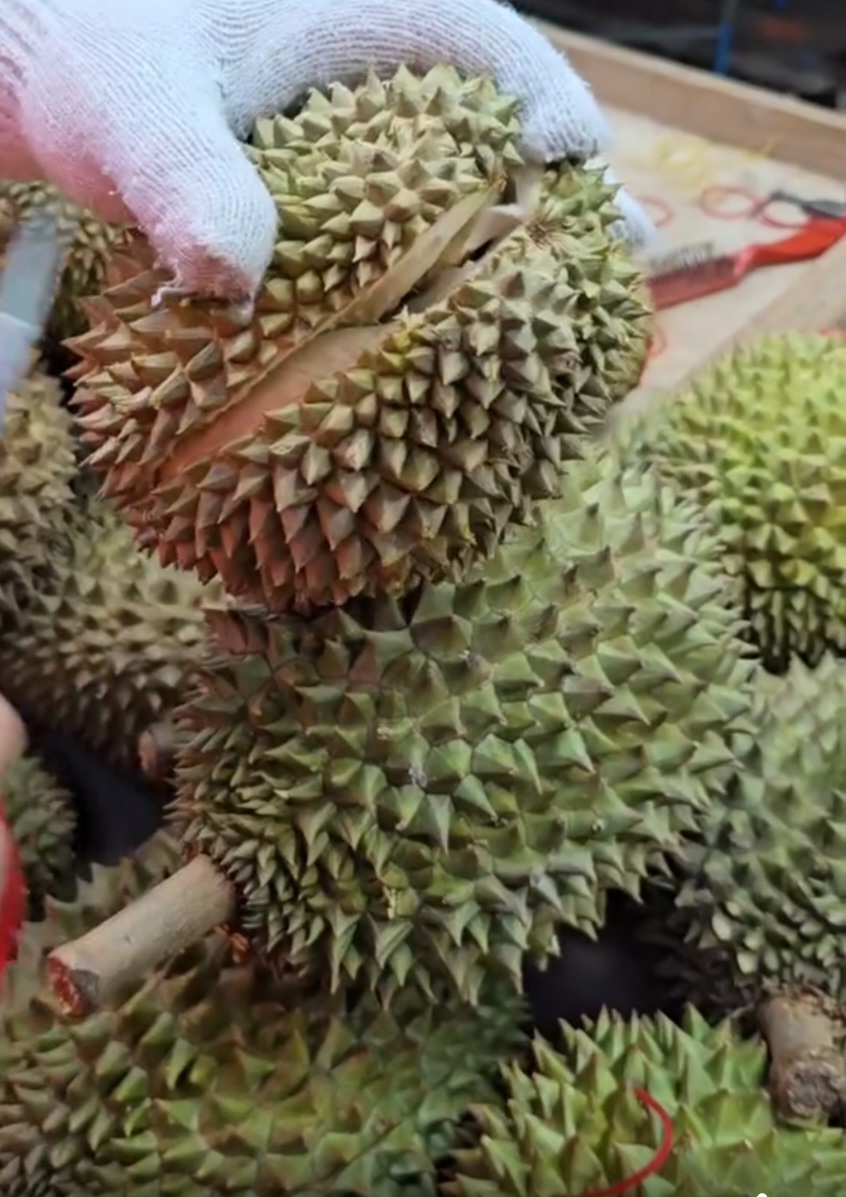
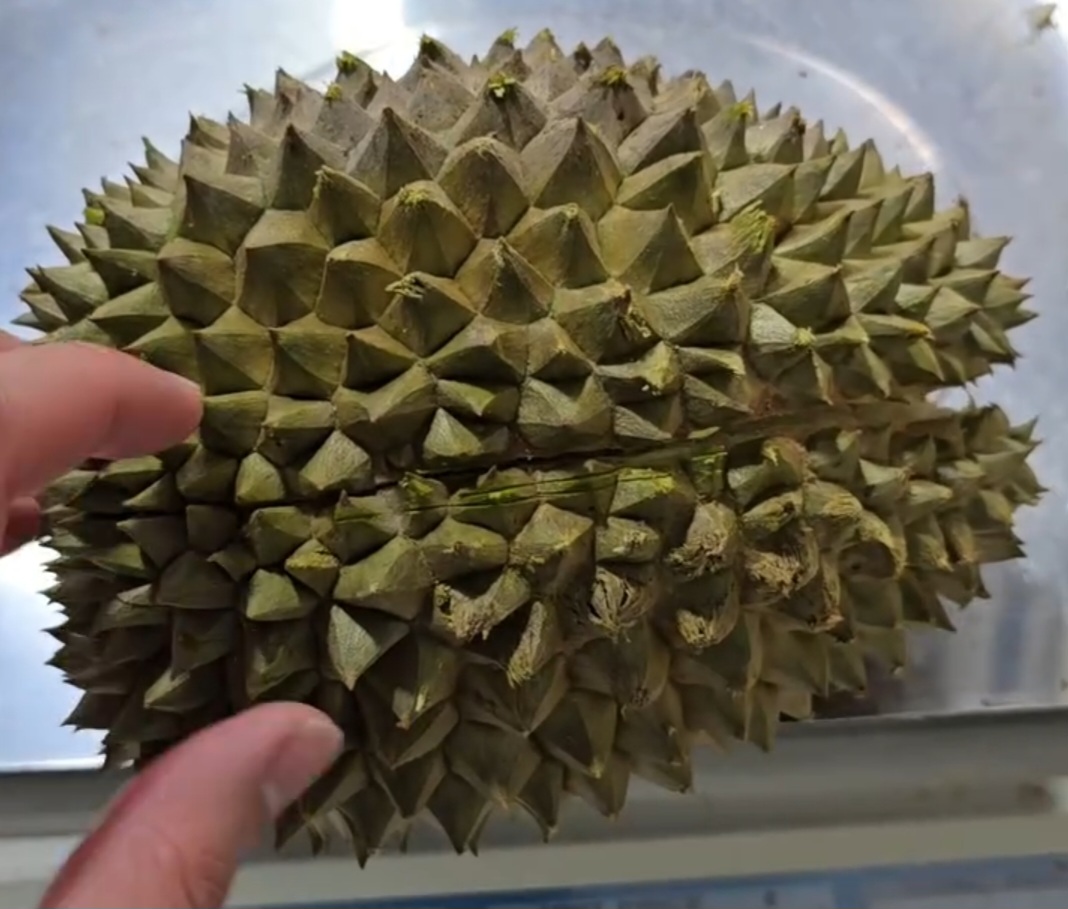
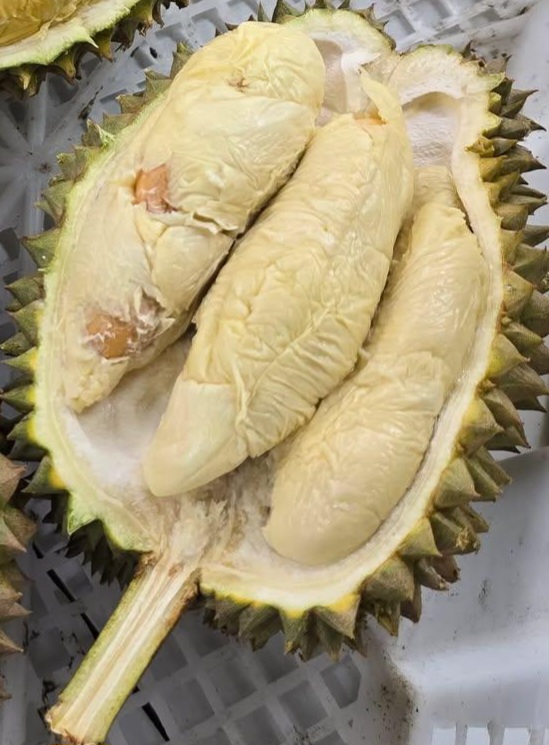
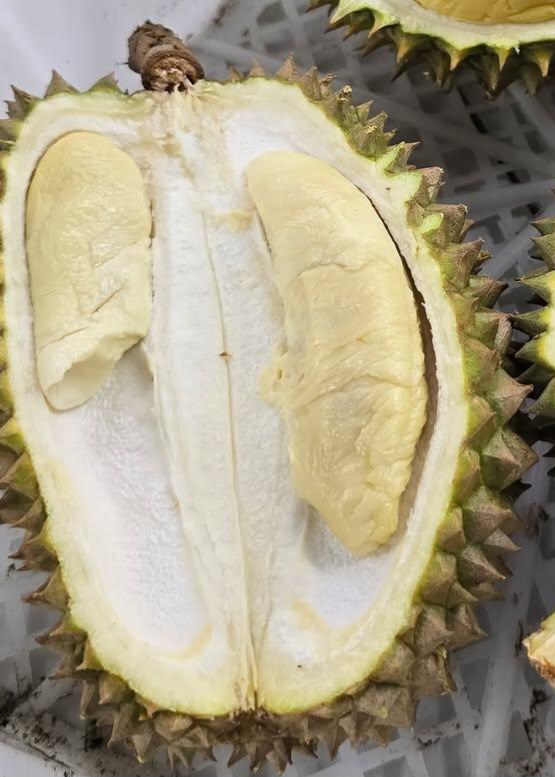
- Rugged-looking if you know what I mean (like how Capri and Tupai King have that rugged look)
- Taste-wise had complex bitterness
- Mild fermentation
D163 Hor Lor
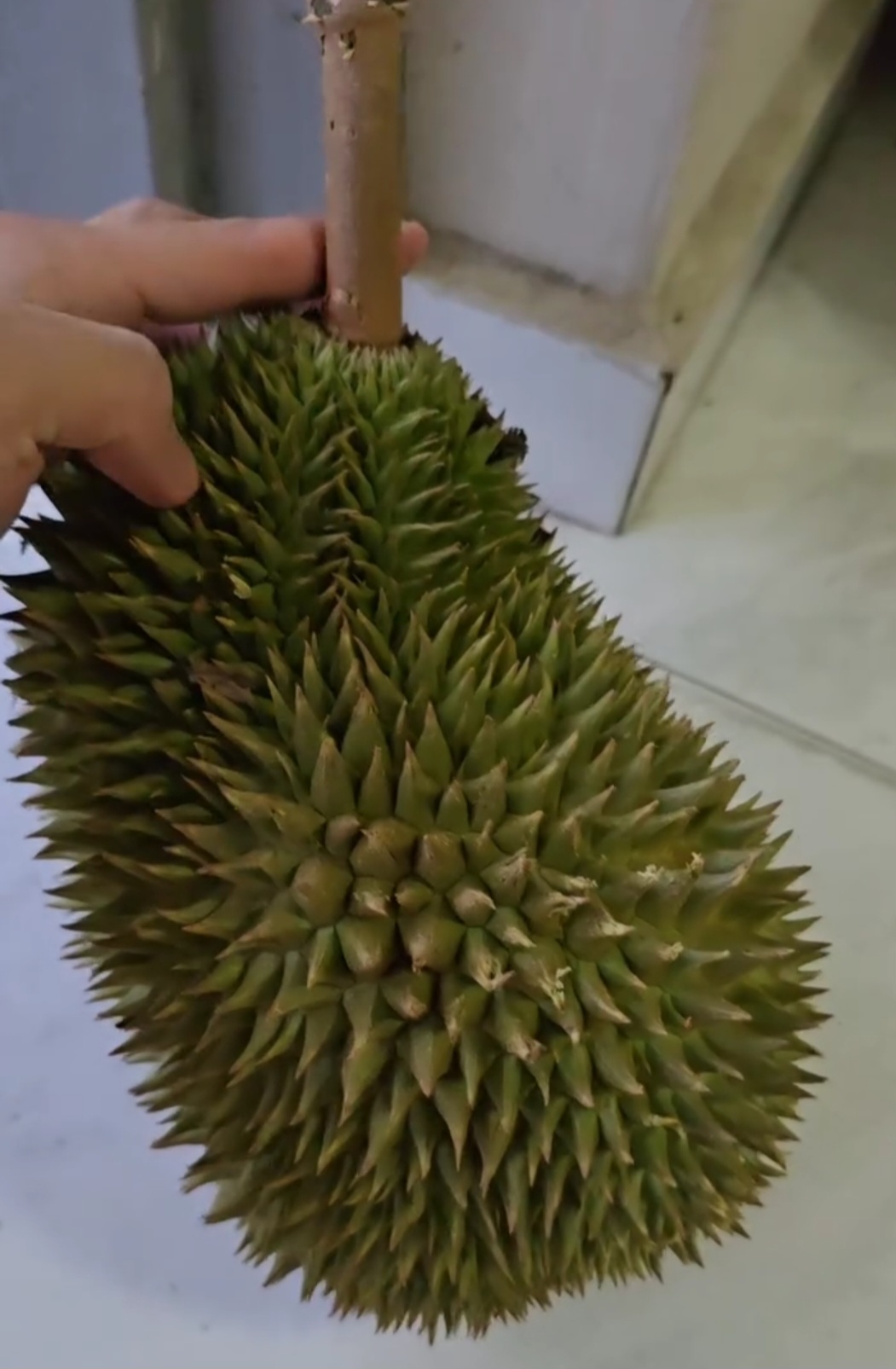
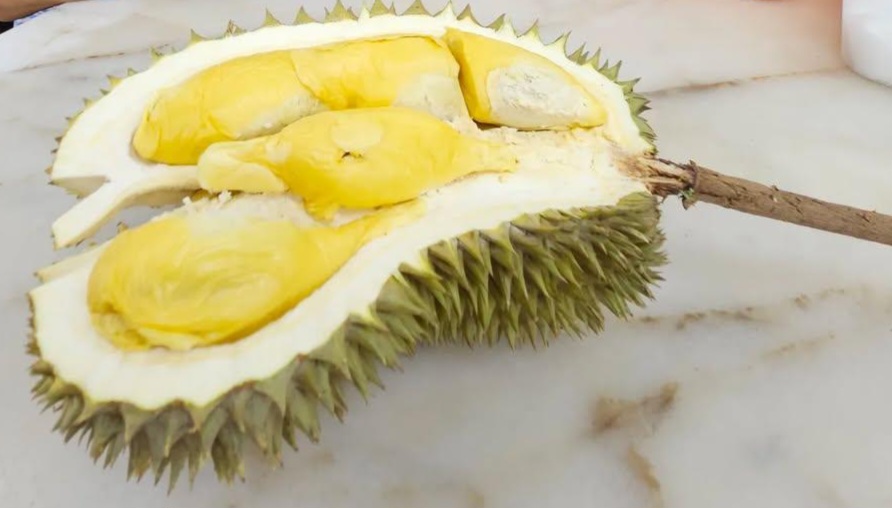
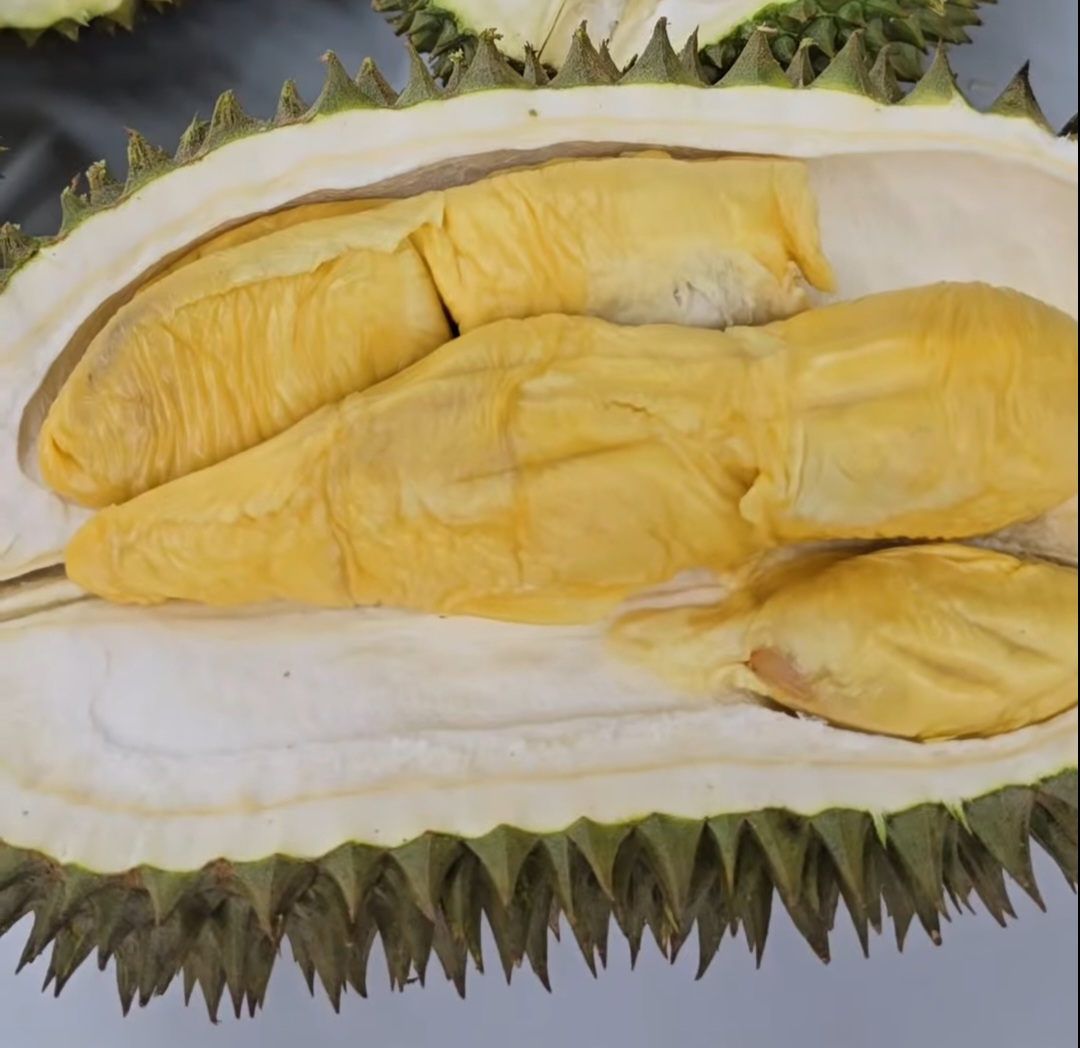
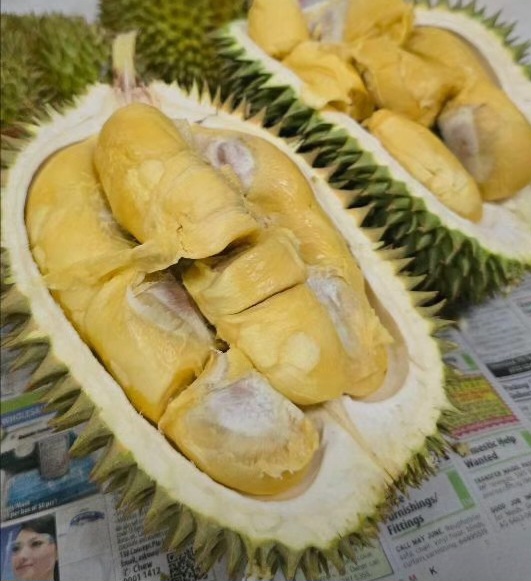
Name is Hokkien for gourd. From Penang.
- Gourd-like shape as per the name
- Light flavour; one of the lightest in my opinion and not suitable for non-beginners
D164 Khun Poh and Xiao Hong
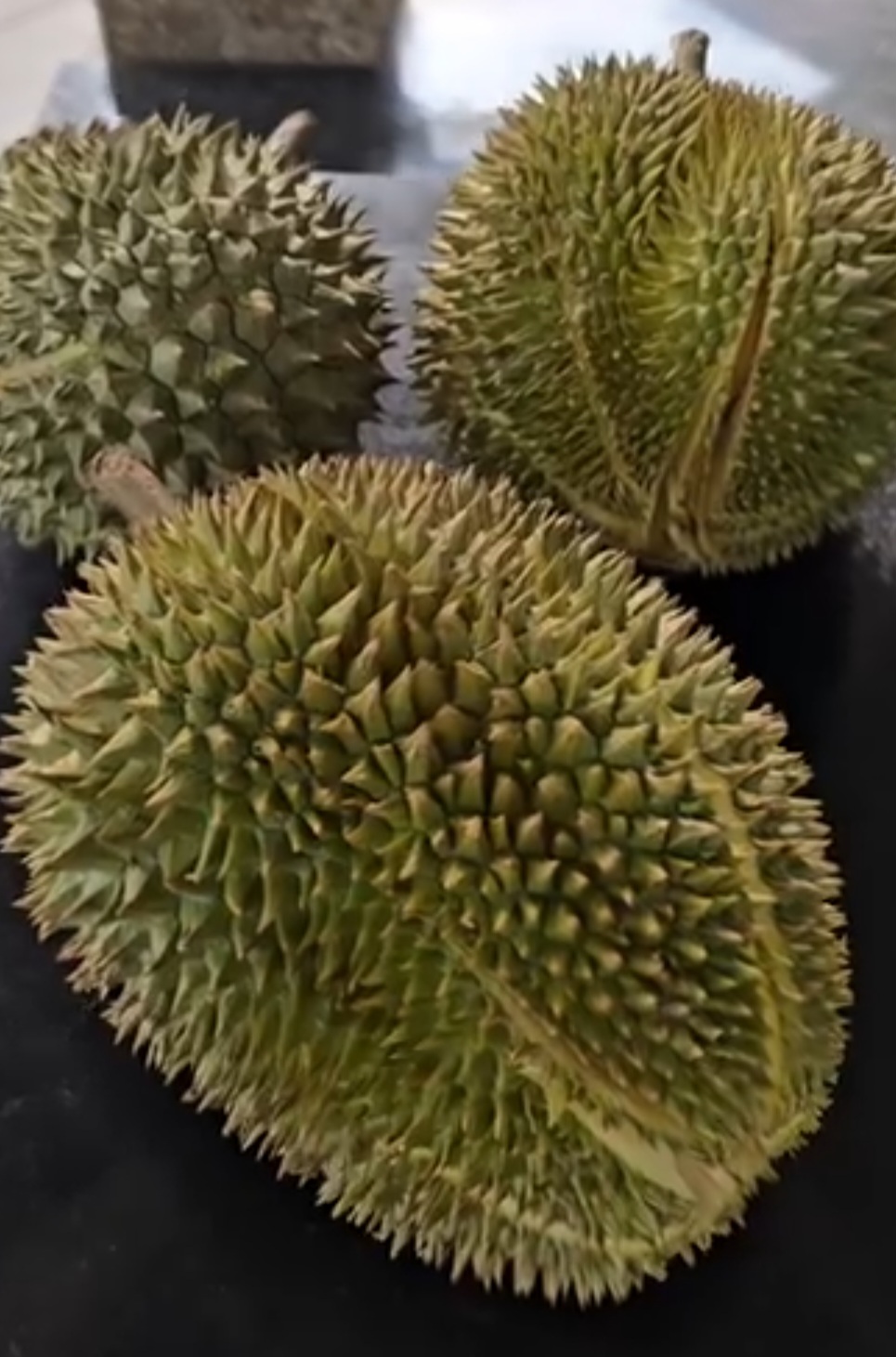
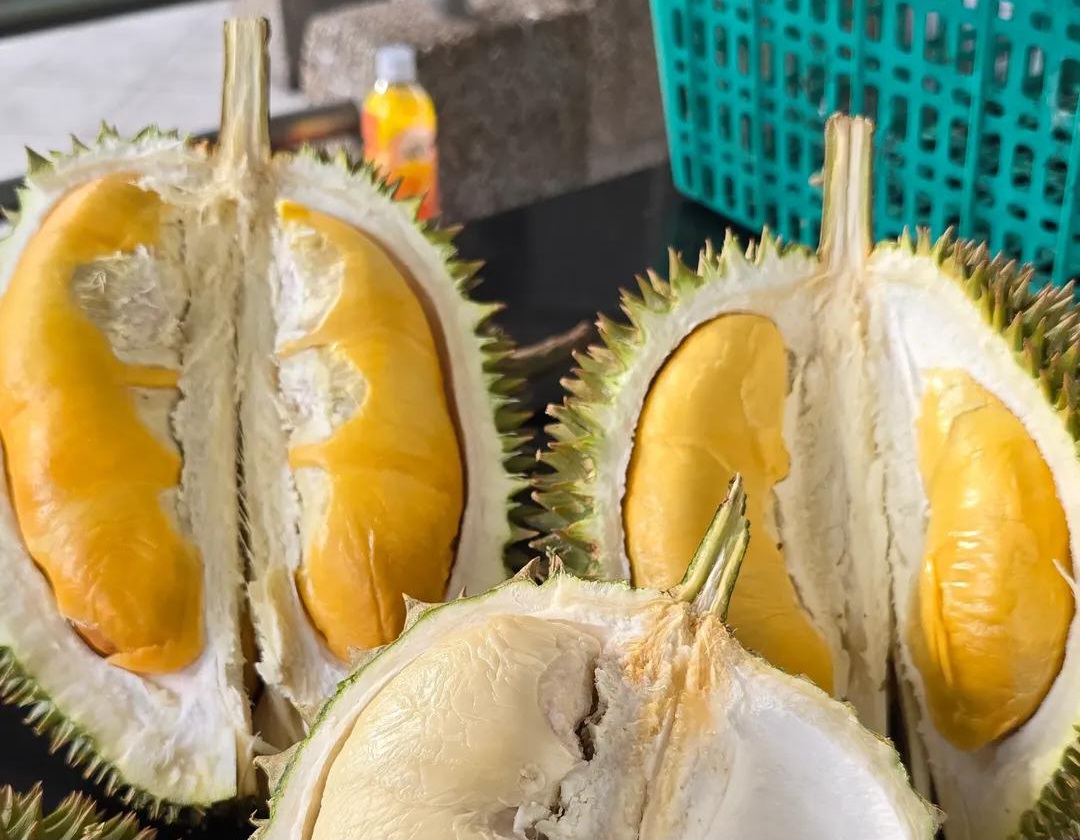
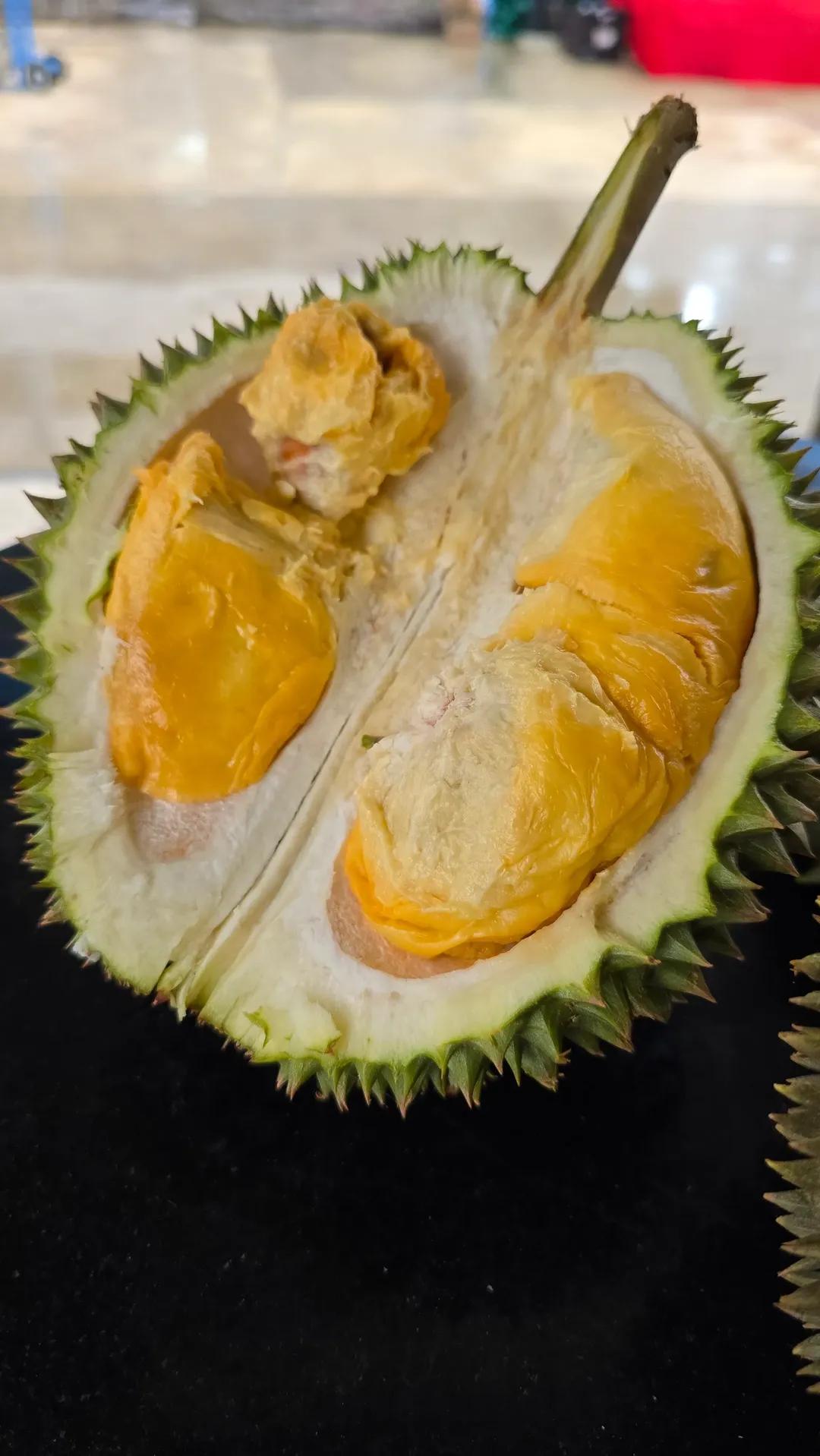
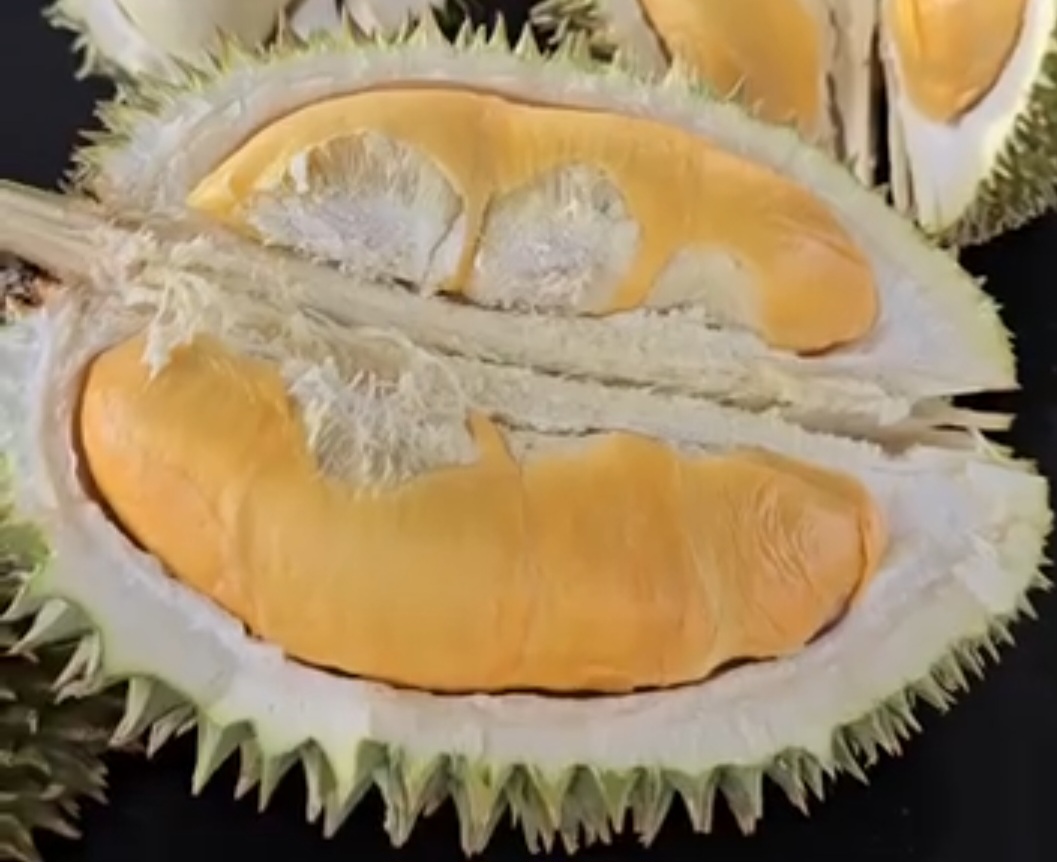
From Penang. Online articles say that 小红 (Xiao Hong, or Little Red) is an off-shoot of Khun Poh Ang Bak (坤宝红肉), and seems to be recognised as a separate cultivar. For the sake of convenience I am lumping them together here.
I tried both Khun Poh and Xiao Hong, side by side, as seen in the pictures. Personally, I was unable to distinguish between both by visual, or by taste. The stallholder told me to look at the base to see the difference in pattern, but I cannot remember the difference now sadly.
- Tastes citrus-y and orange-y, really very unique, like eating an orange dessert
D168 D101
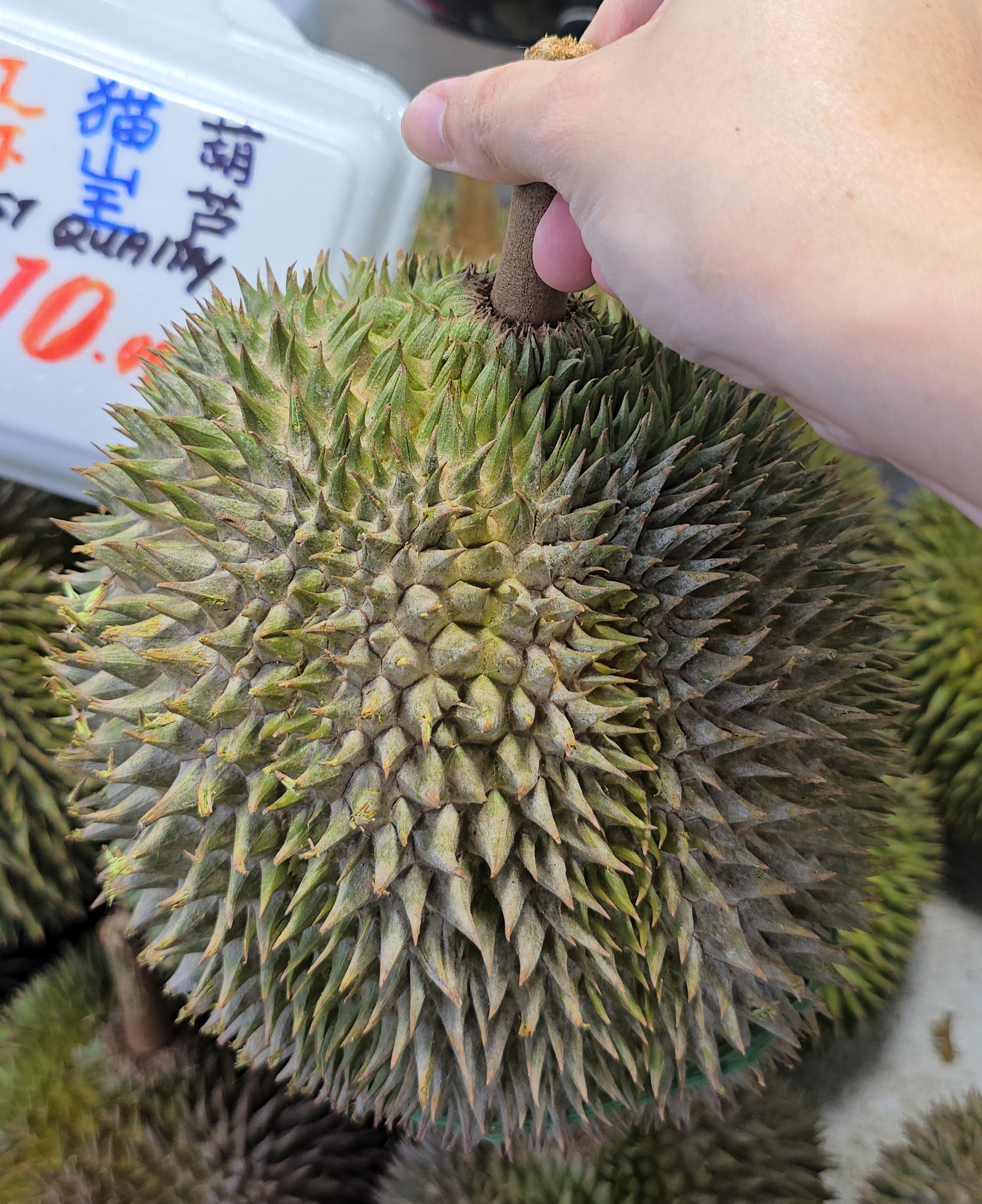
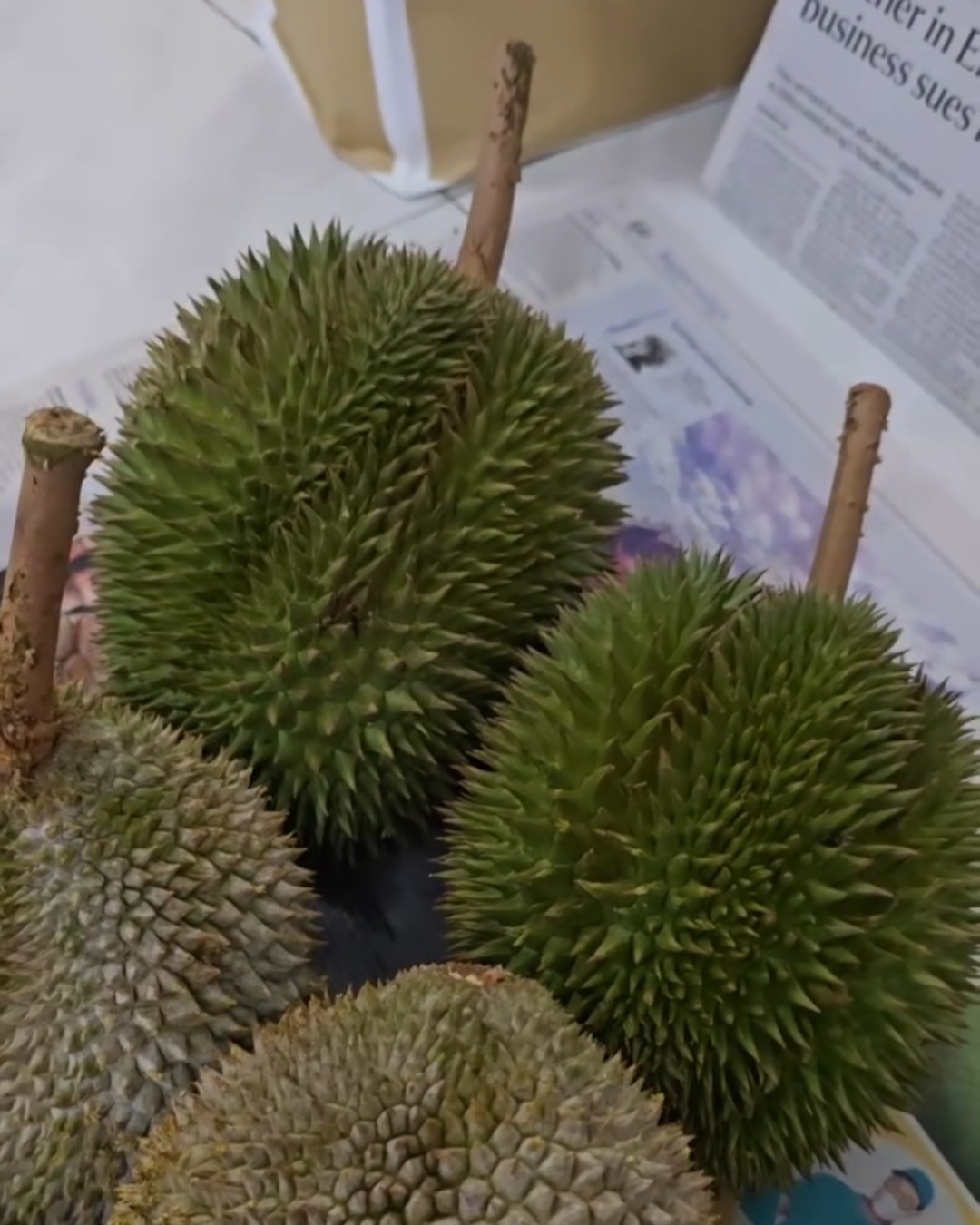
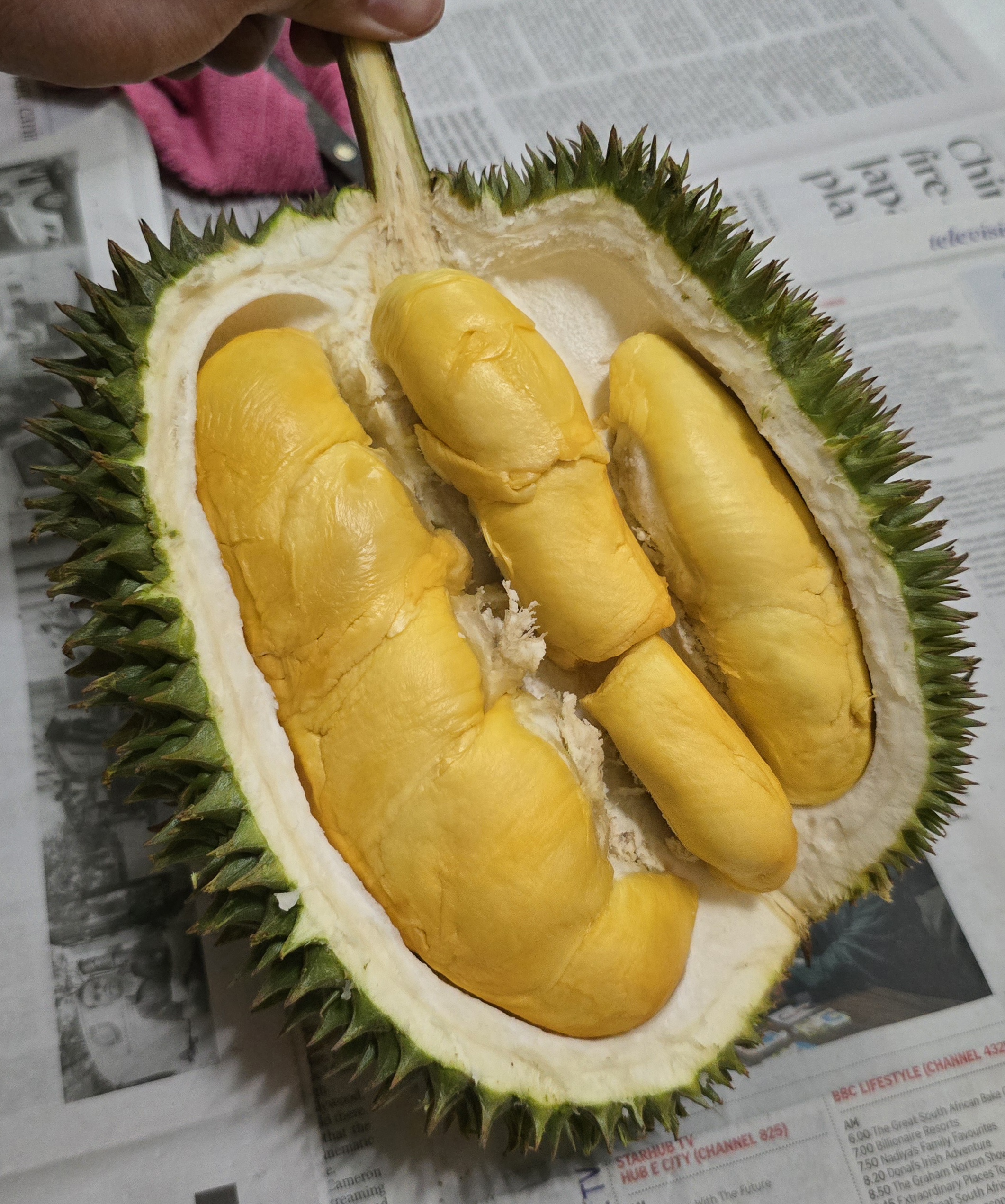
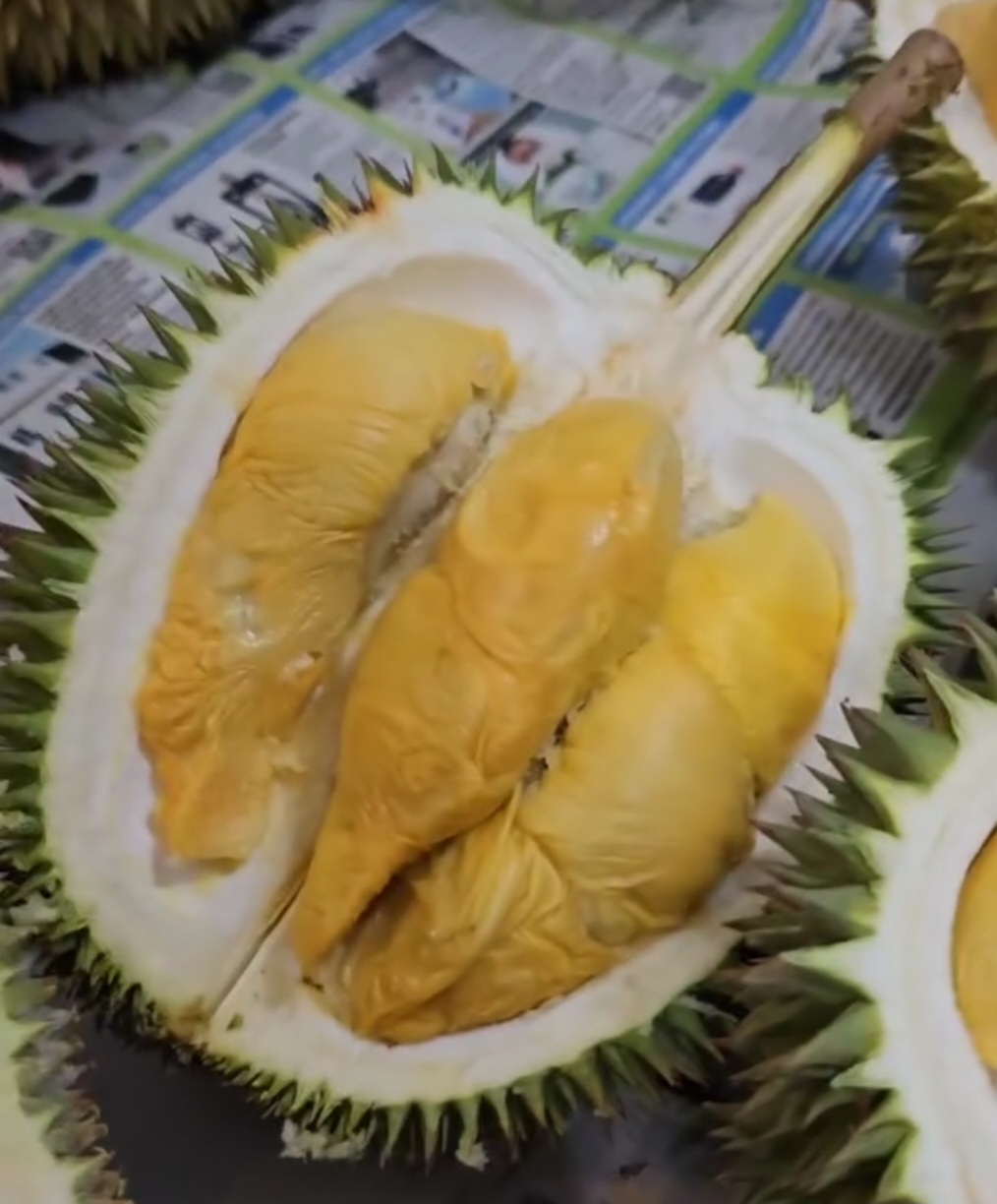
Apparently, is Mardi registered as D168, but due to various reasons got known as D101, IOI (eye-oh-eye). D101 is the most common term for it. D101 in Mardi is another durian altogether. Also likes to be passed off as ‘red prawn’.
- Insanely sharp thorns; probably one of the sharpest in my opinion. Looks dangerous and is dangerous; get ready to bleed if not careful.
- Tastes sweet to mild bittersweet
- With a milky aftertaste, reminds me of a white rabbit candy
D175 Red Prawn
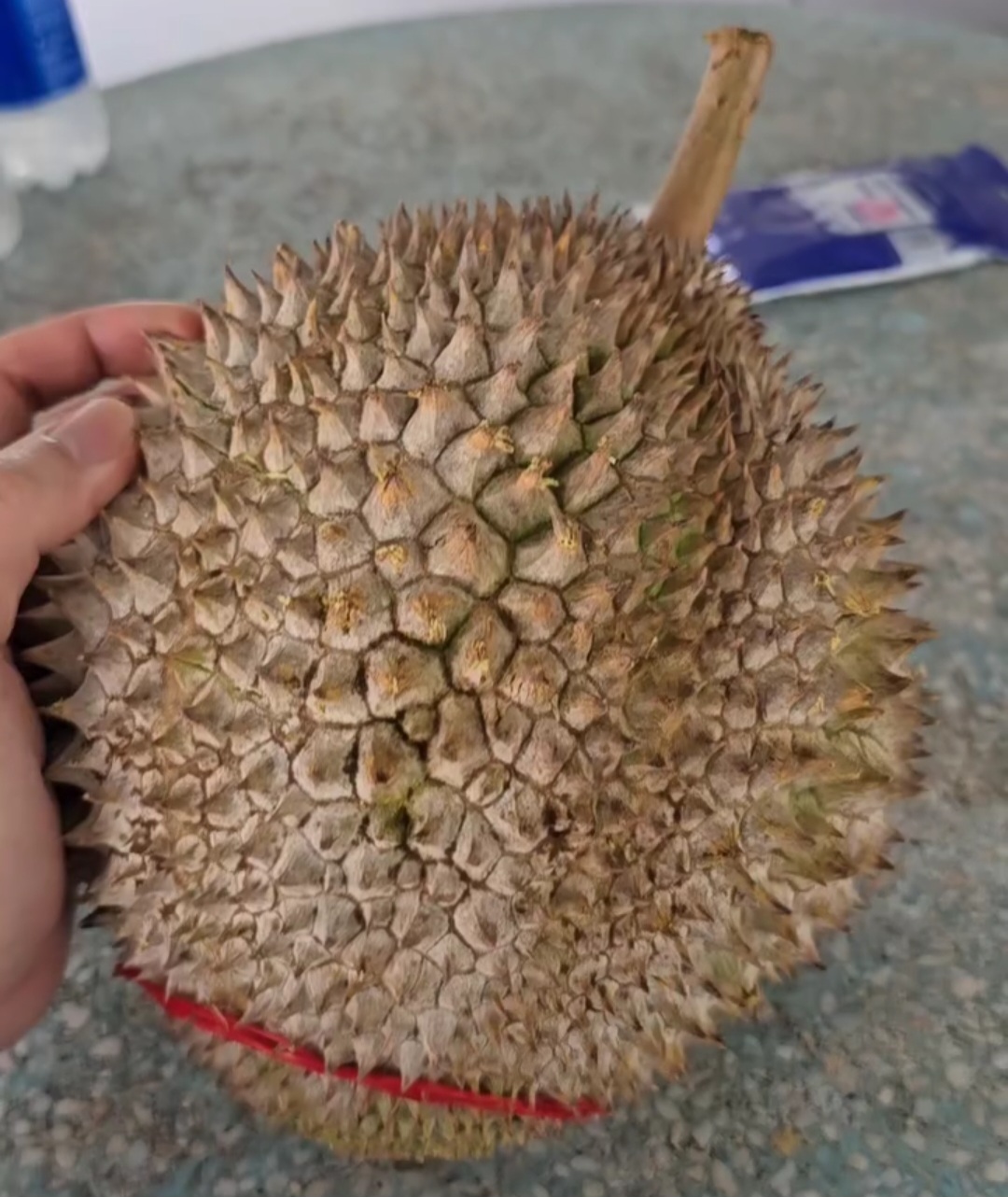
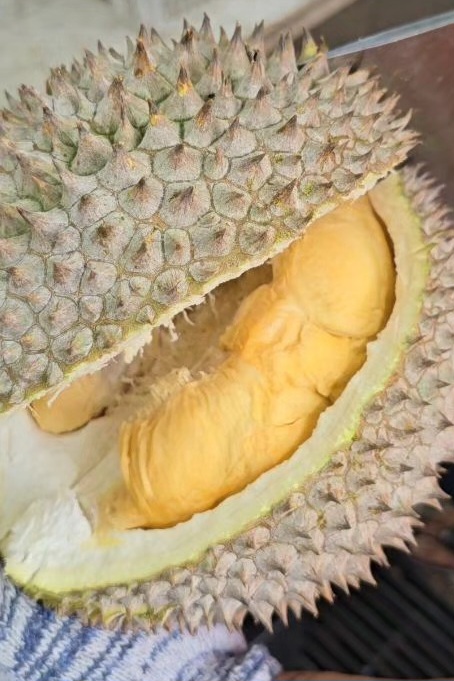
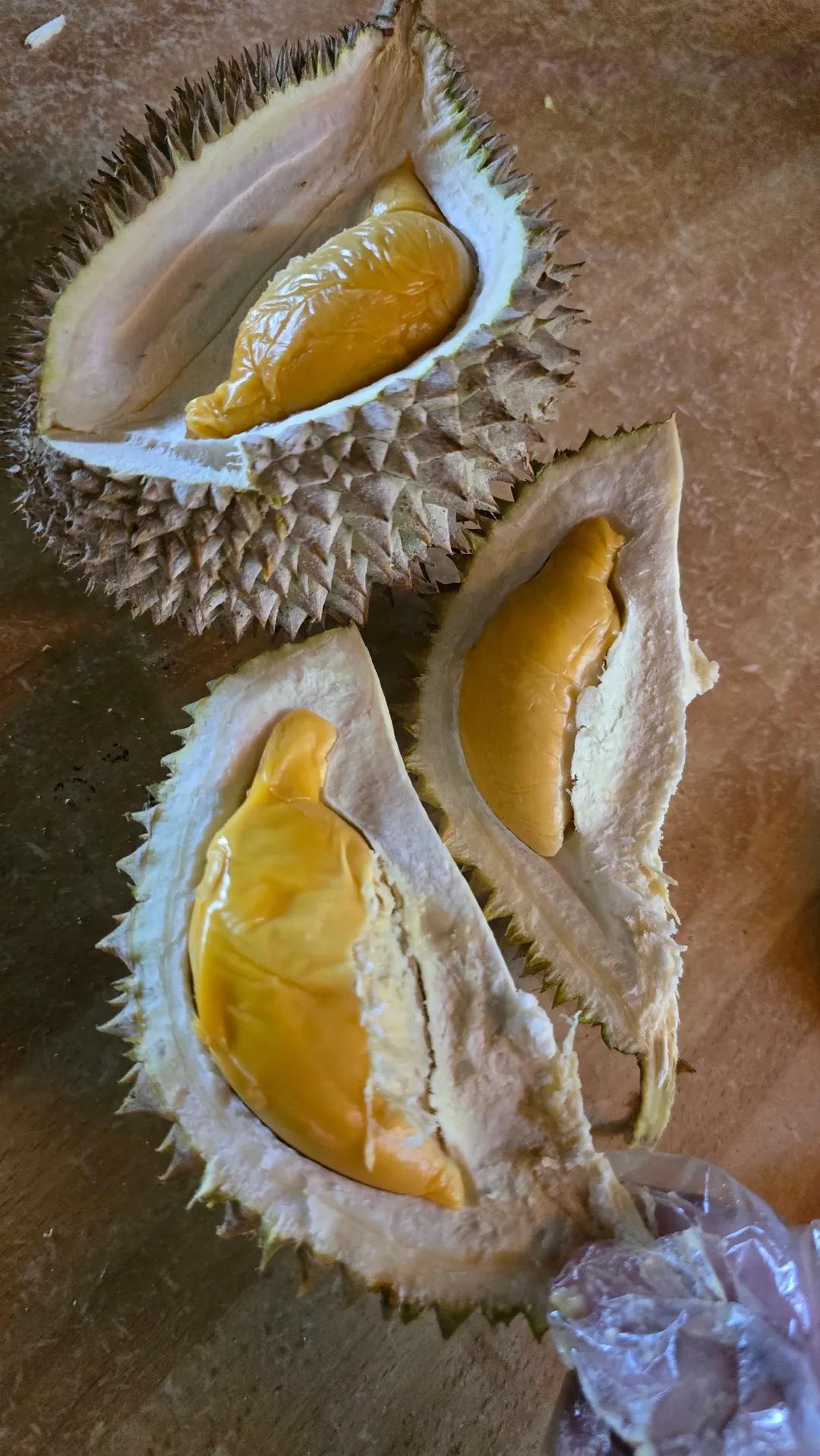
Also known as Penang Red Prawn (‘True Red Prawn’). Some people try to pass off Thai Puangmanee as D175 (but Puangmanee is very green and tastes of a flat sweet, while D175 is usually ash gray and has a complex bittersweet with light fermentation)
- Rugby shape
- Usually ash gray husk colour (not because it is not fresh)
- Bittersweet
- Frequently has fermentation
- Low meat yield. The inner stem fibre takes up so much space
- Weak thorns
D196 Simpang Permata
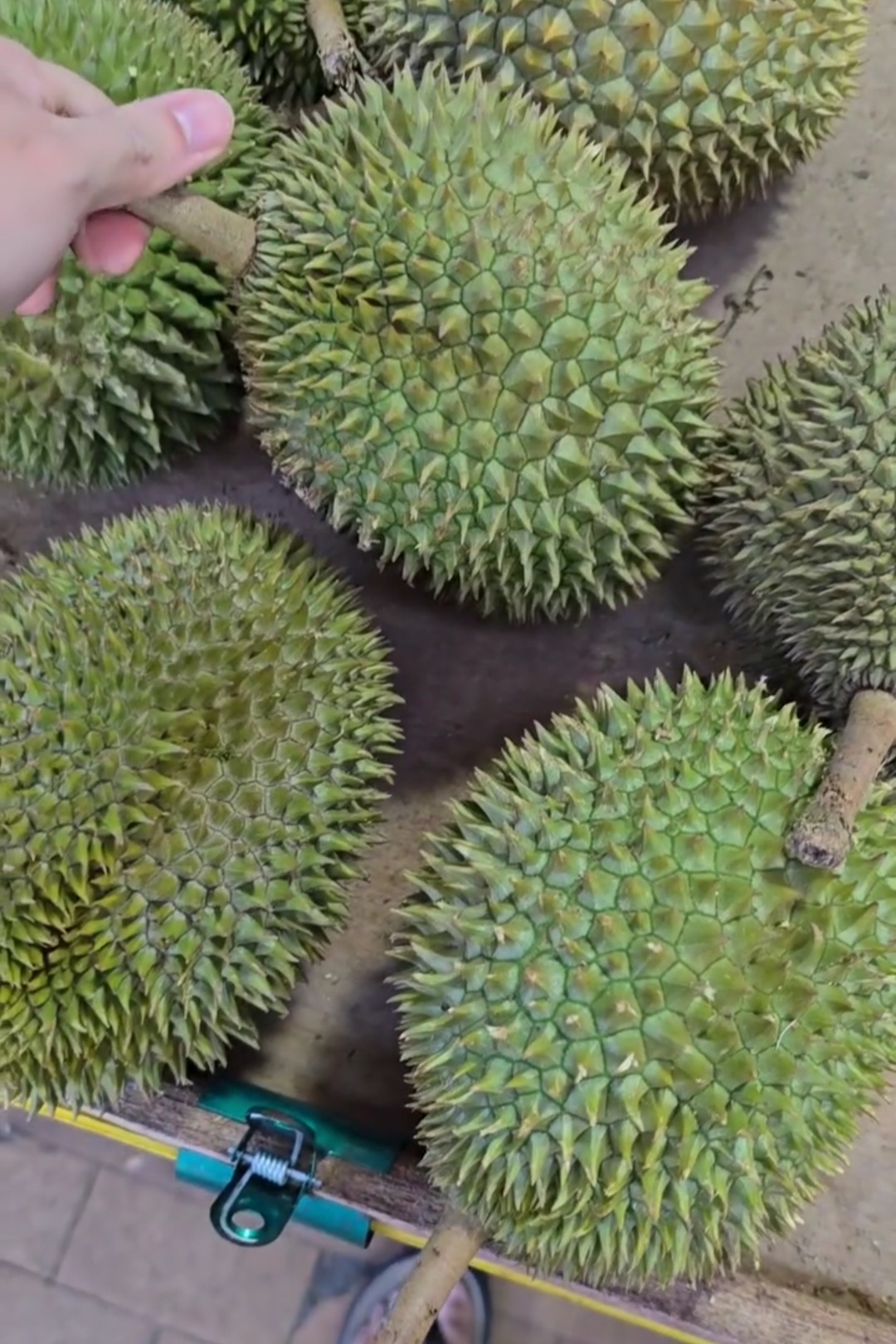
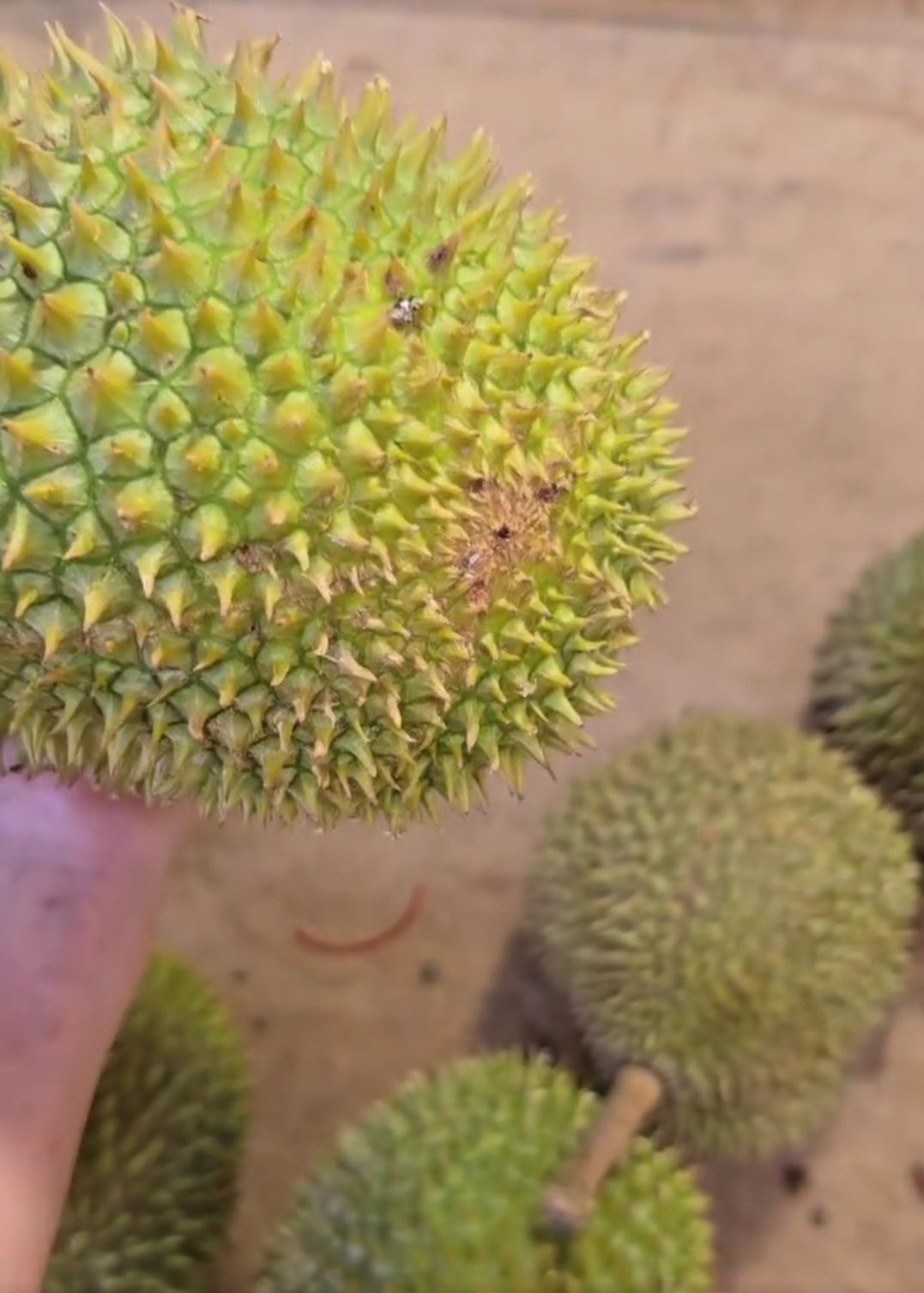
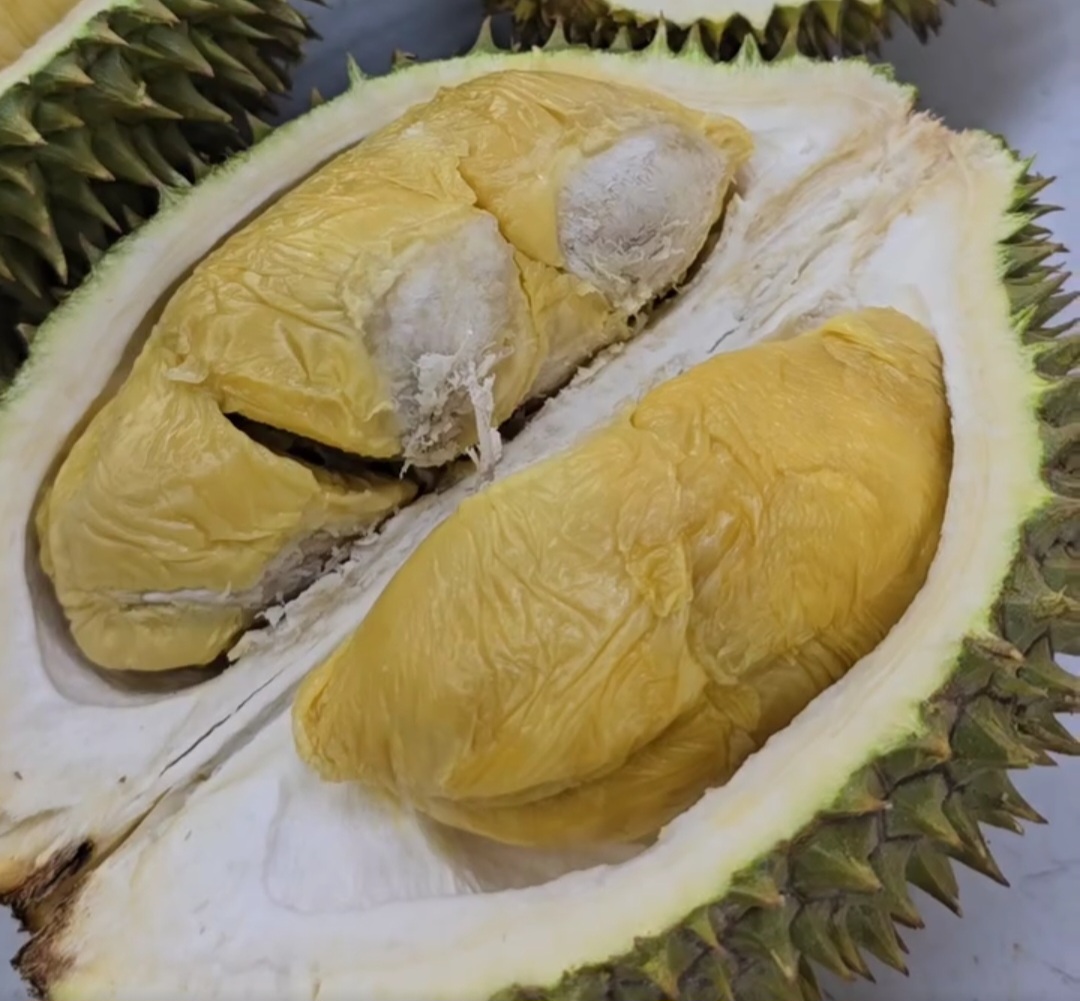
Johor variety that is not common.
- Bittersweet
- Mildly fermented
D197 Musang King
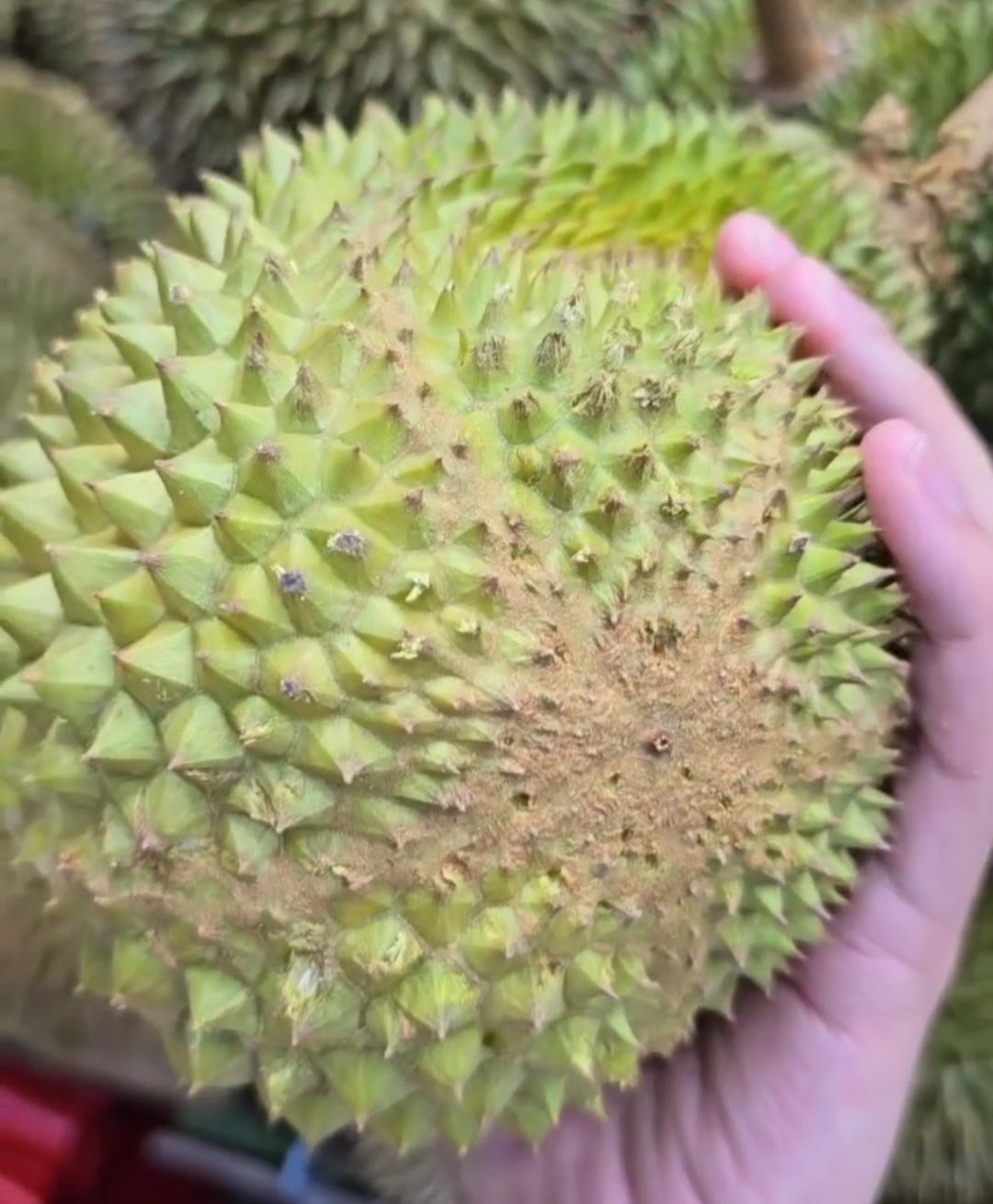
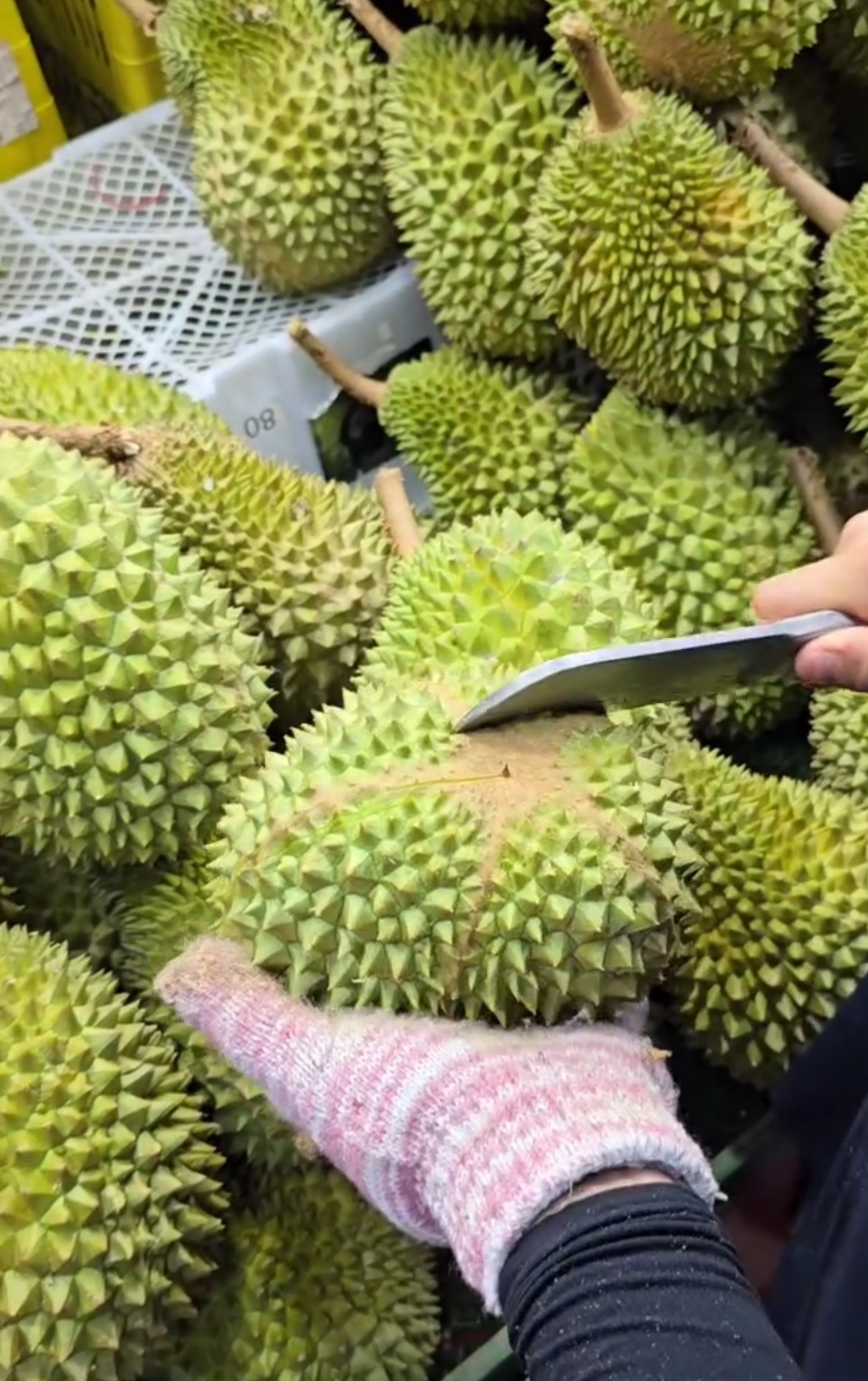
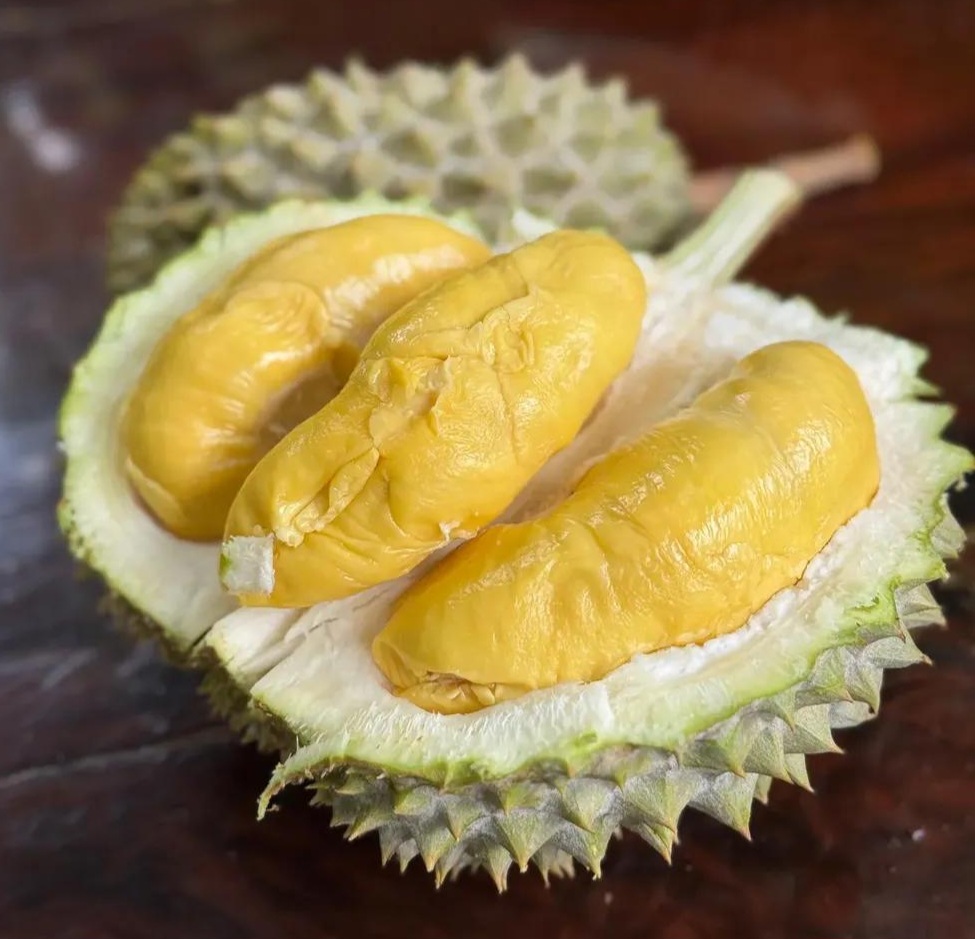
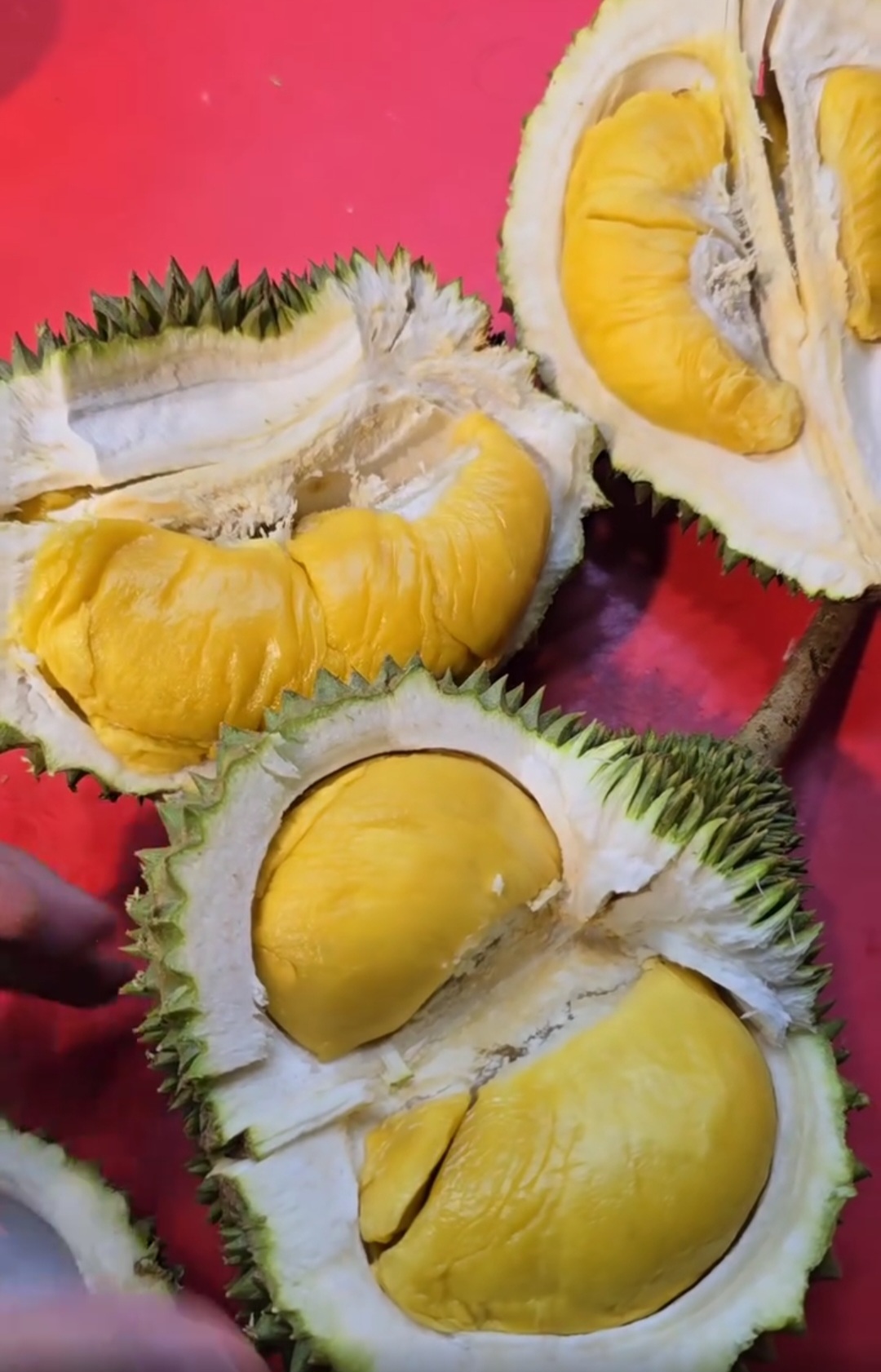
猫山王, 王中王, Blackgold, King of kings, Butter King, Raja Kunyit, Old Tree… Really needs no elaboration. Grown everywhere, but I think most people prefer the Pahang ones. I must say that MSW has a very wide variety of tastes, textures, seeds, and costs, but the one thing that is common is always the star pattern.
- Easy to recognise from the star pattern at base
- Yellow (never white flesh)
- Quite bald in terms of thorns at the crown area
- Ranges from sweet to bitter
- Ranges from small to big seed
- Ranges from fibrous to wet (for blackgold)
D198 Golden Phoenix
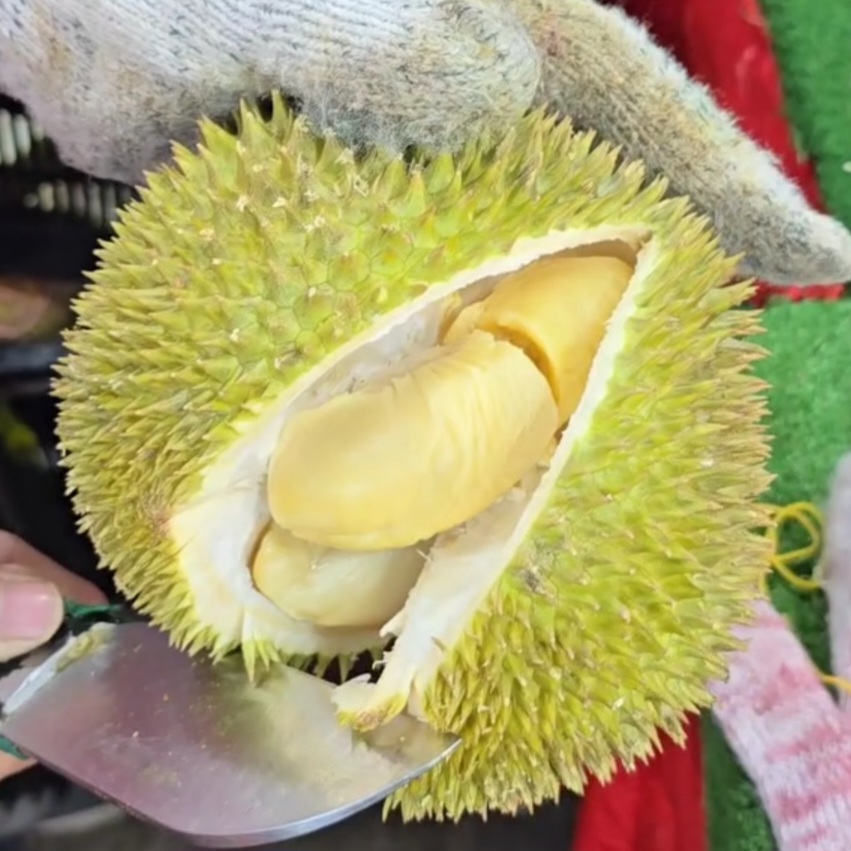
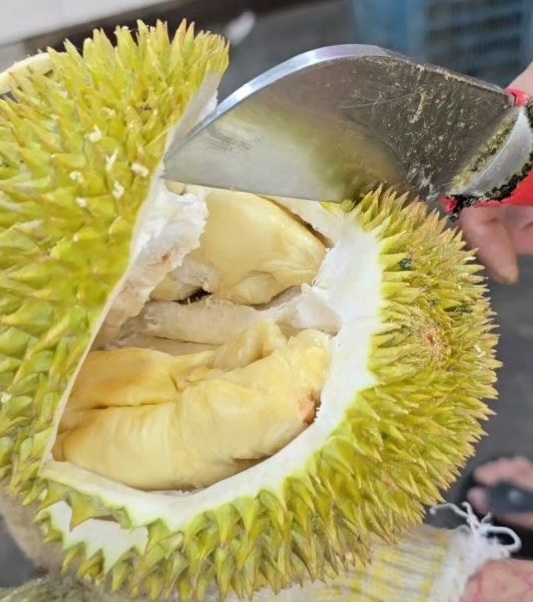
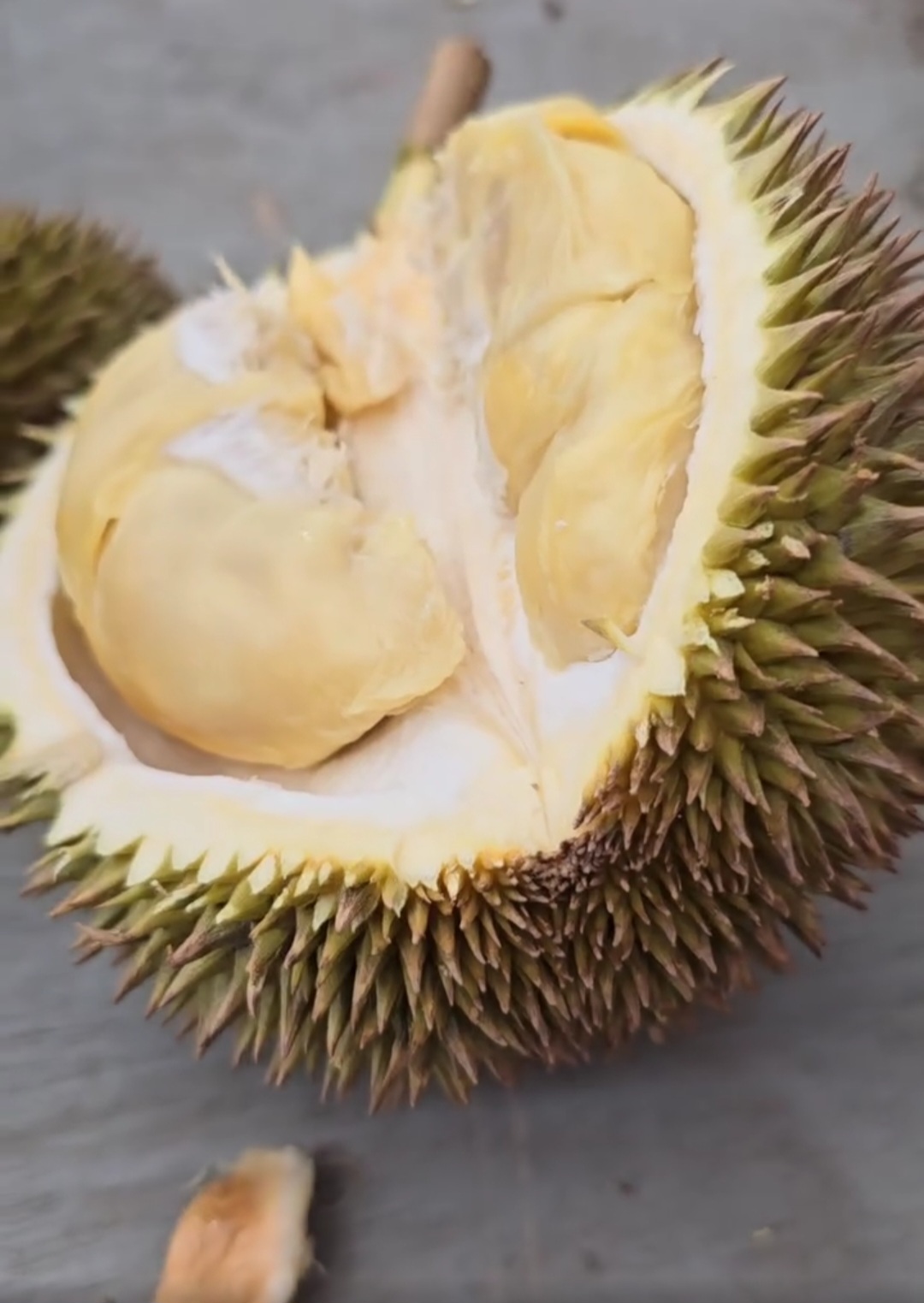
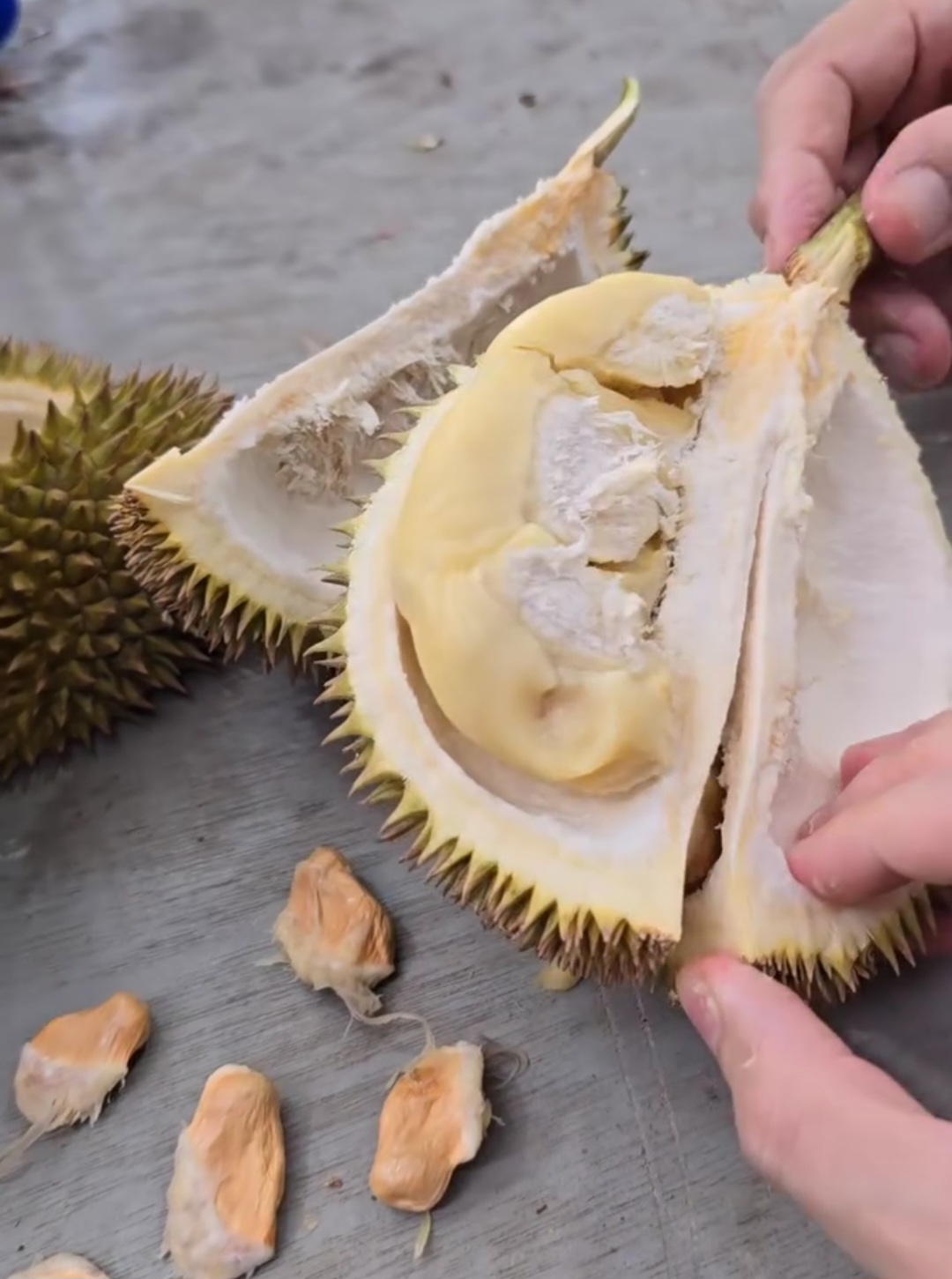
Usually from Johor. An expensive variety, but Golden Phoenix has one of the highest meat yield ratios, due to its very small seed
- Tiny tiny seeds
- Bittersweet to medium complex bitter
- Round shape, usually small in size (<2kg)
- White flesh
- Thorns converge into a rose at the base
D199 Bola
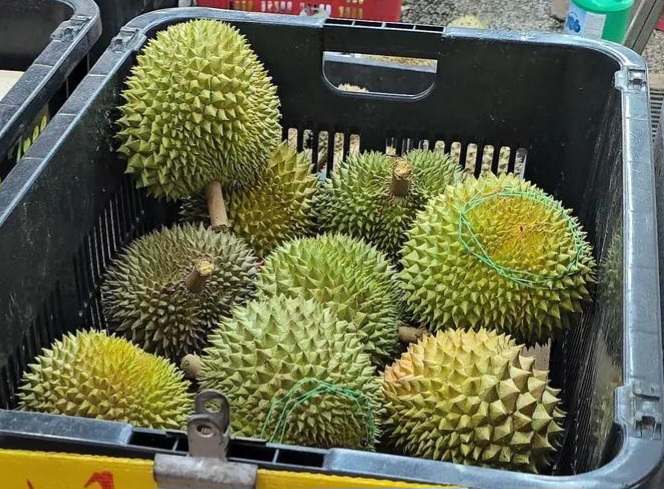
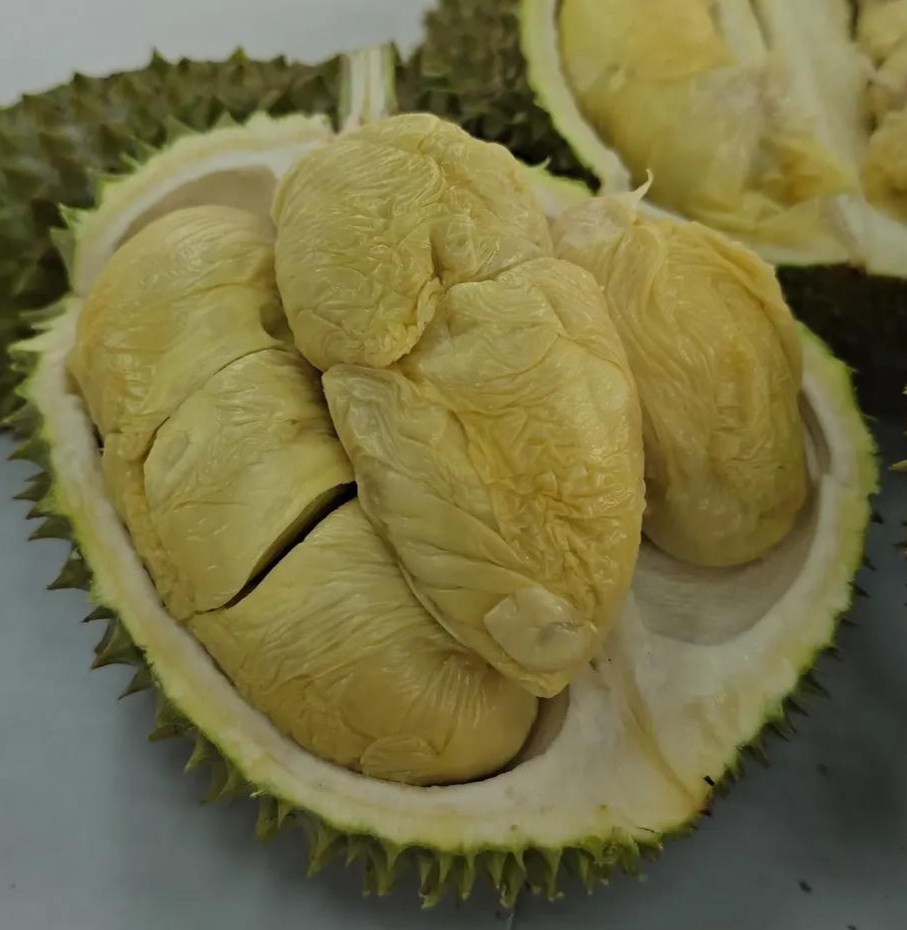
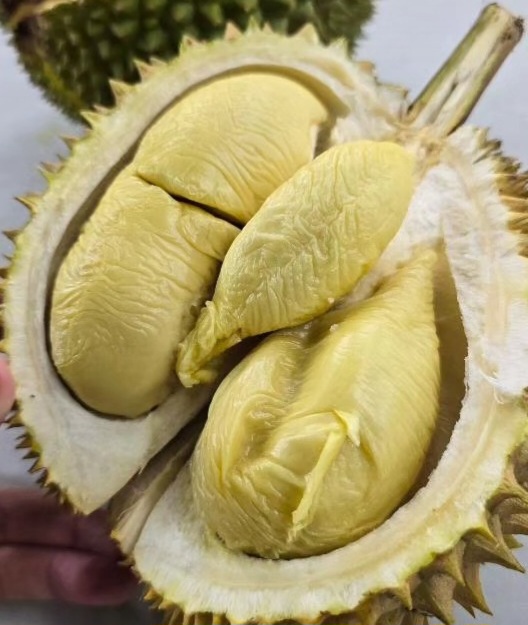
From Johor. Also known as Football or 美球 (Beautiful Ball).
- Ball shape as per the name
- Bittersweet to mild bitter
- Fleshy pasty texture
D200 Black Thorn
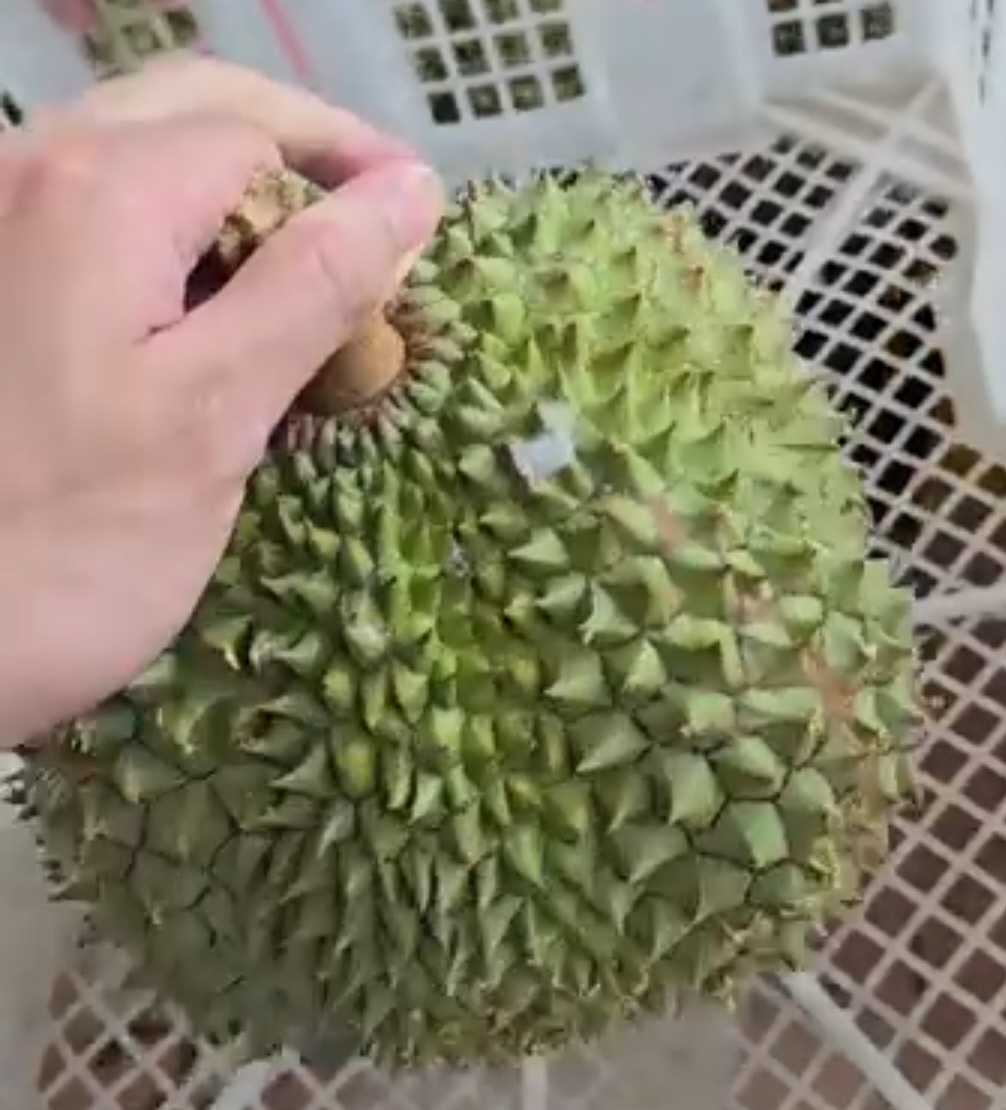
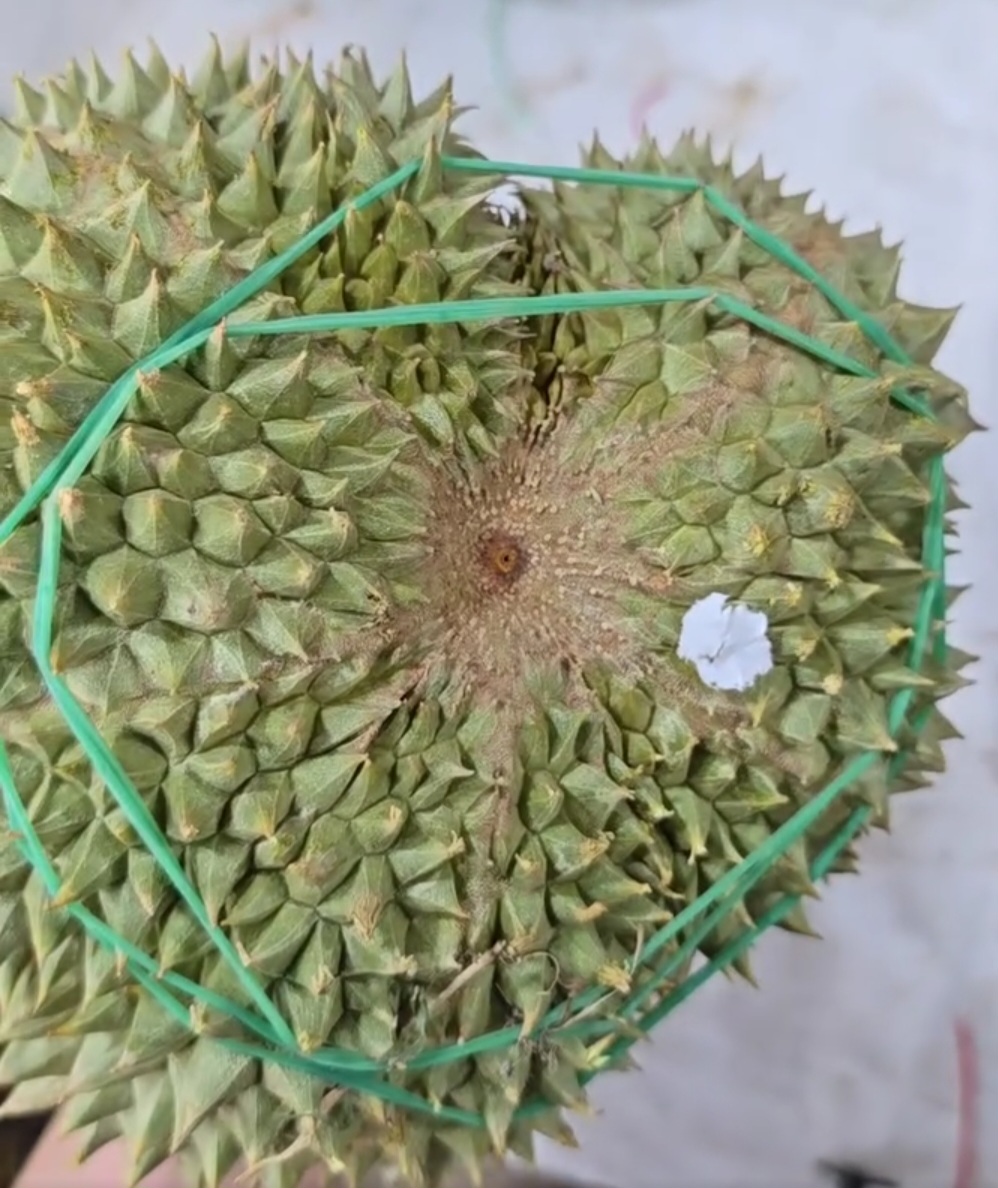
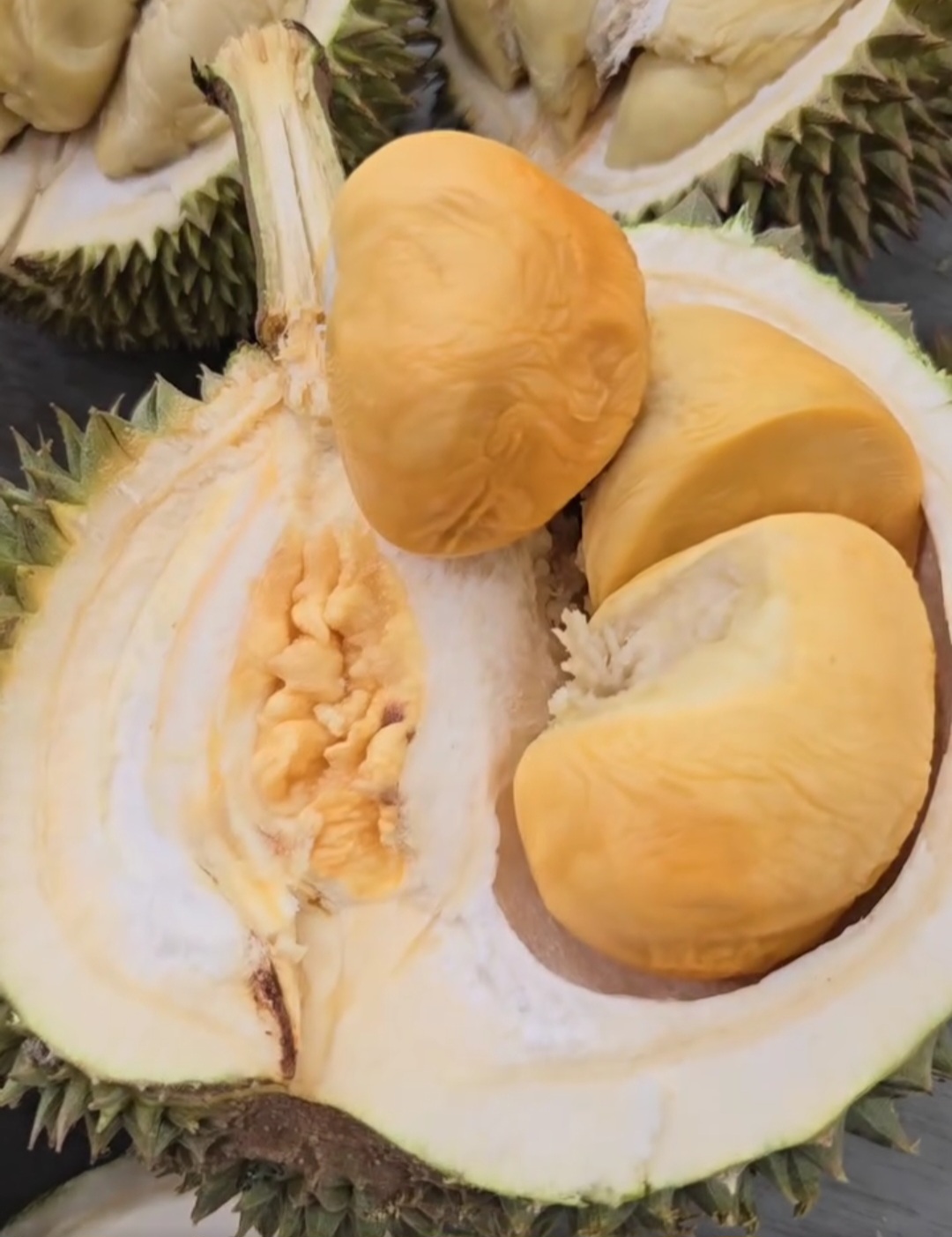
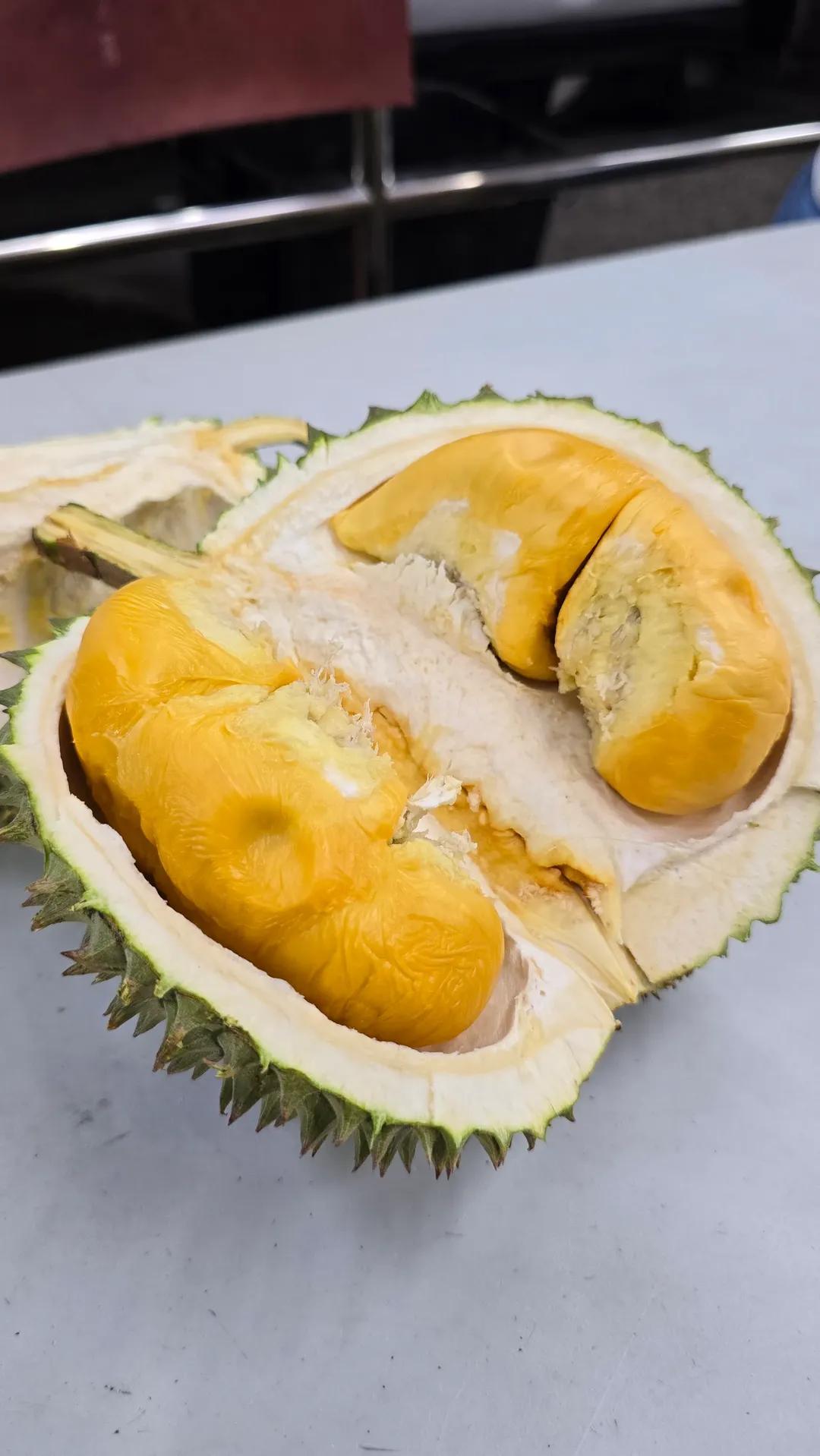
From Penang. The most expensive accessible cultivar now (other than Tupai King but it isn’t easily accessible).
- Obvious pumpkin shape; big and heavy usually
- Star pattern below with occasional visible remains of the black stigma (the ‘black thorn’)
- Bumpy orange inner stem fibre just like D160 Tekka (but unlike Tekka, easy to open)
- Complex bittersweet
- Usually very creamy and thick flesh (very filling)
- Good ones have bruising with fermentation
D208 Gang Hai 'D1'
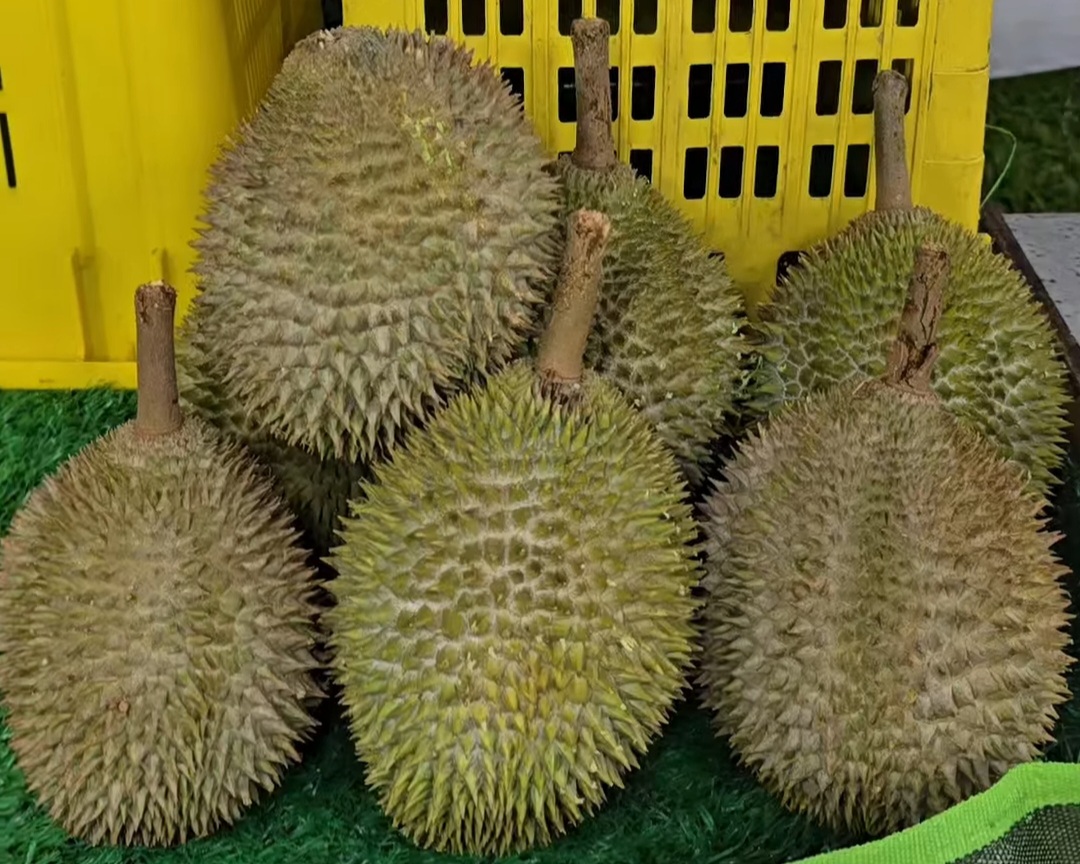
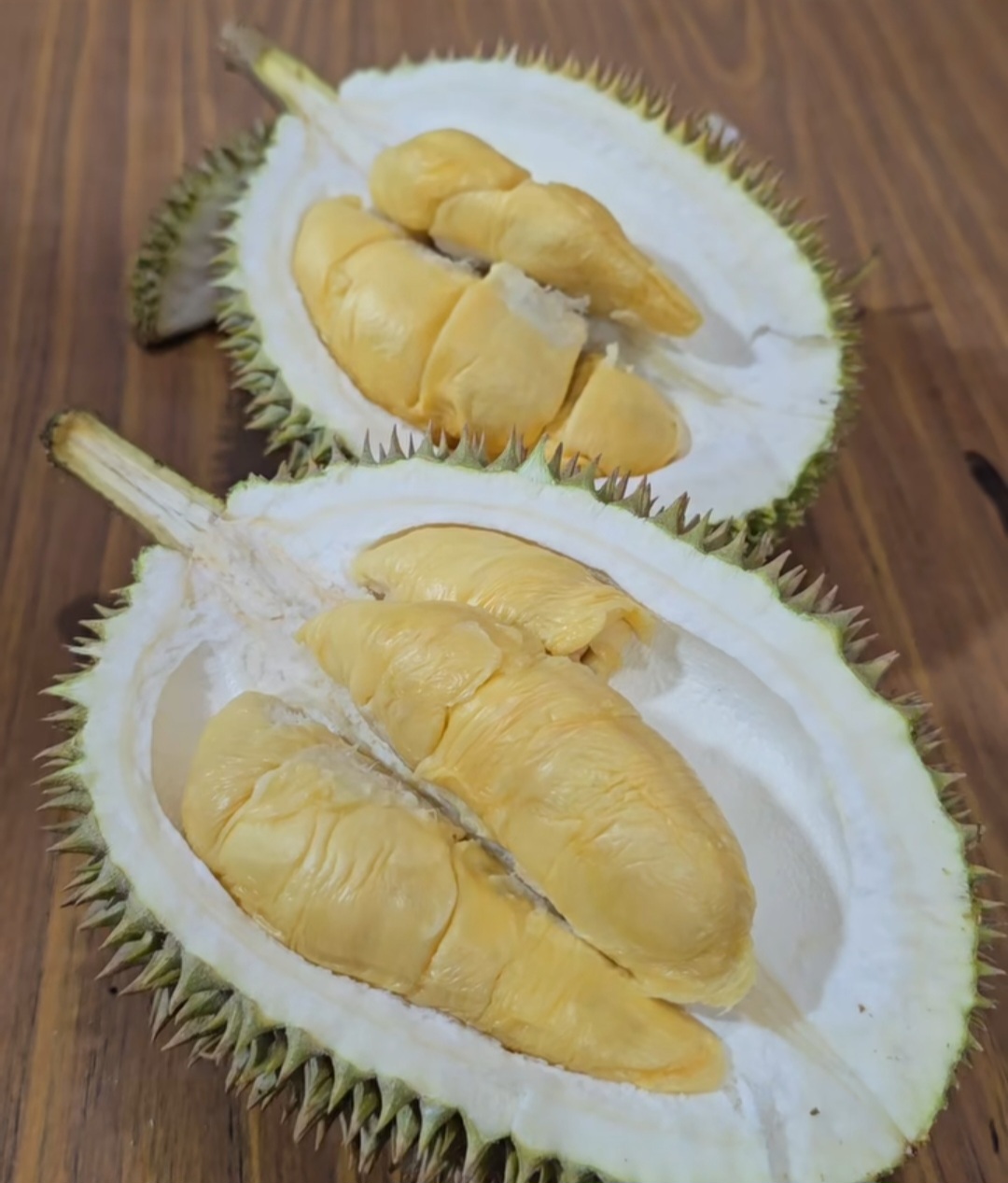
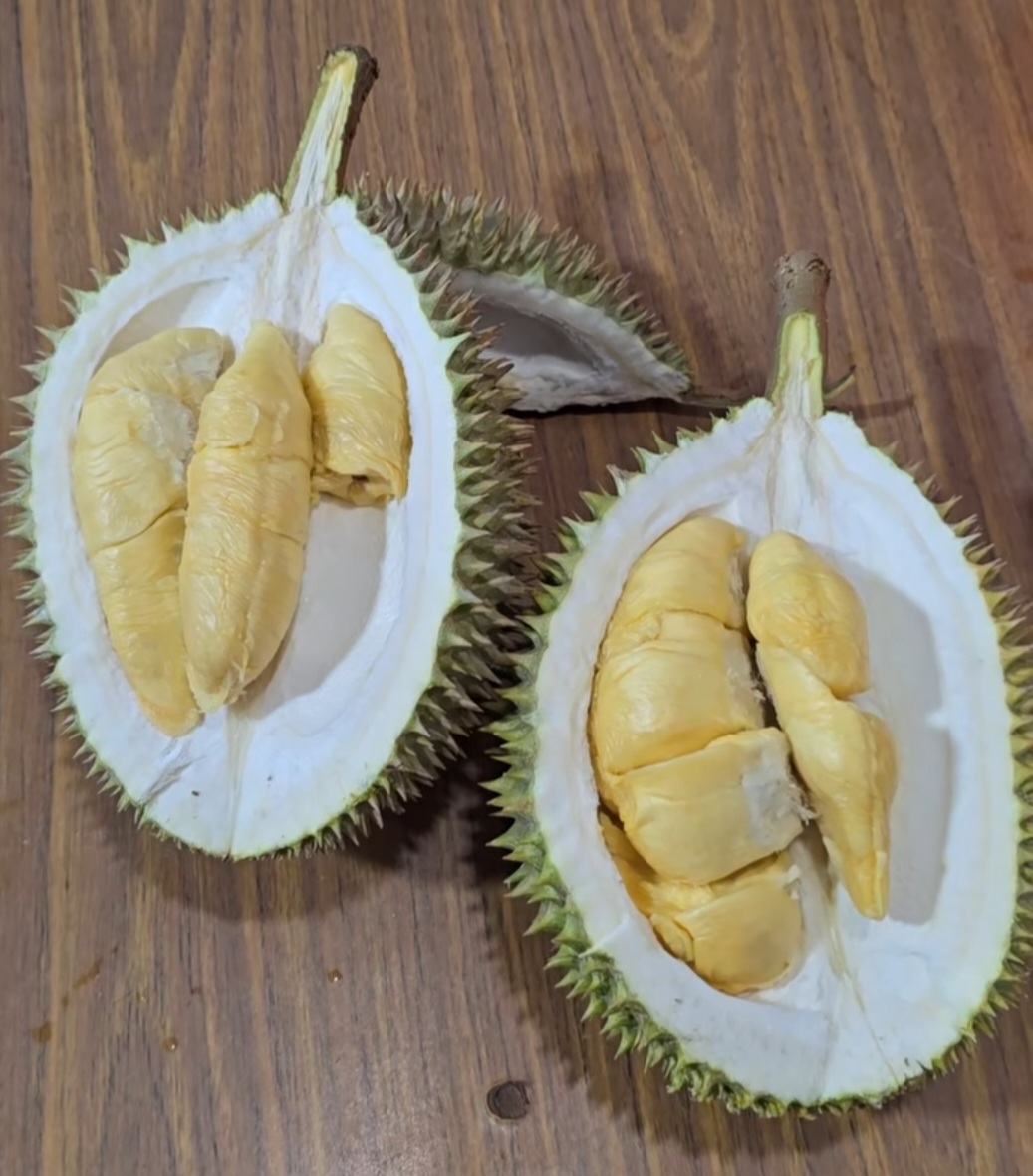
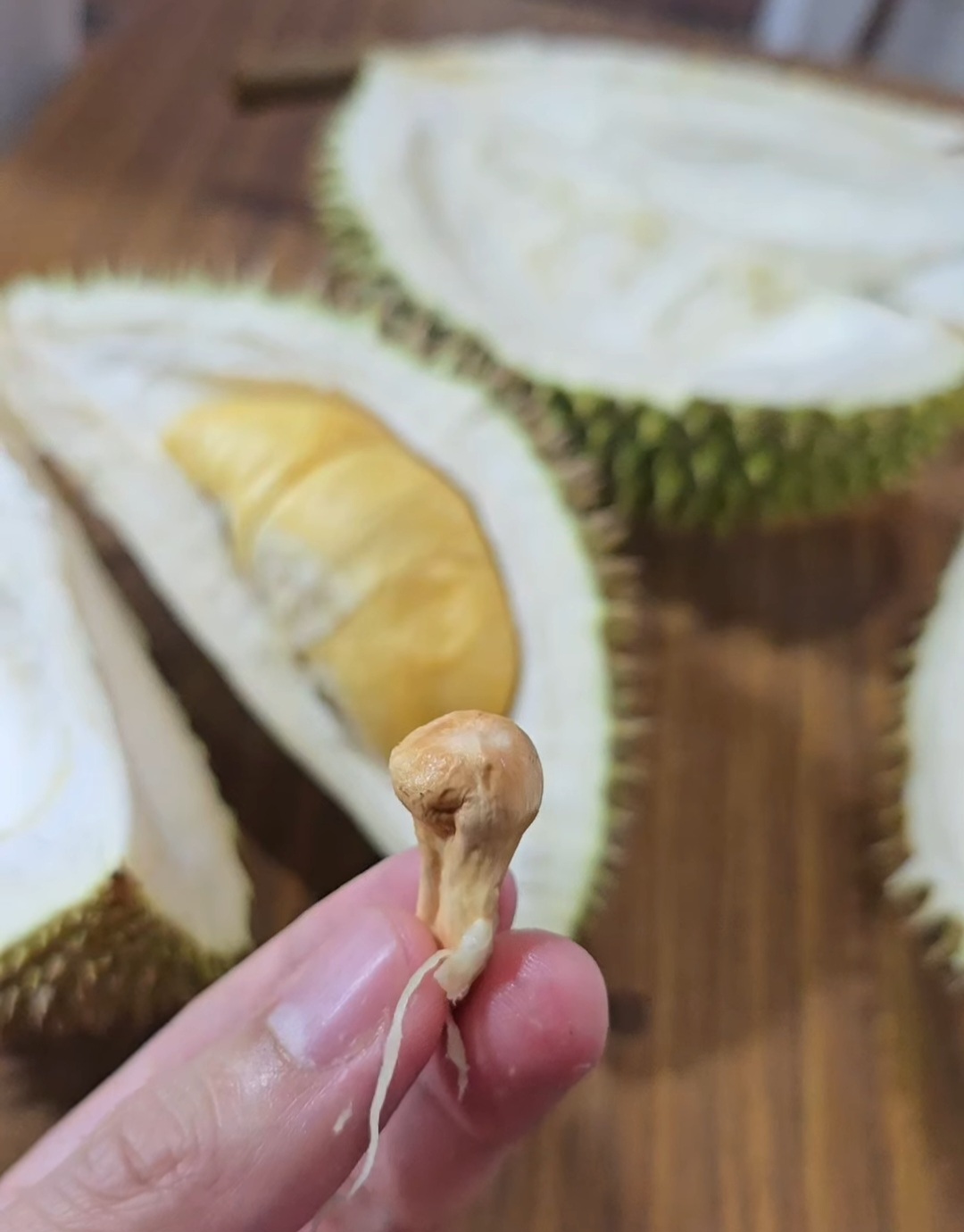
Officially MARDI registered as D208 in 2019, but everyone knows it as D1, or Gang Hai / Jiang Hai (江海 means river sea). It generally heralds the start of the Johor season, as its fruits fall first.
- Seeds small tadpole shaped, just like Black Pearl
- Tastes mild bittersweet; I consider it a very light flavour, like D163 Hor Lor
D211 Kasap Merah
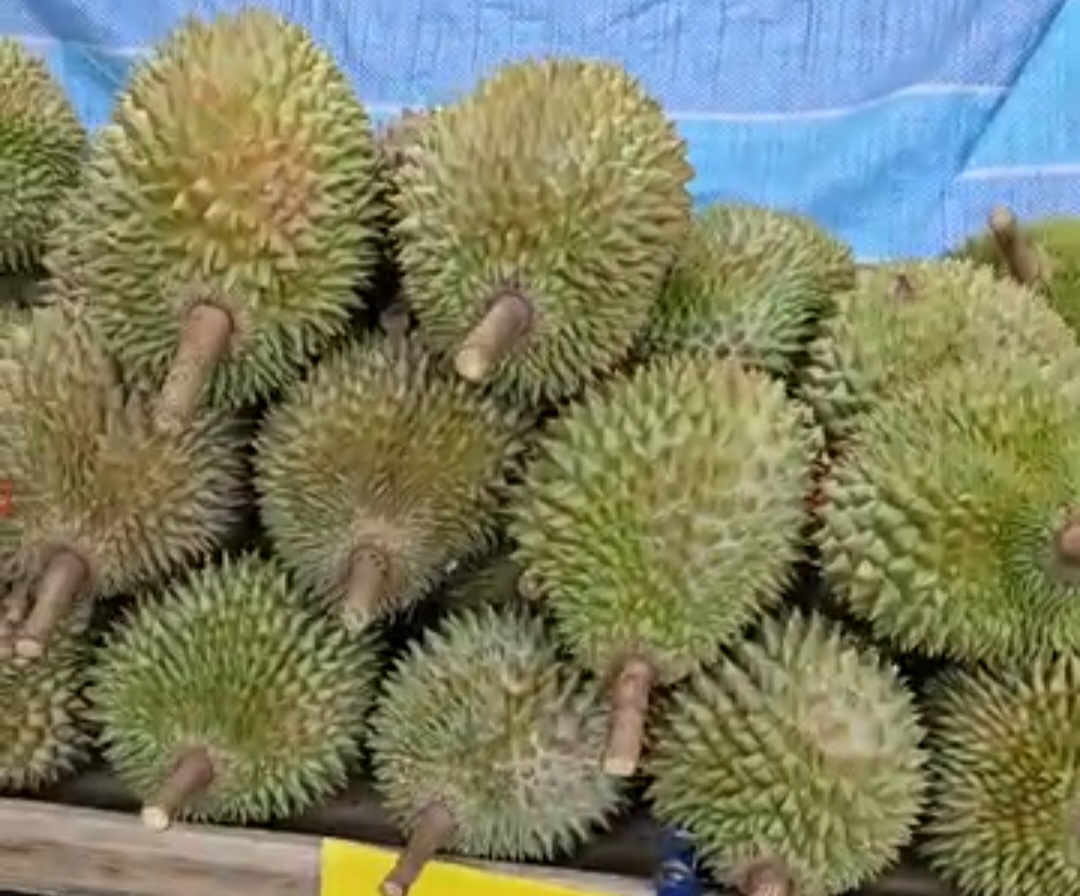
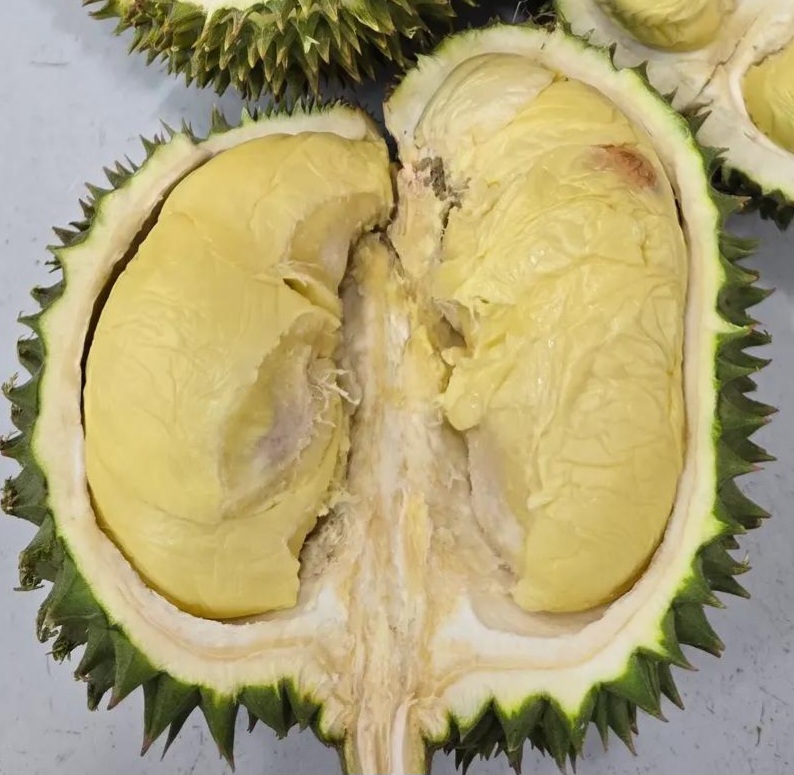
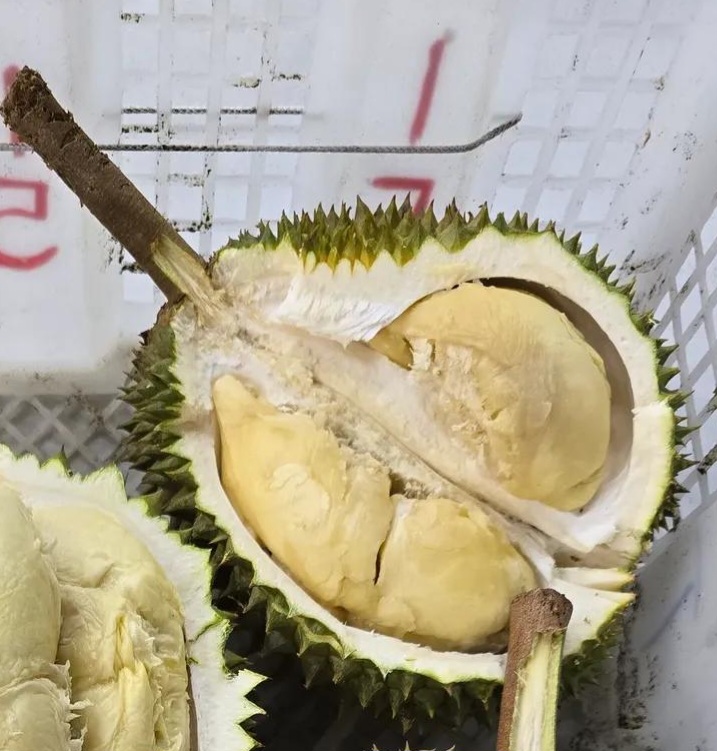
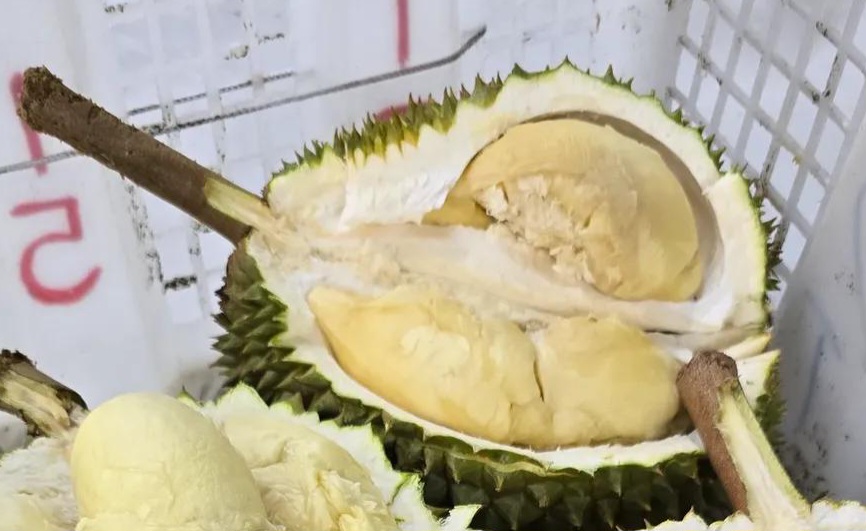
From Johor. Also known as Ice Cream Durian
- White flesh
- Wet-ish texture
- I think flavour profile varies; the one I had was quite bitter and had garlic aftertaste like Capri
D212 'S17'
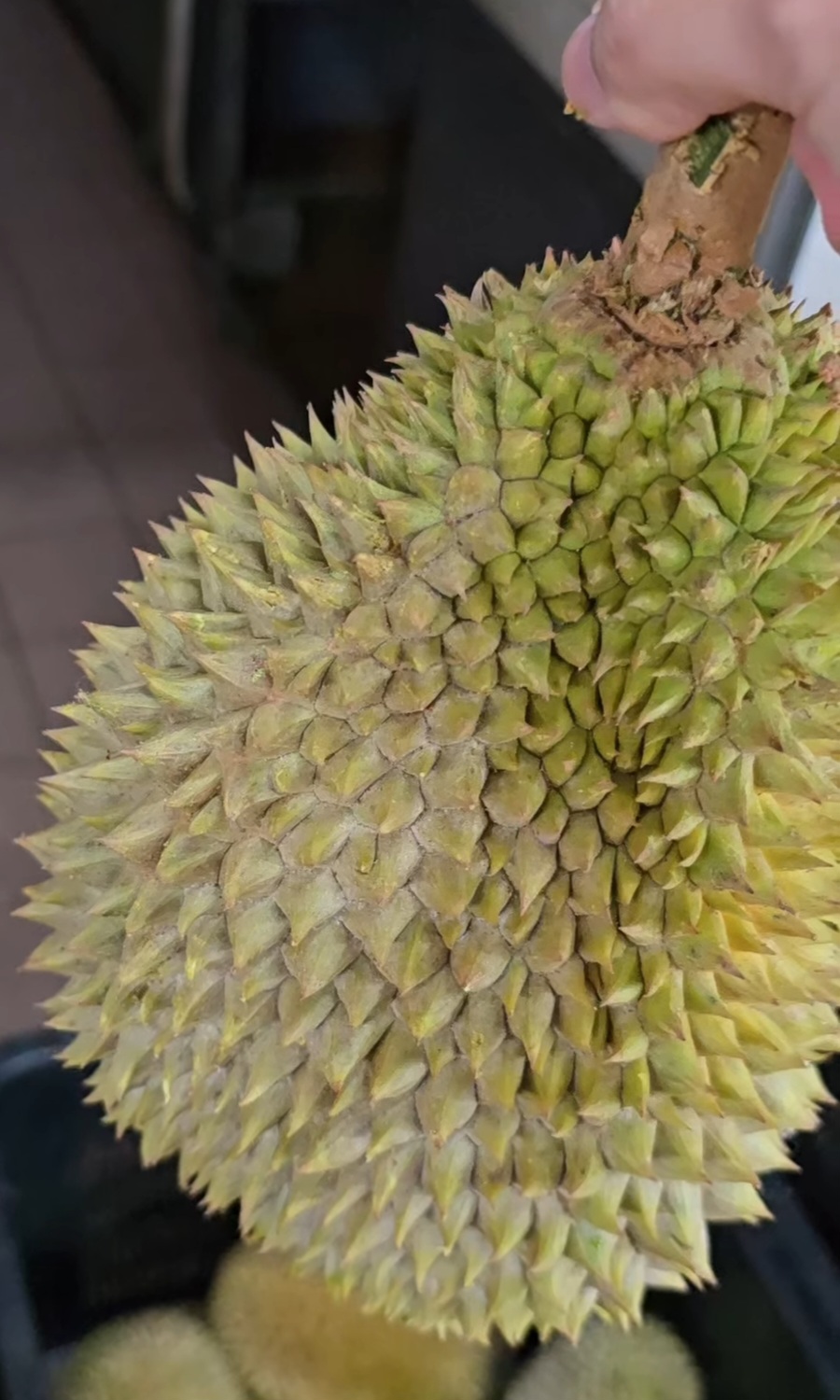
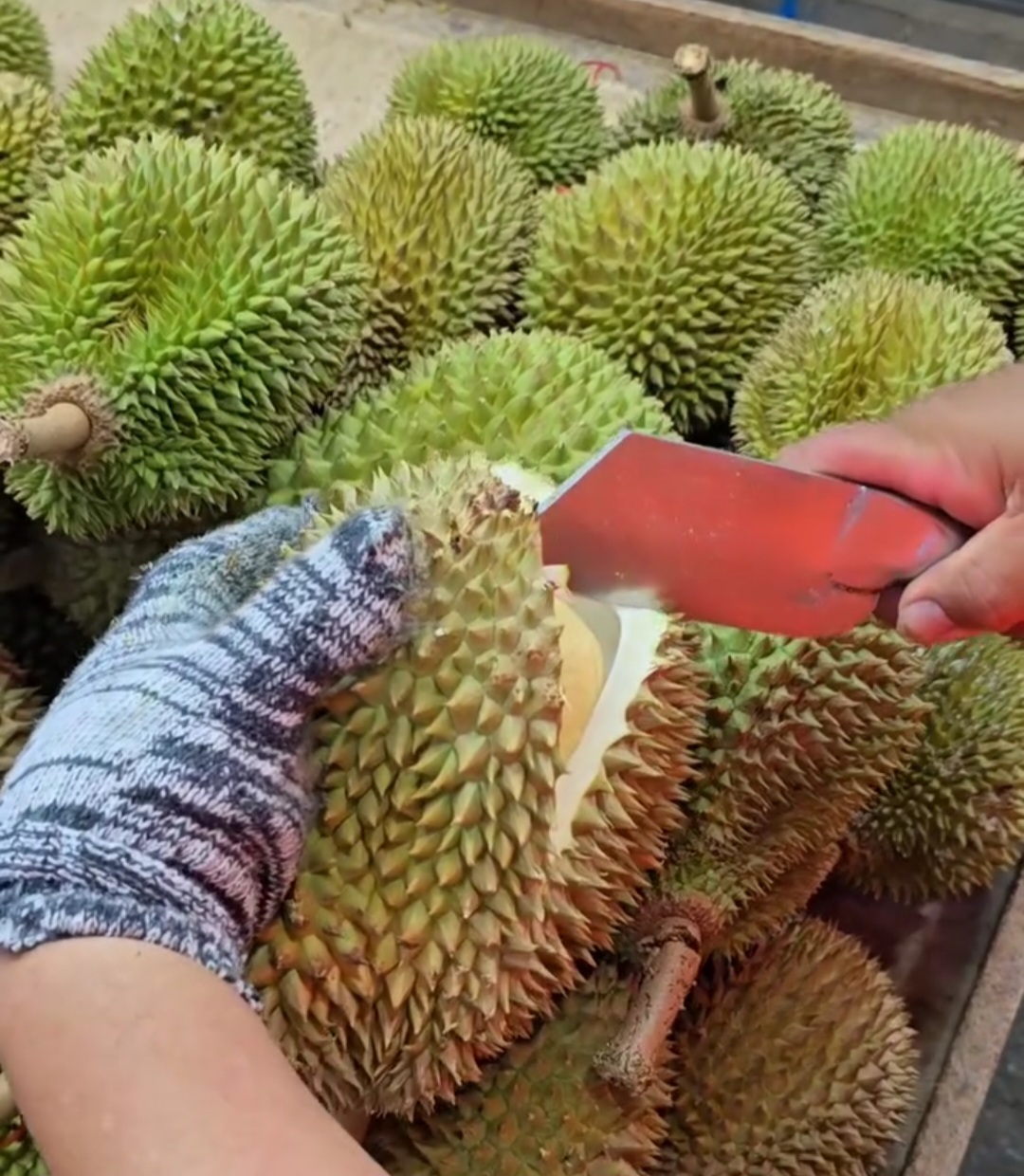
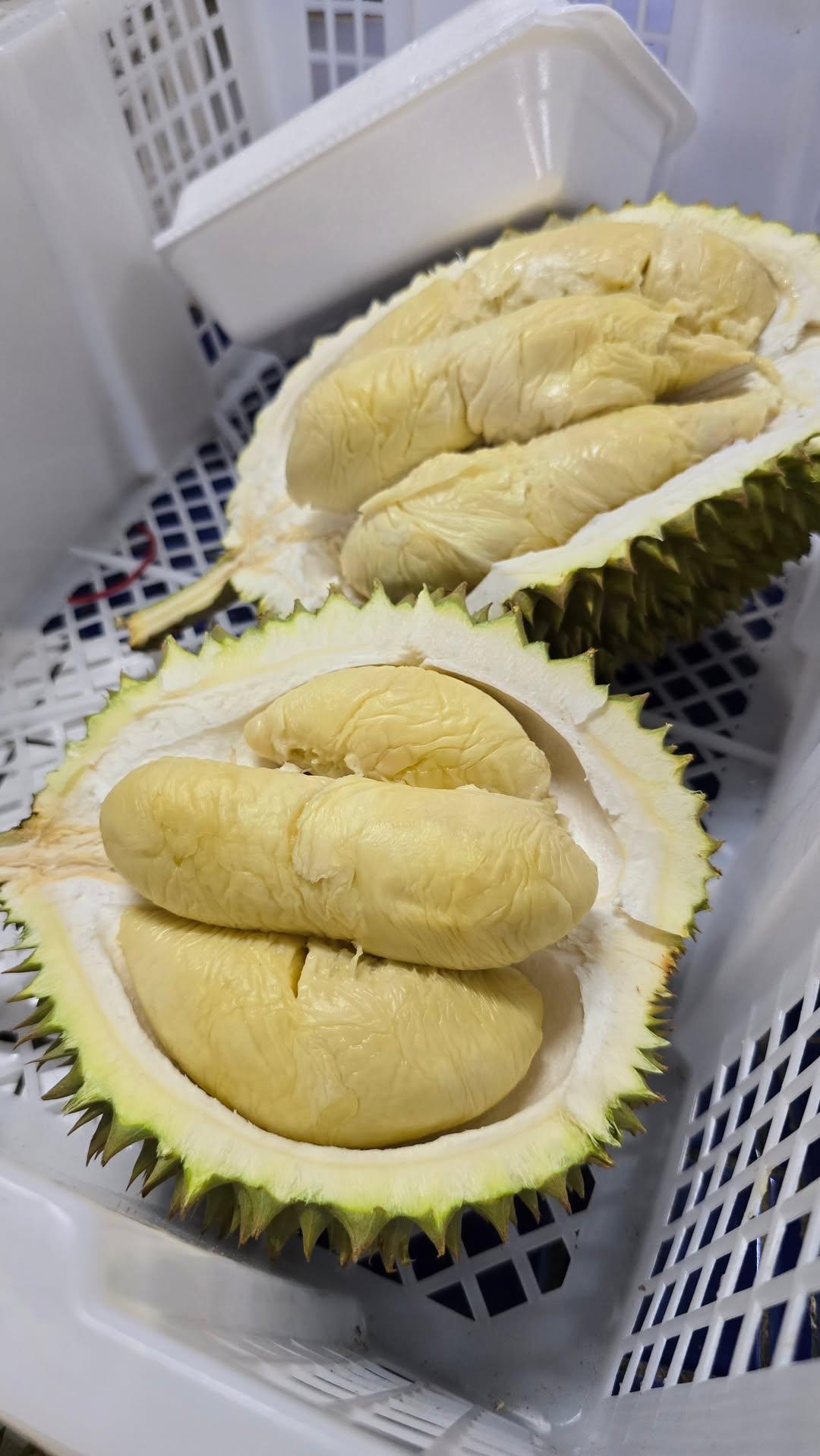
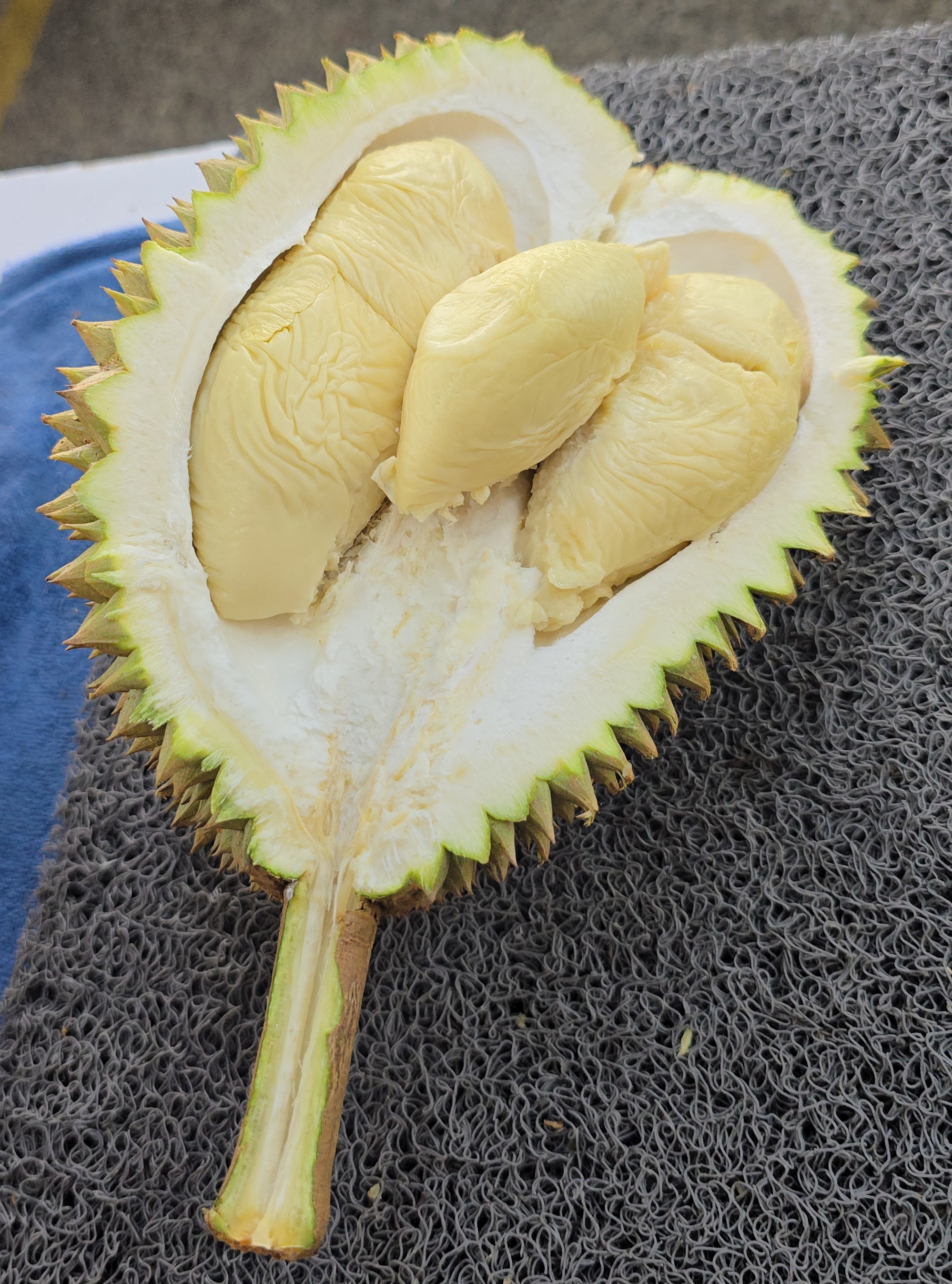
From Johor. S17 is really what it is most commonly known by. Also known as ‘D17’ (but it’s not the actual official D17 registered in Mardi), or Coffee Durian due to its taste profile.
- Rugged husk look (rugged like Capri and Tawa)
- Tastes like soy bean to me (I have never tasted the ‘coffee’)
- Generally big seeds
D214 Tupai King
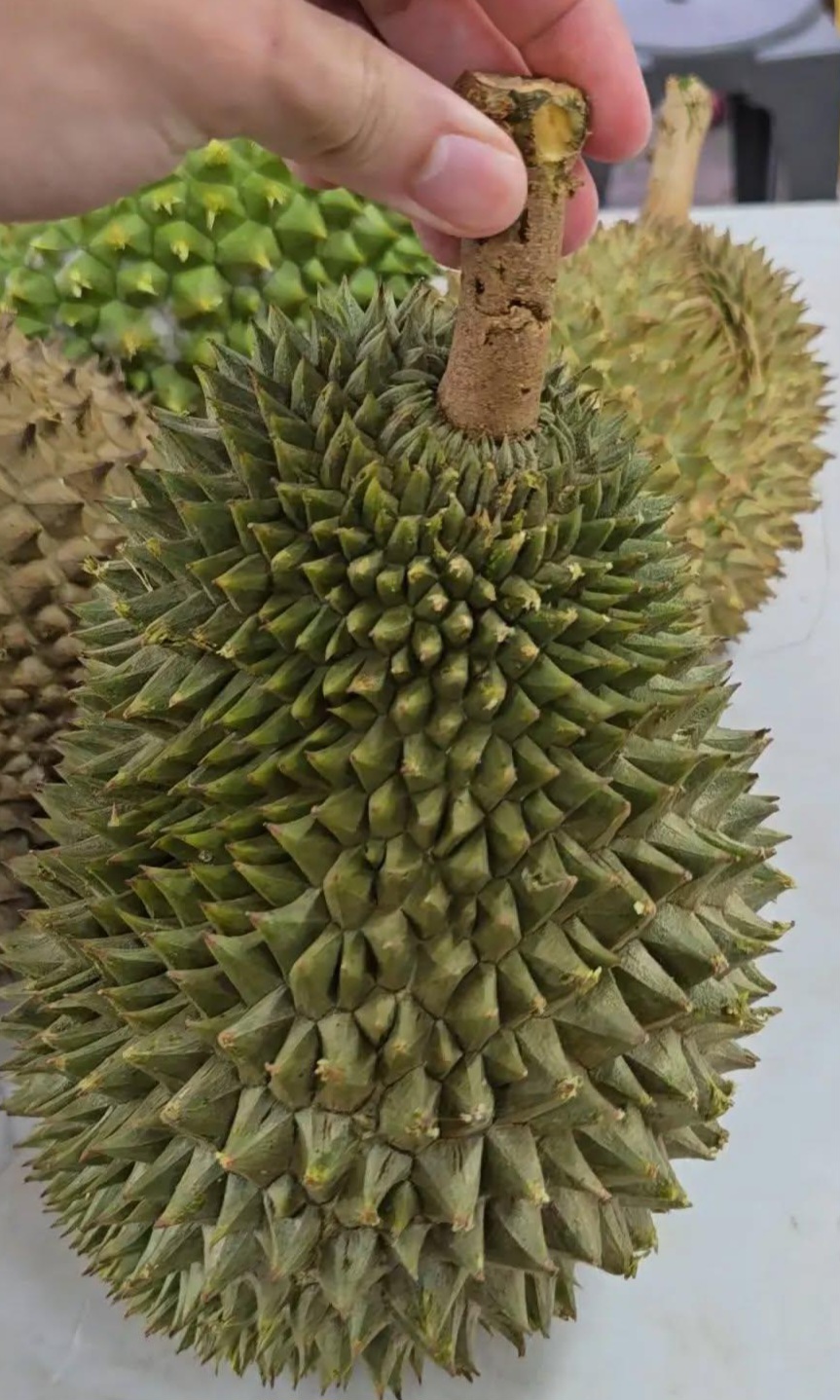
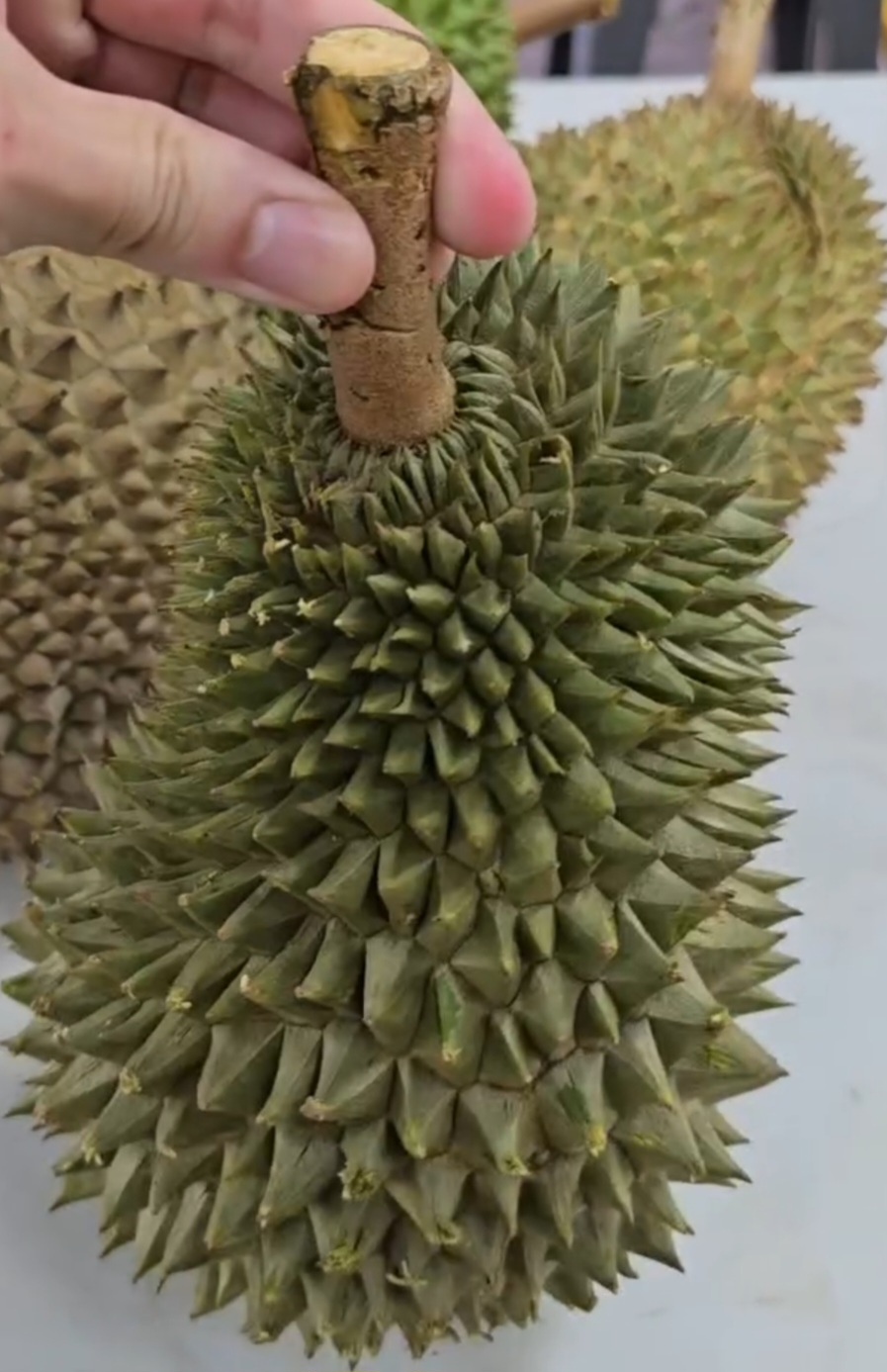
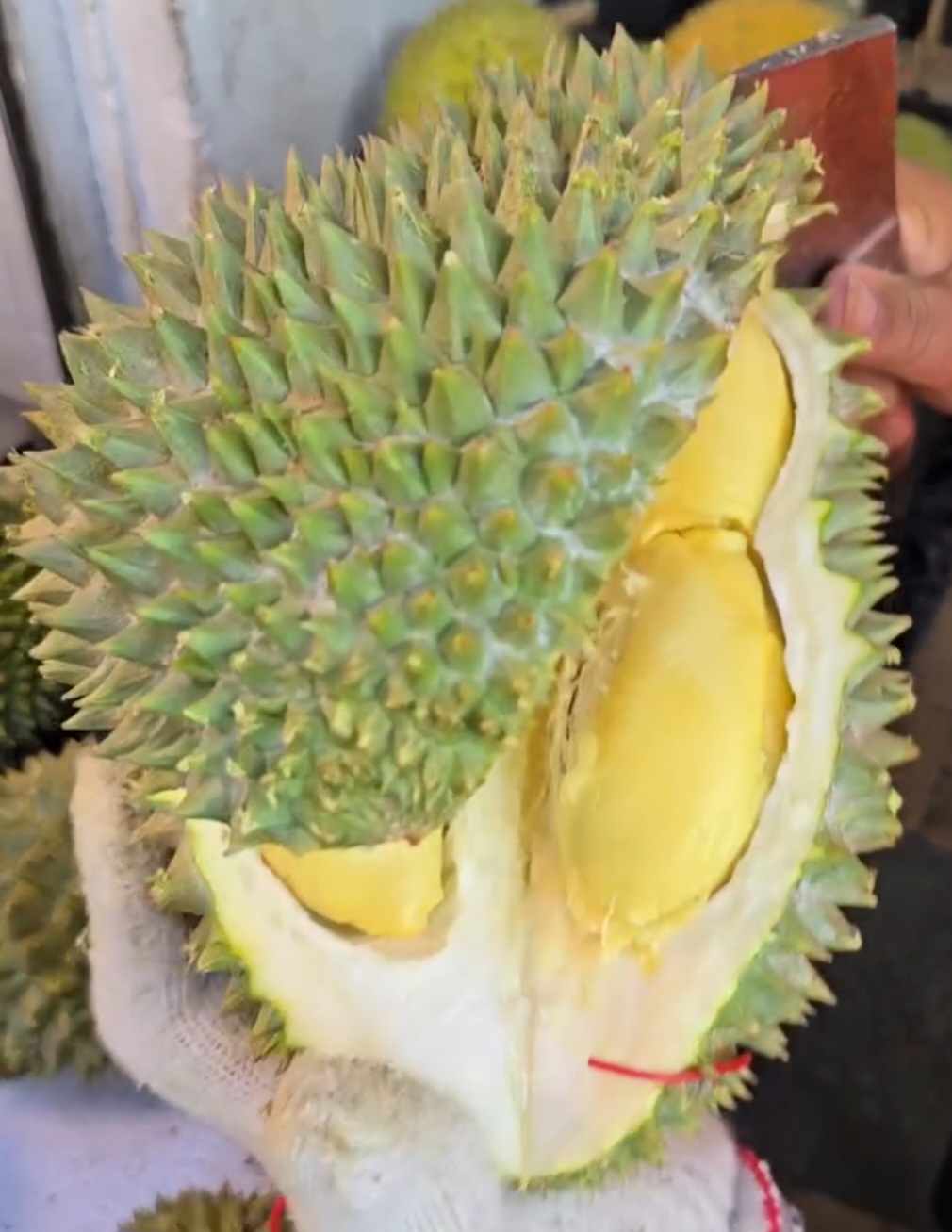
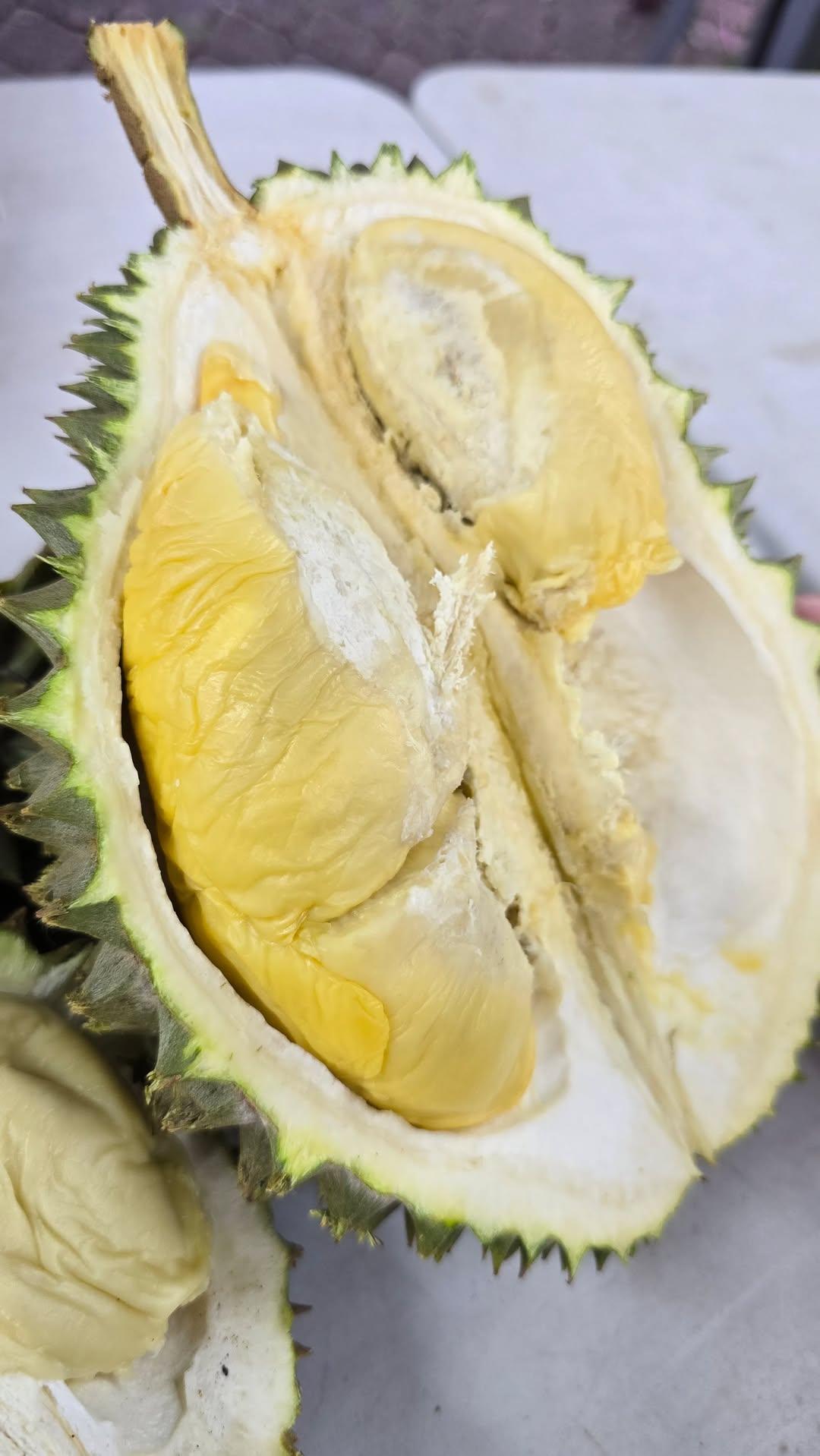
From Penang. Okay, actually, I may not have managed to try the real Tupai King. Apparently according to the stallholder, this Tupai King is supposedly a young graft in Johor, hence the different outer visuals; but they also doubt its authenticity. Oh well. However, the taste does kind of fit the profile that others describe Tupai King to be like. Naturally, I want to be able to try the obviously-authentic fruit in Penang when I have the time.
- Brown muddy star pattern at base
- Generally more blue-black bruising on flesh due to faster fermentation
- Leaves long lasting sharp bitterness inside mouth
- Above medium level bitterness
- Very floral at the same time
D226 D13
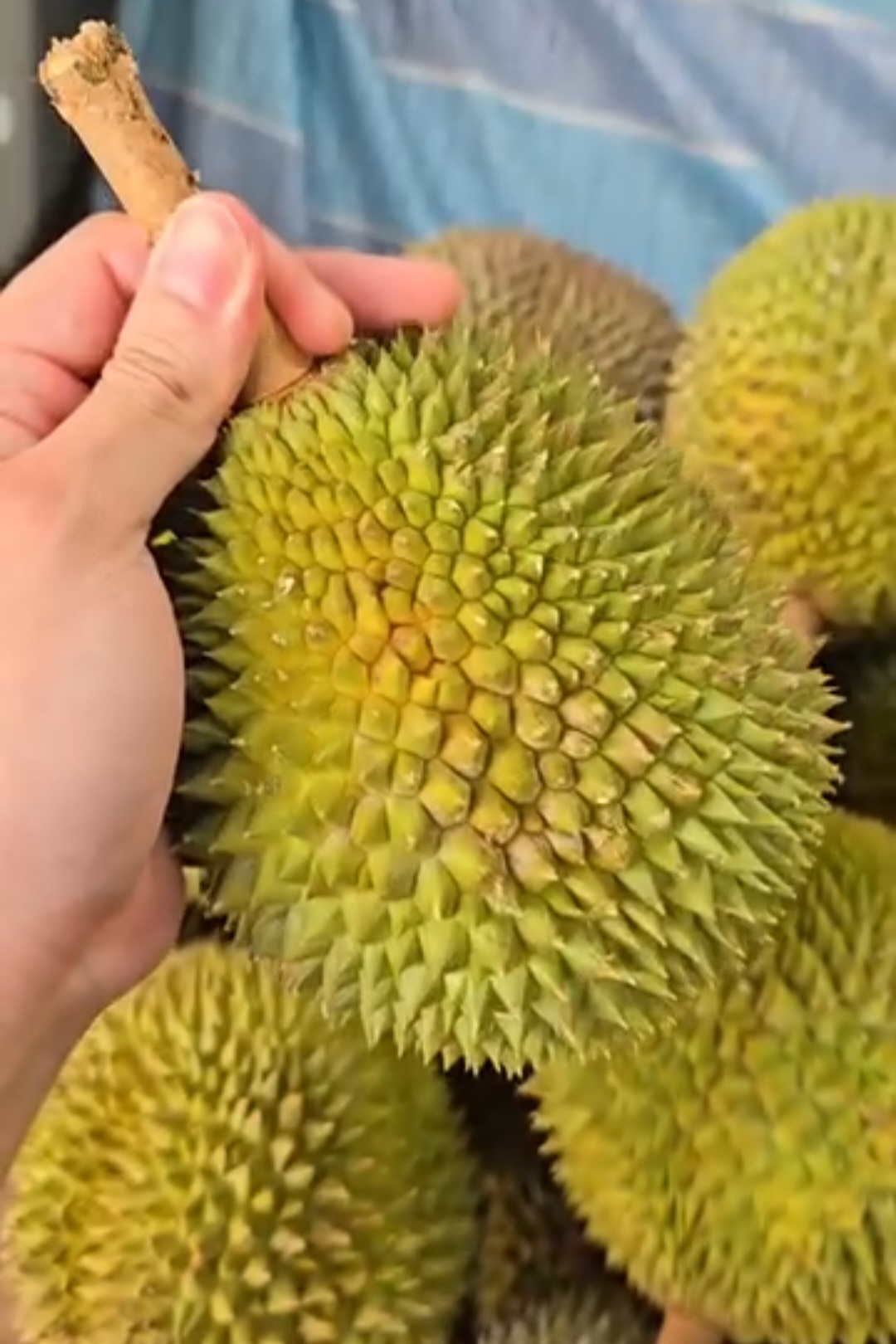
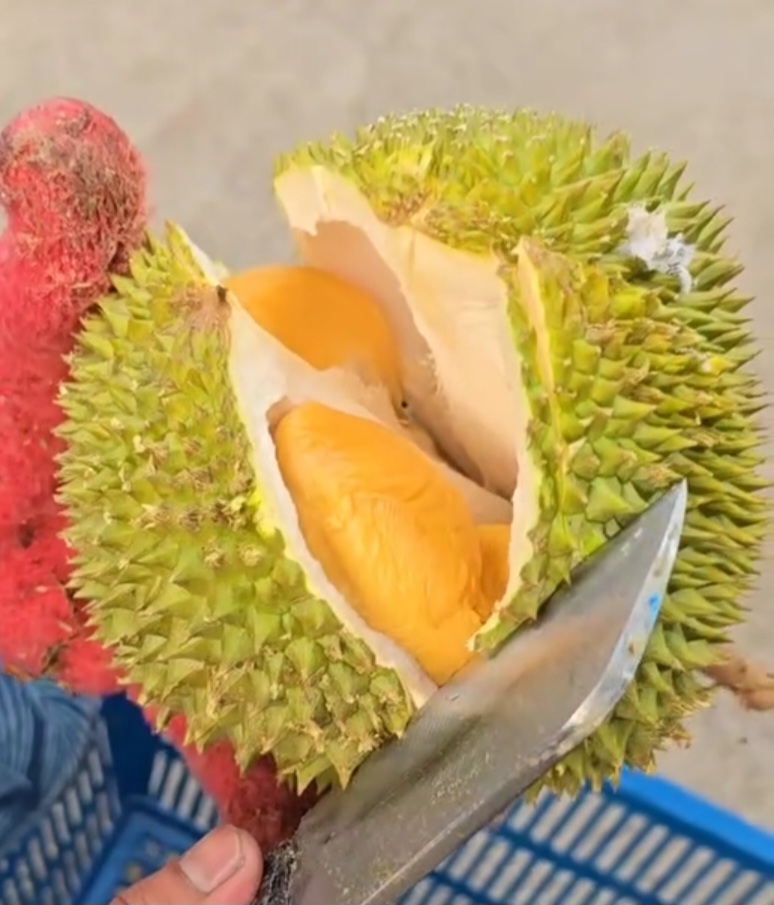
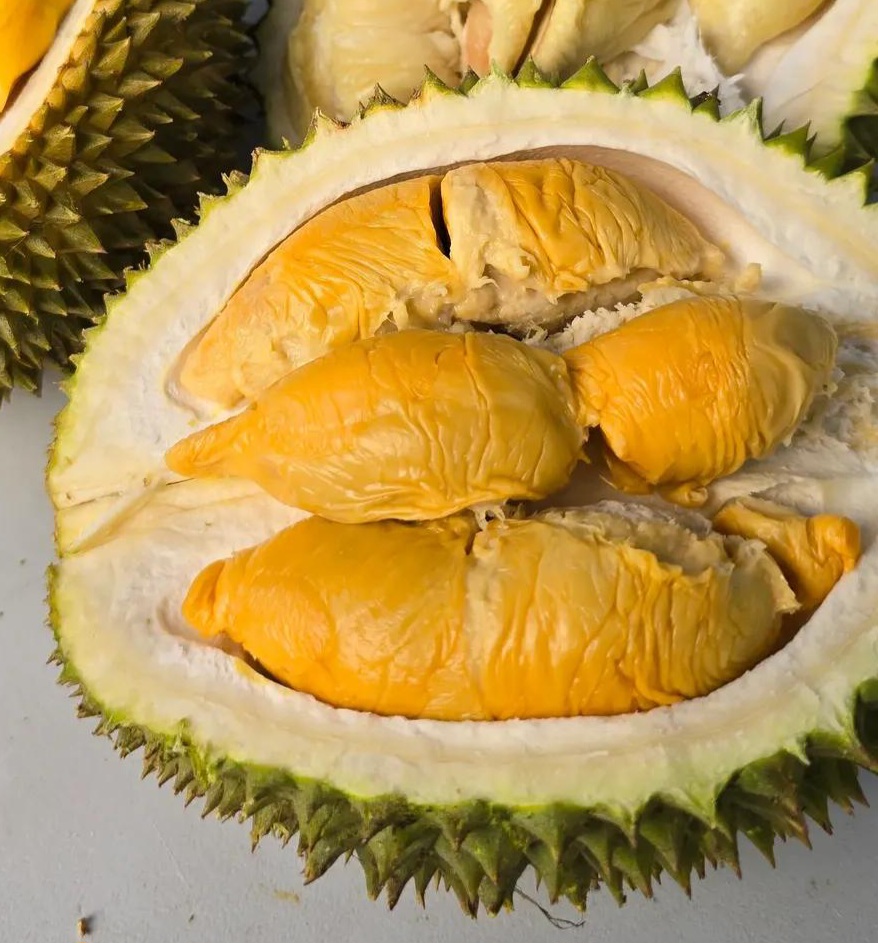
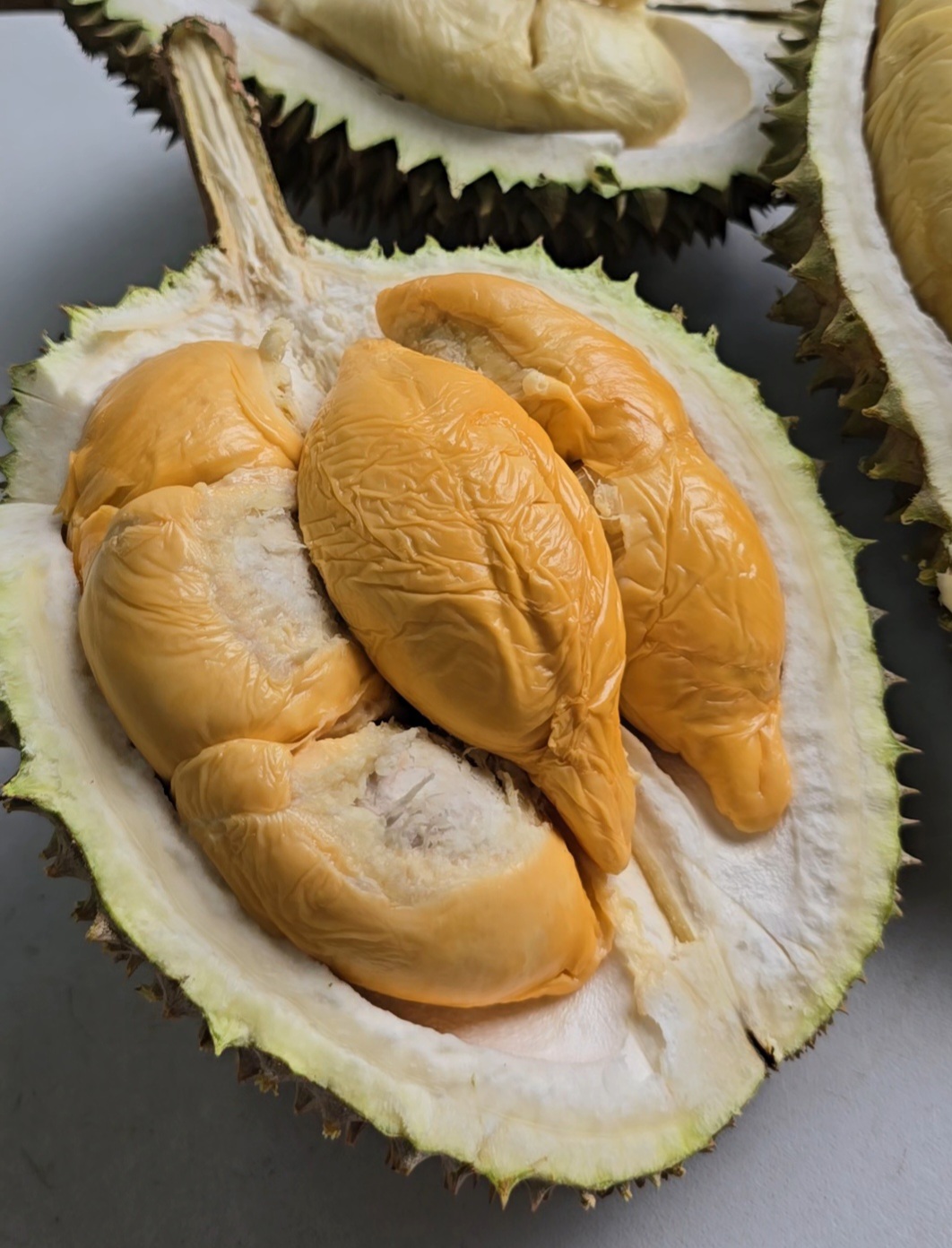
One of those confusing situations where supposedly for historical reasons got very well-known as D13, but was never MARDI registered until later, as D226 in 2022. Also known as ‘Johor Red Prawn’, or Hock (Beng) 13.
- Generally sweet to bittersweet
- Generally big seeds
D232 Tang Lai
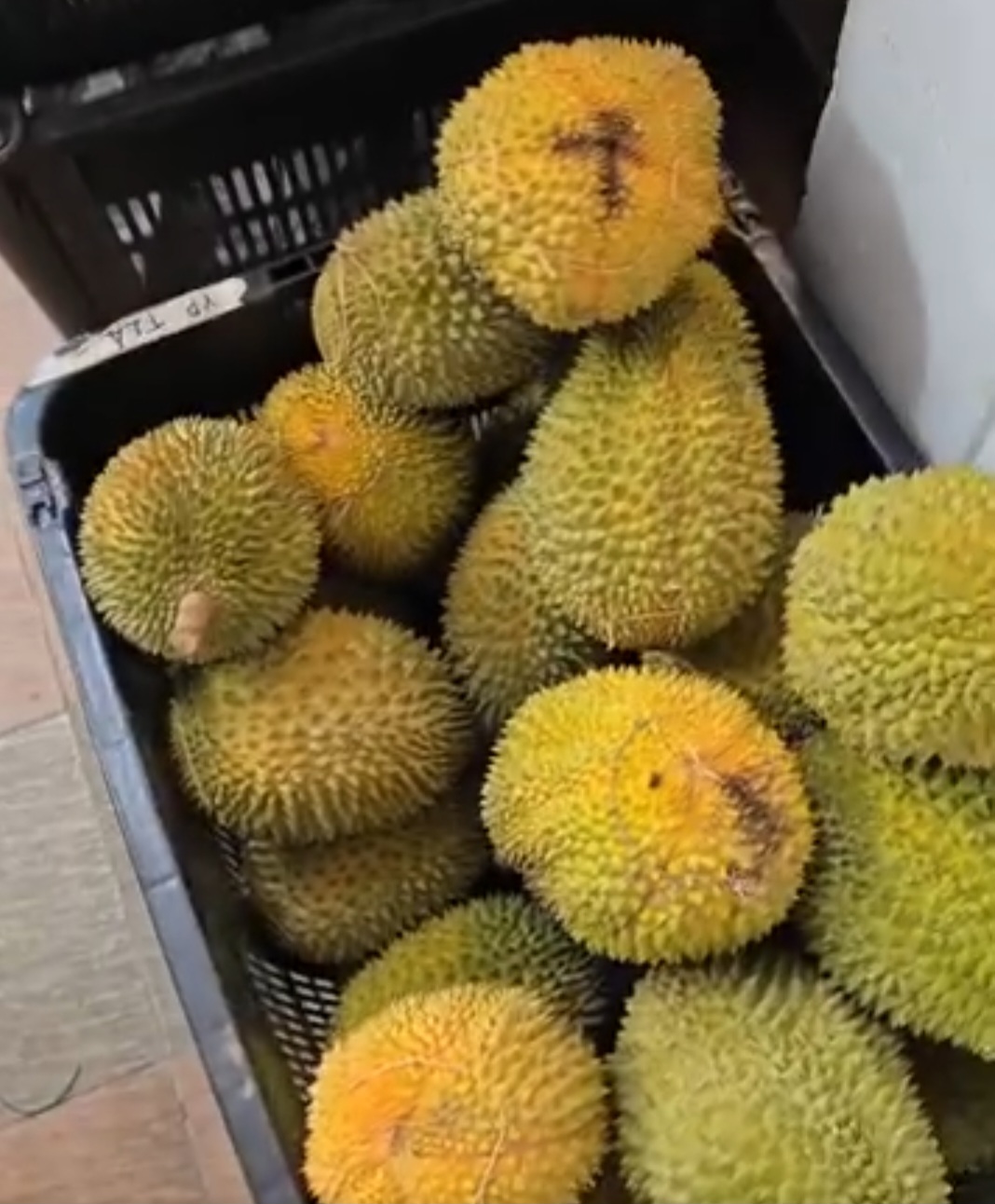
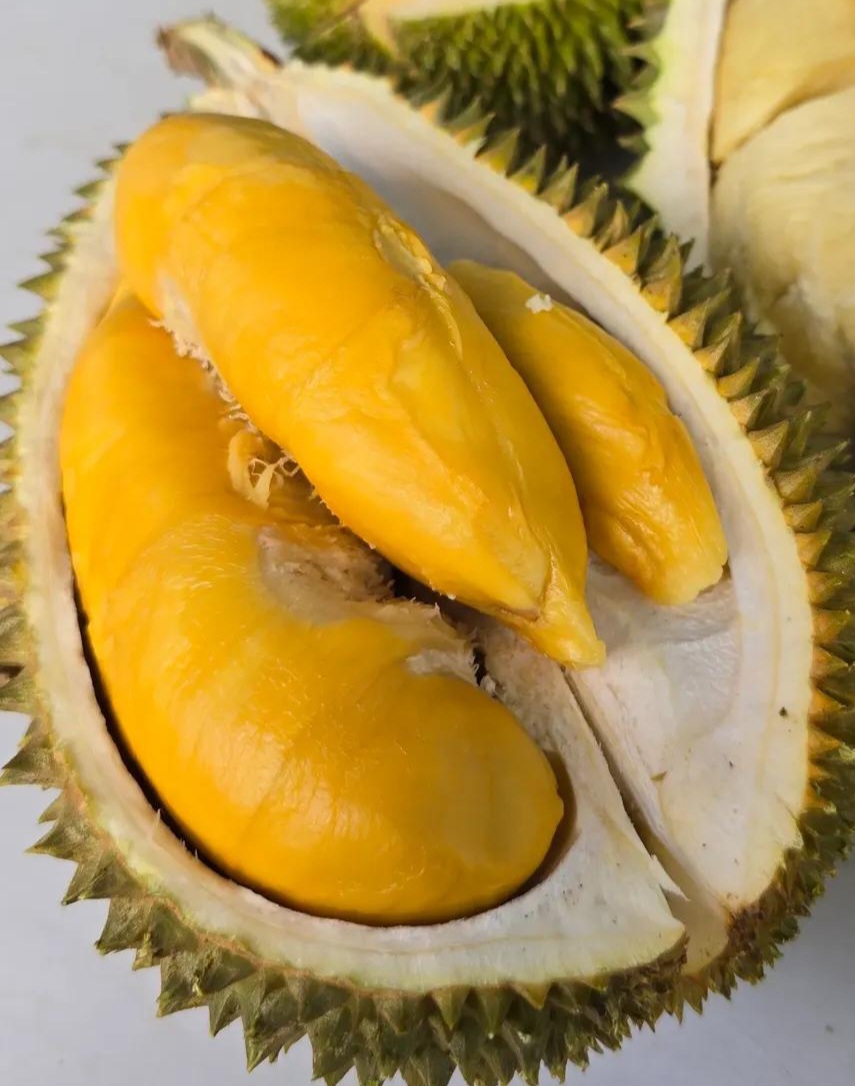
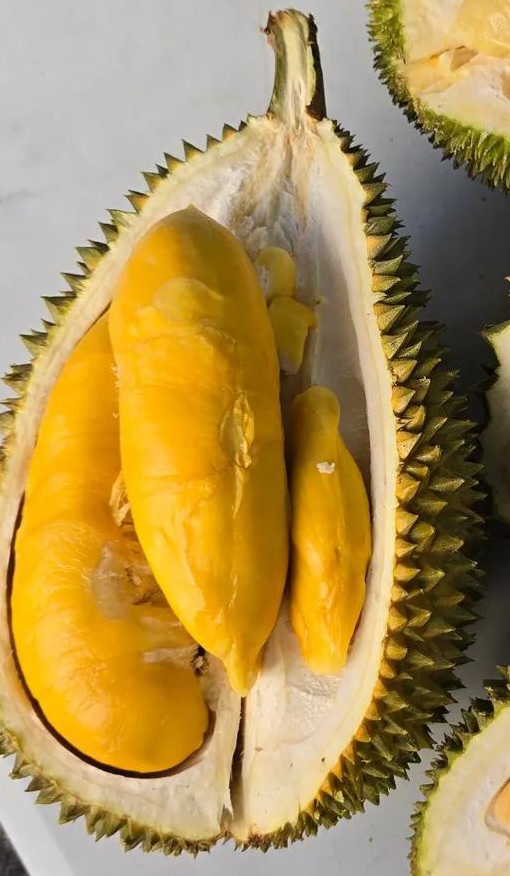
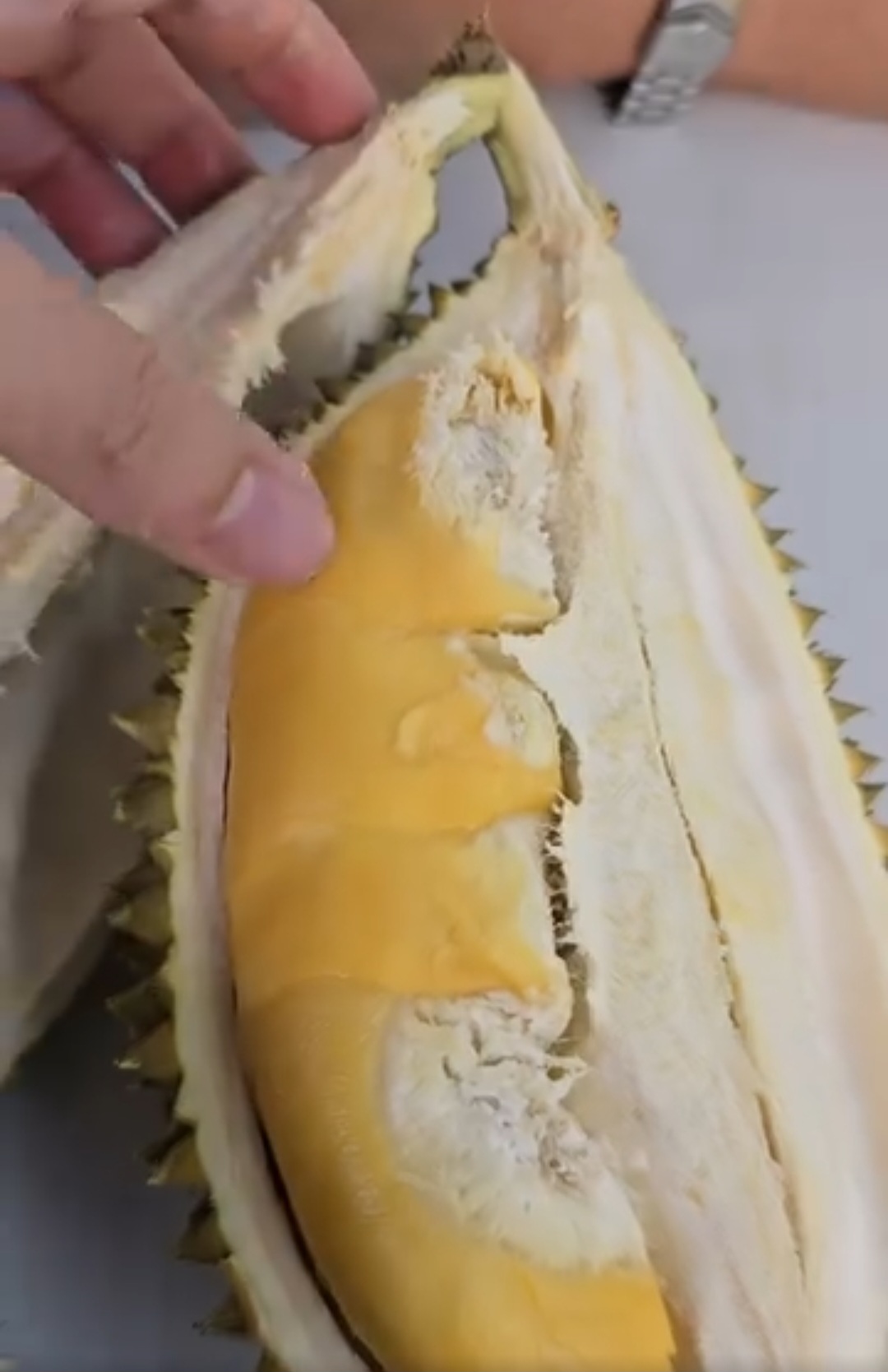
A Johor cultivar, also known as Dong Lai (东来 means Come East), or sometimes as ‘Pineapple durian’, because of the orange and yellow colour hues on the husk.
- Basically tastes like Khun Poh / Xiao Hong, orange citrus taste
- Difference mainly in texture; Dong Lai is much dryer and more suitable for transport
Not Mardi registered cultivars
Capri
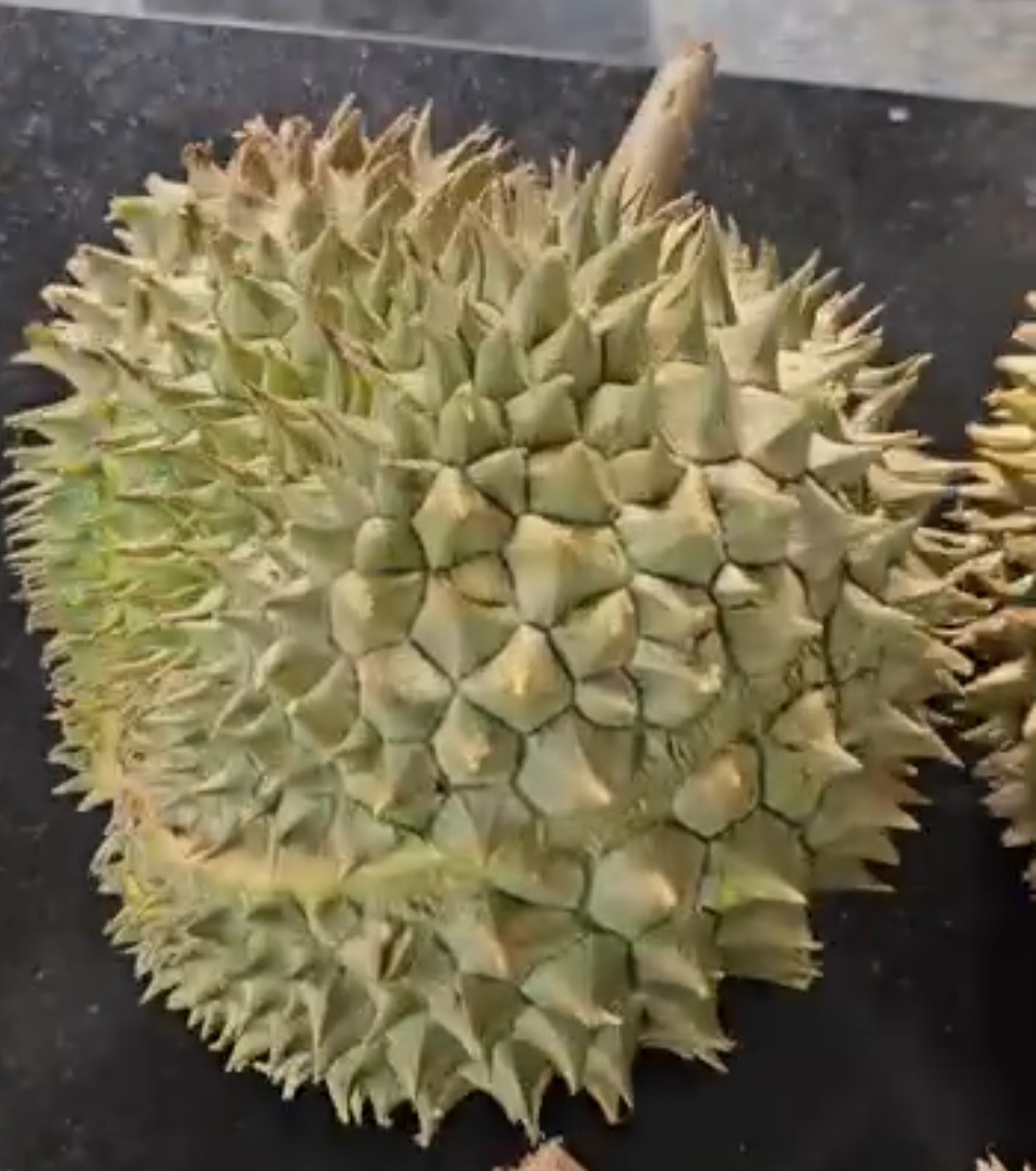
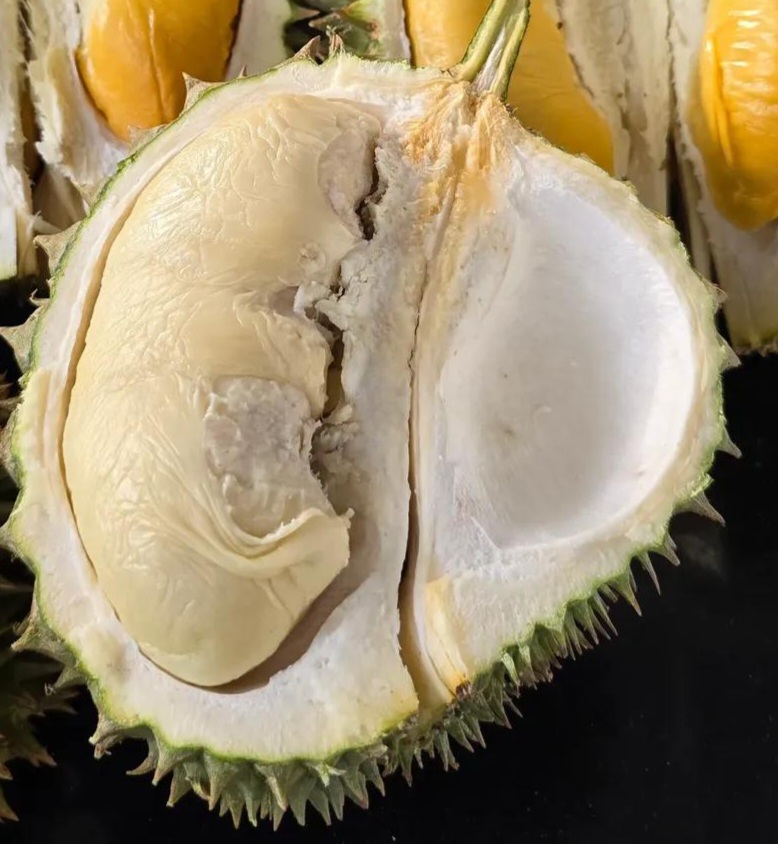
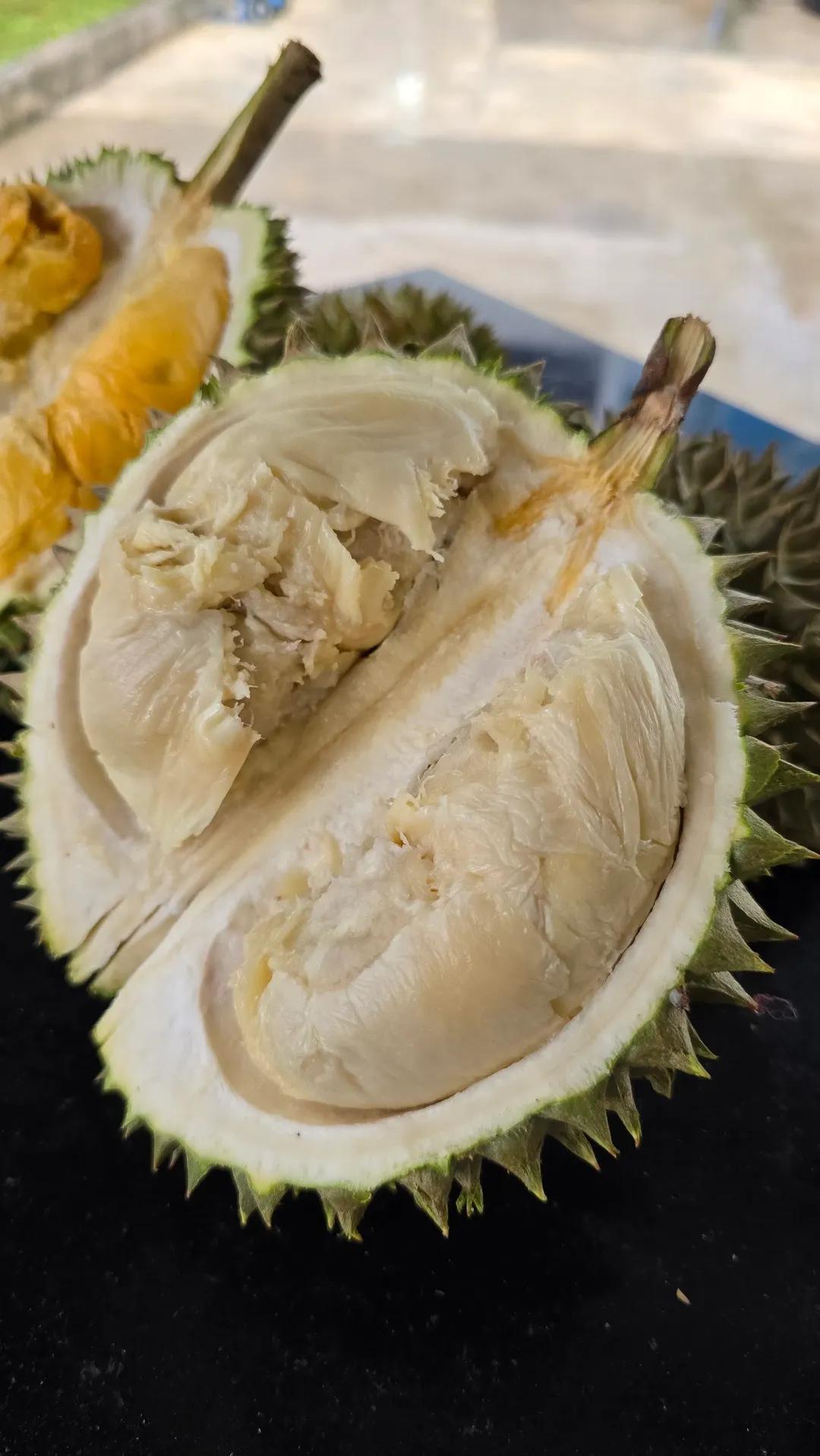
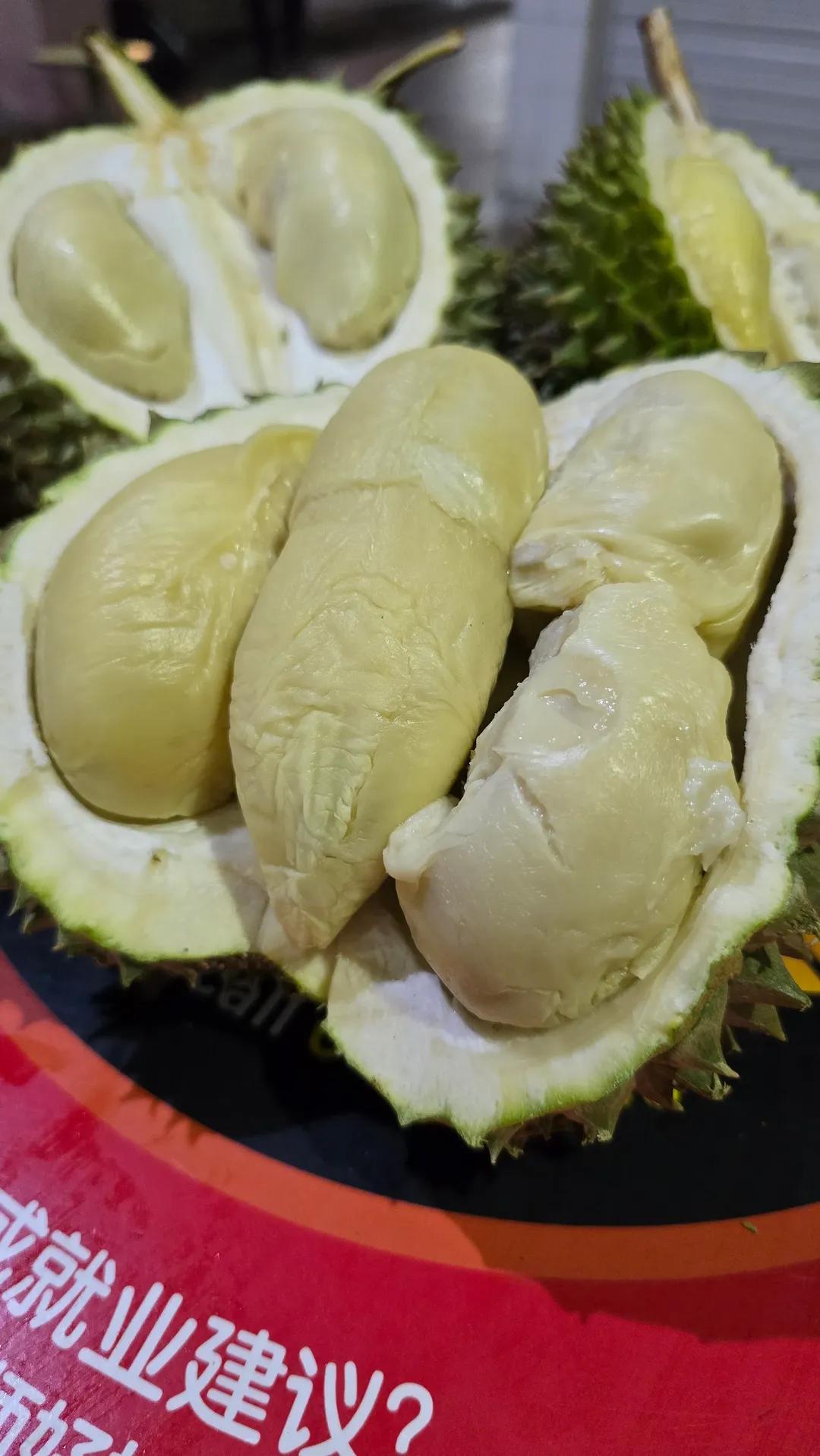
A Penang cultivar. Well known among durian enthusiasts for its strong bitterness.
- Unique rugged look
- Above medium bitterness
- In my opinion, tastes very garlicky, with an aftertaste just like a strong garlic; actually not my personal preference
Xian Mu Hua
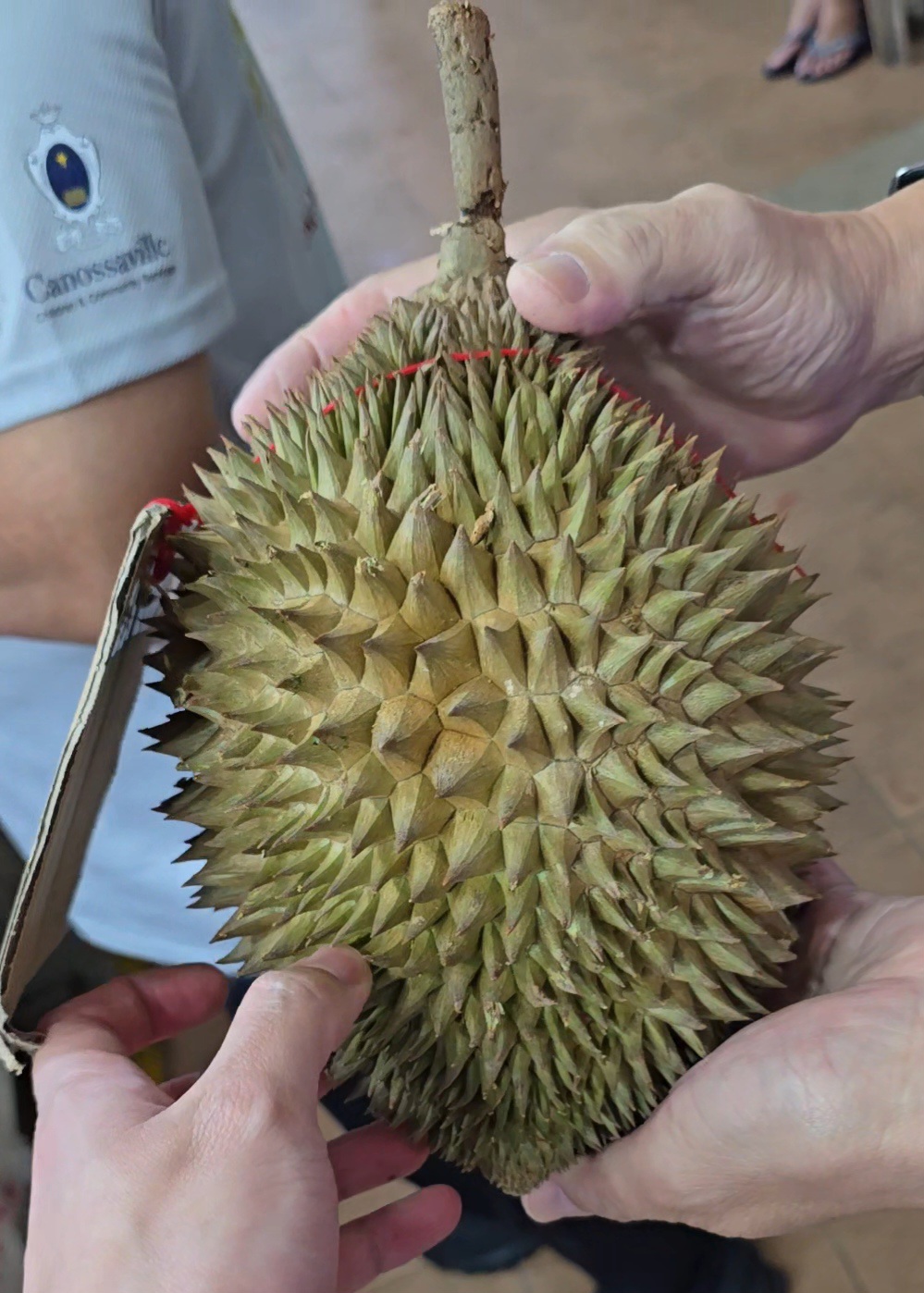
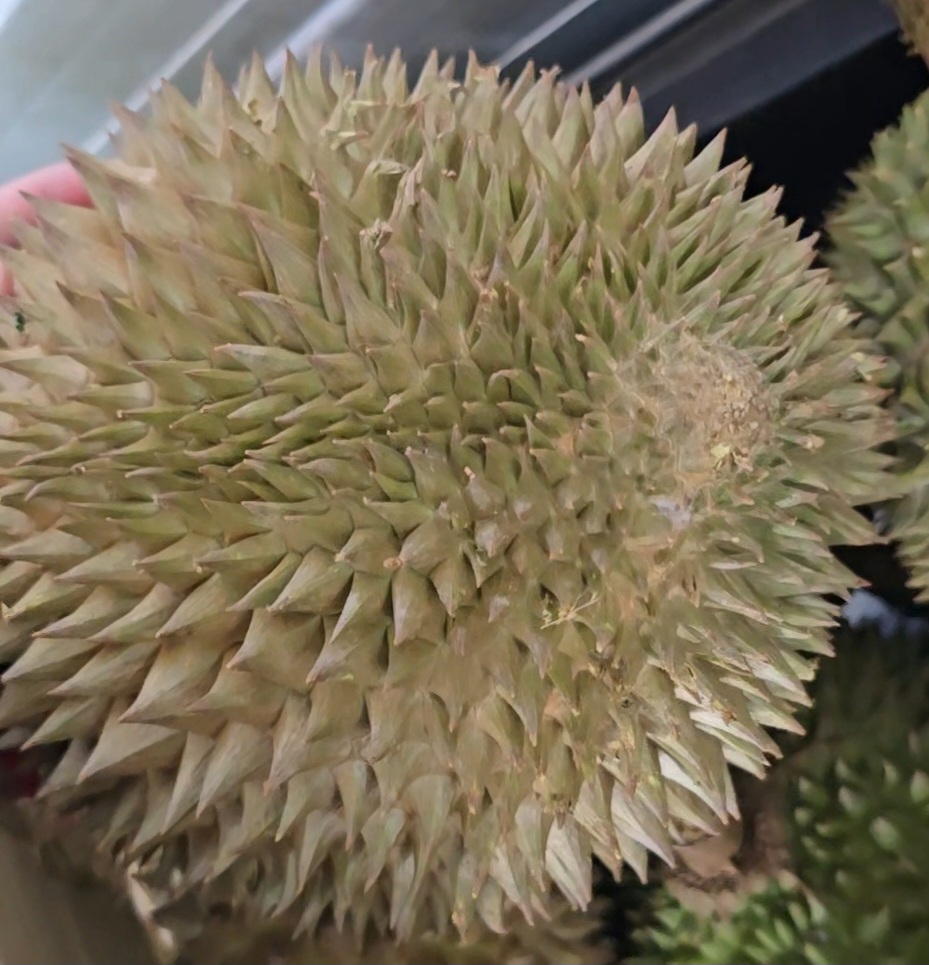
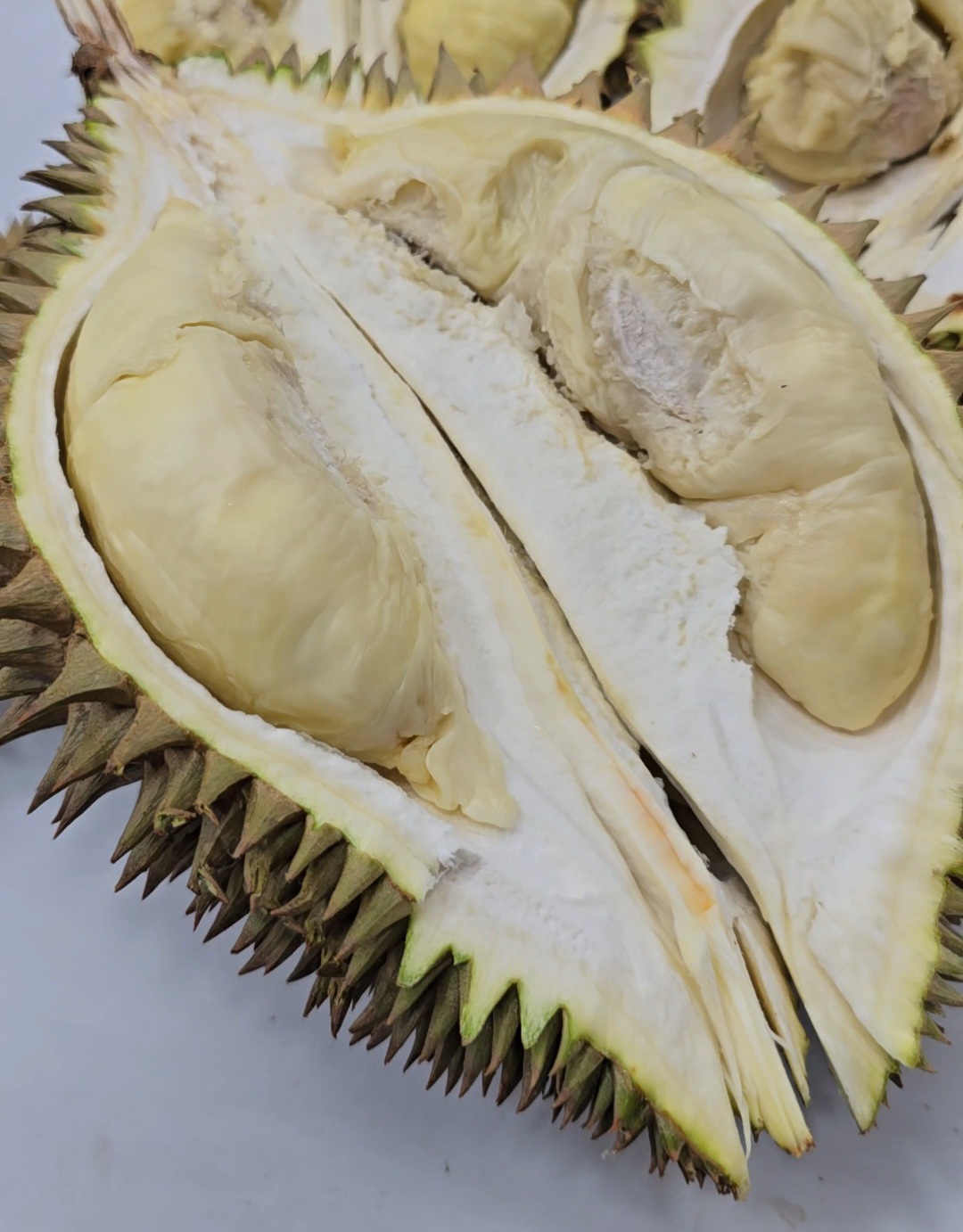
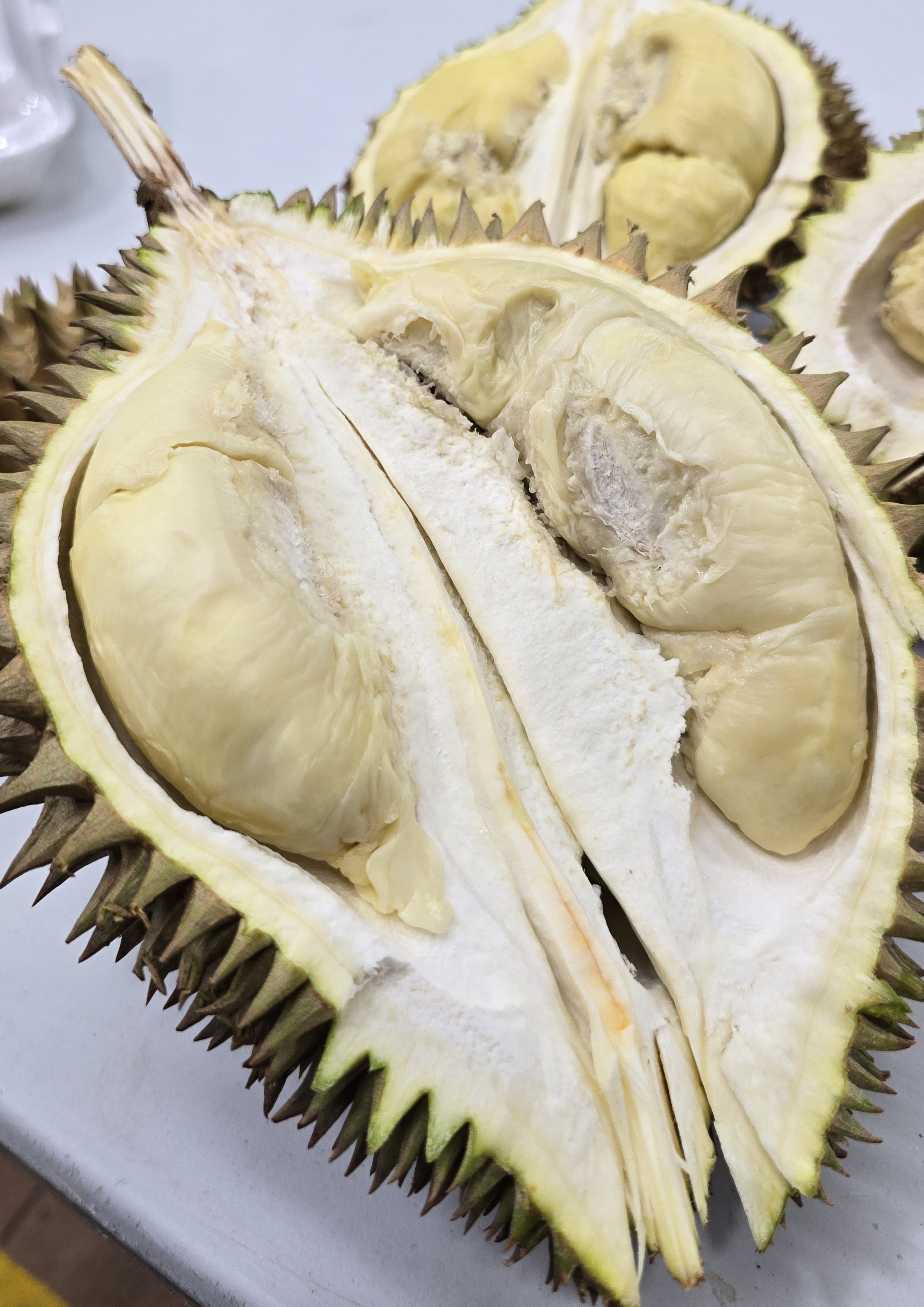
Xian Mu Hua (羡慕花 means Envy Flower) is a Johor variety. Known to be rare, because of the limited trees. Yet high demand.
- White flesh
- Very floral in smell and taste
- Taste kind of reminds me of a less bitter and less strong Capri
- Overall experience is very good; would describe as maybe a good Tekka mixed with a milder Capri
Kim Leng
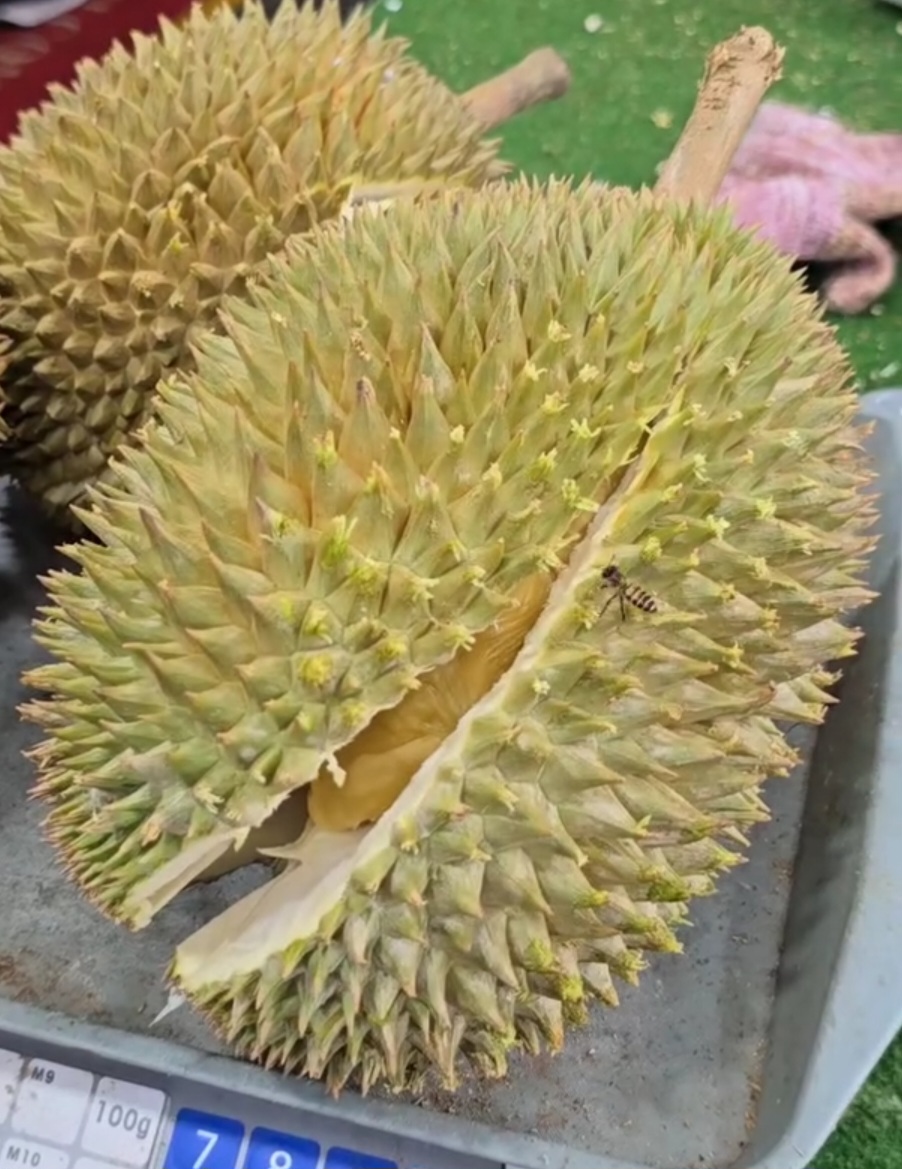
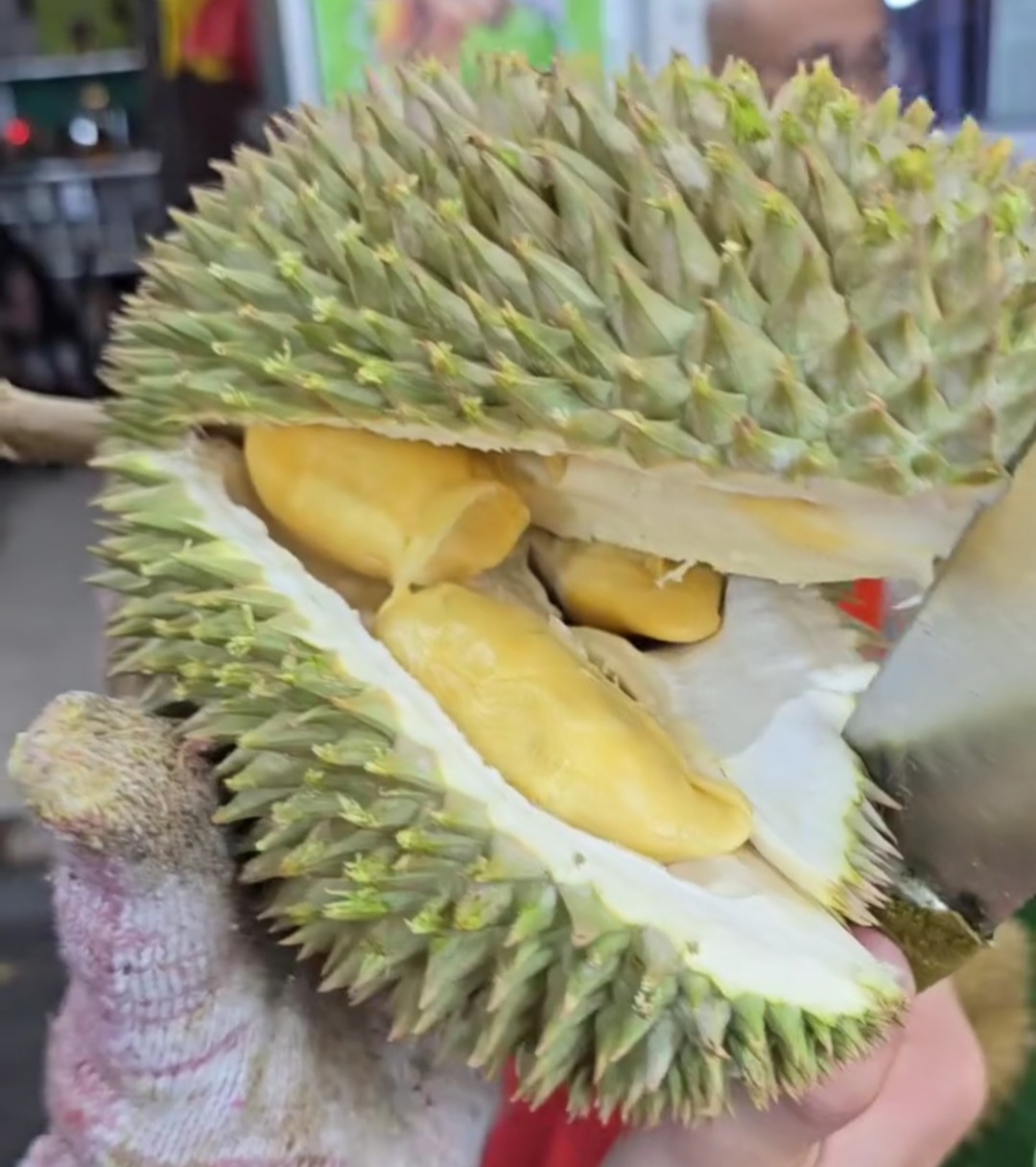
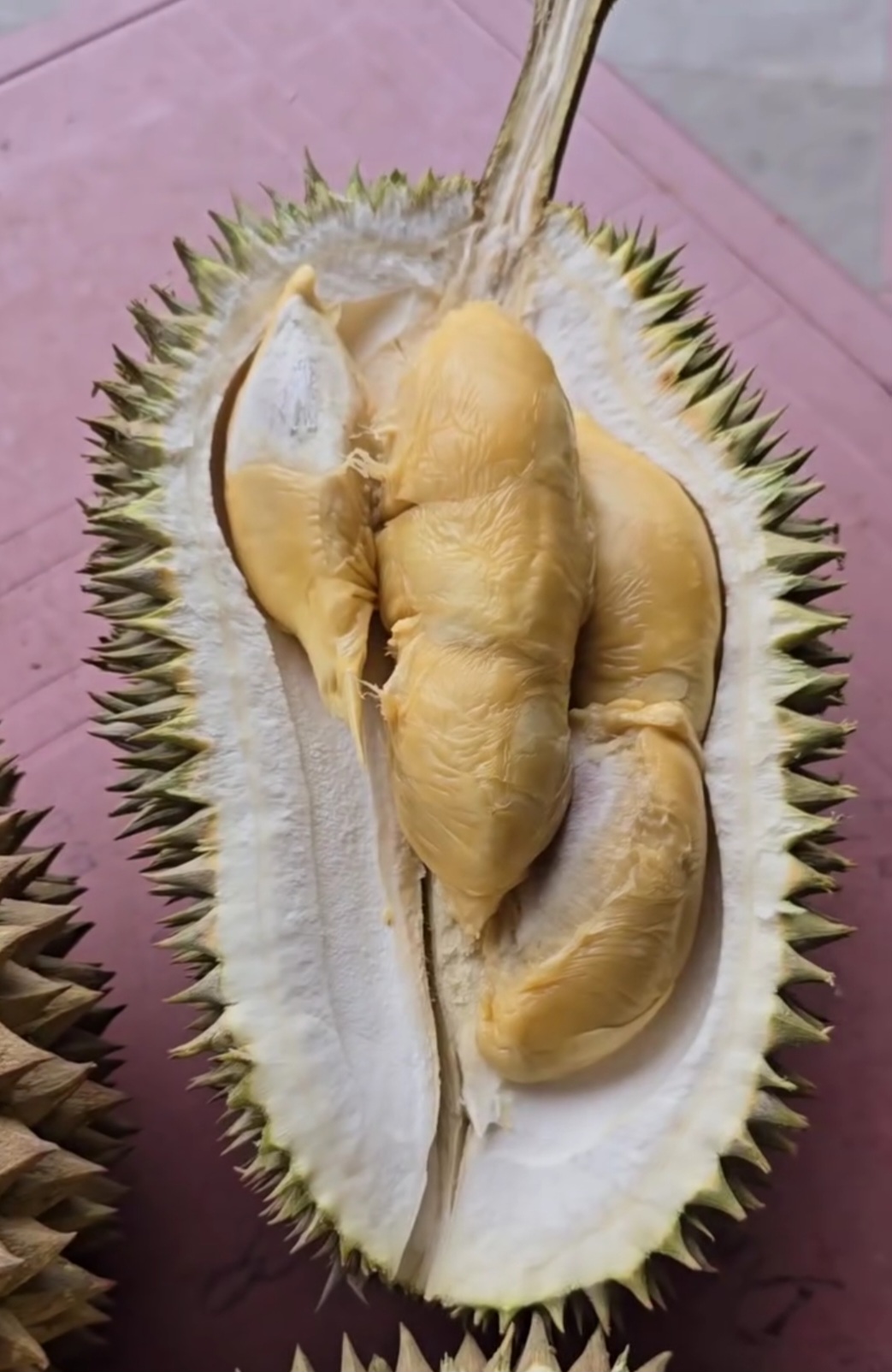
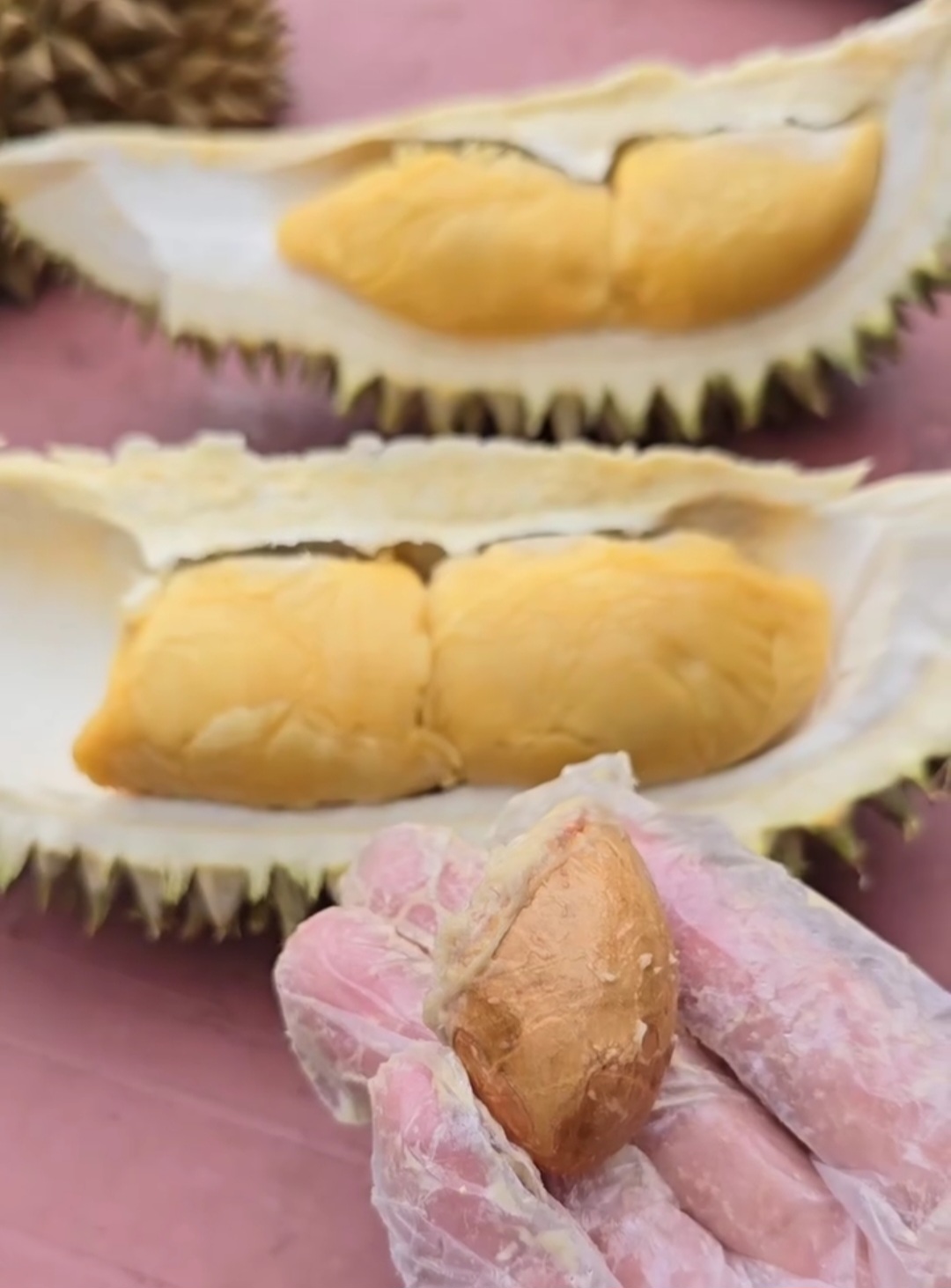
From Penang. Kim Leng (金龙, or Kim Leng in Hokkien, means golden dragon)
- Long-ish shape
- Nicely complex bittersweet
Black Pearl
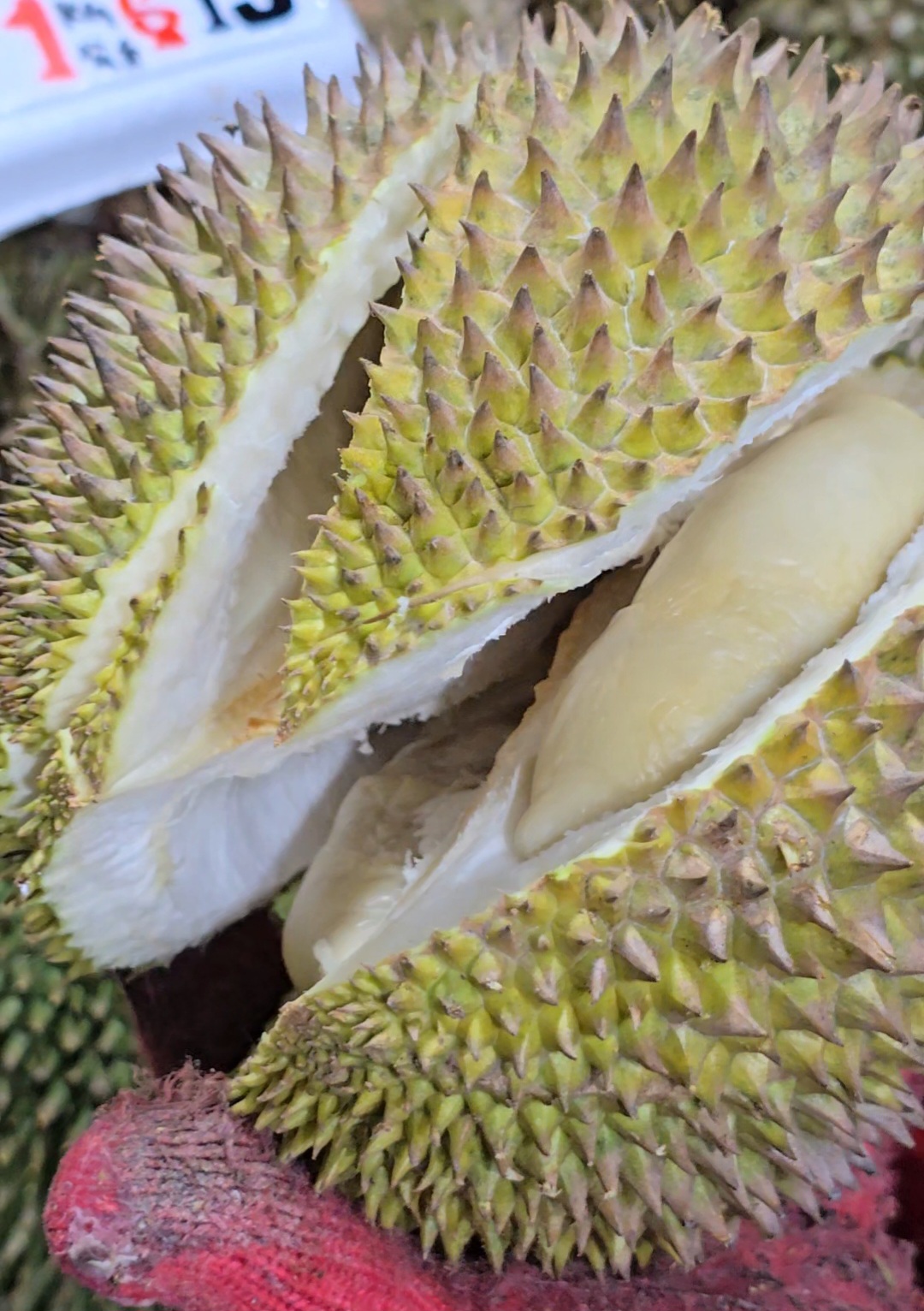
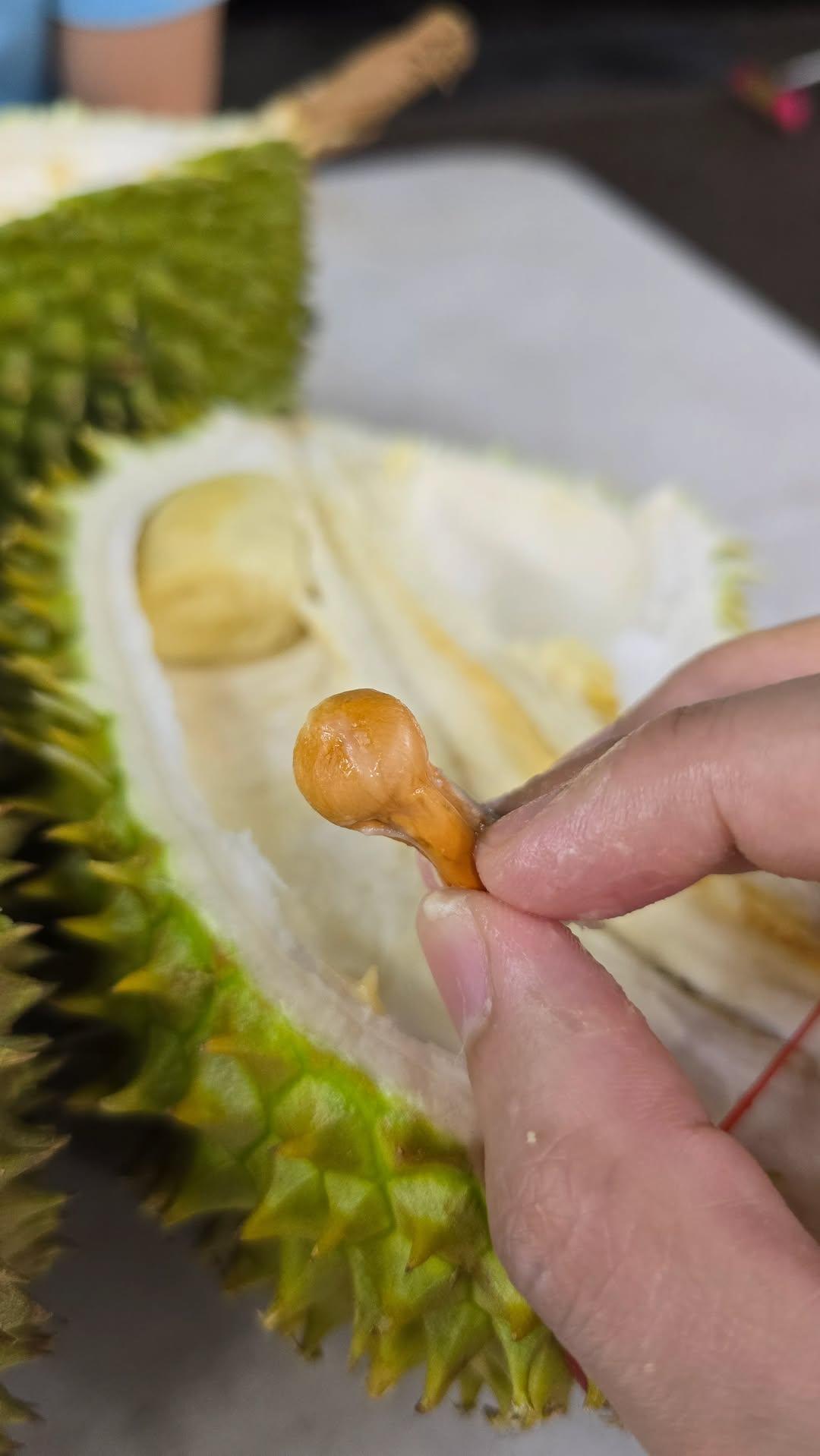
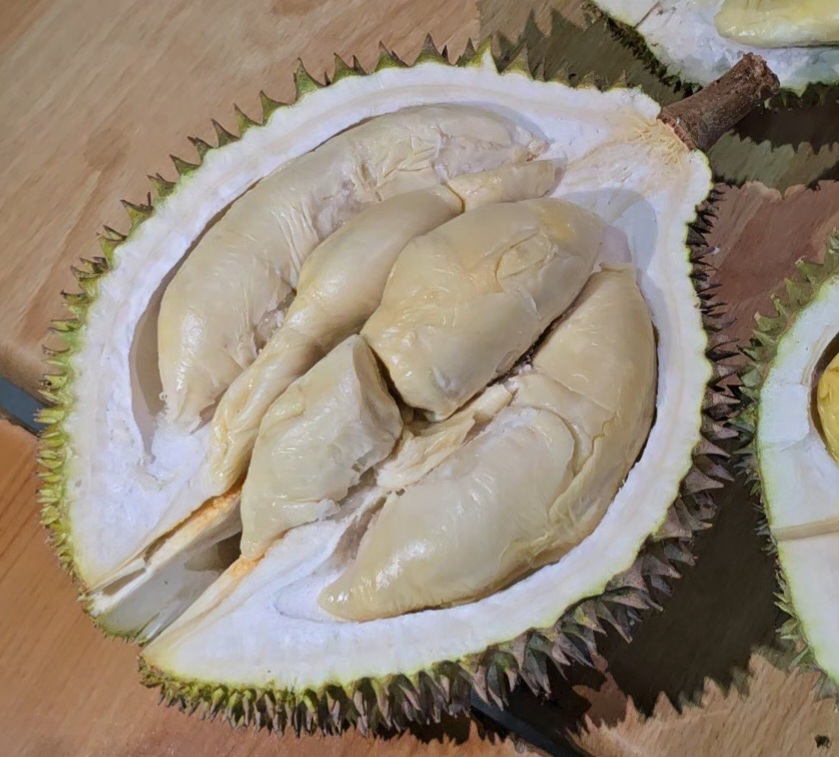
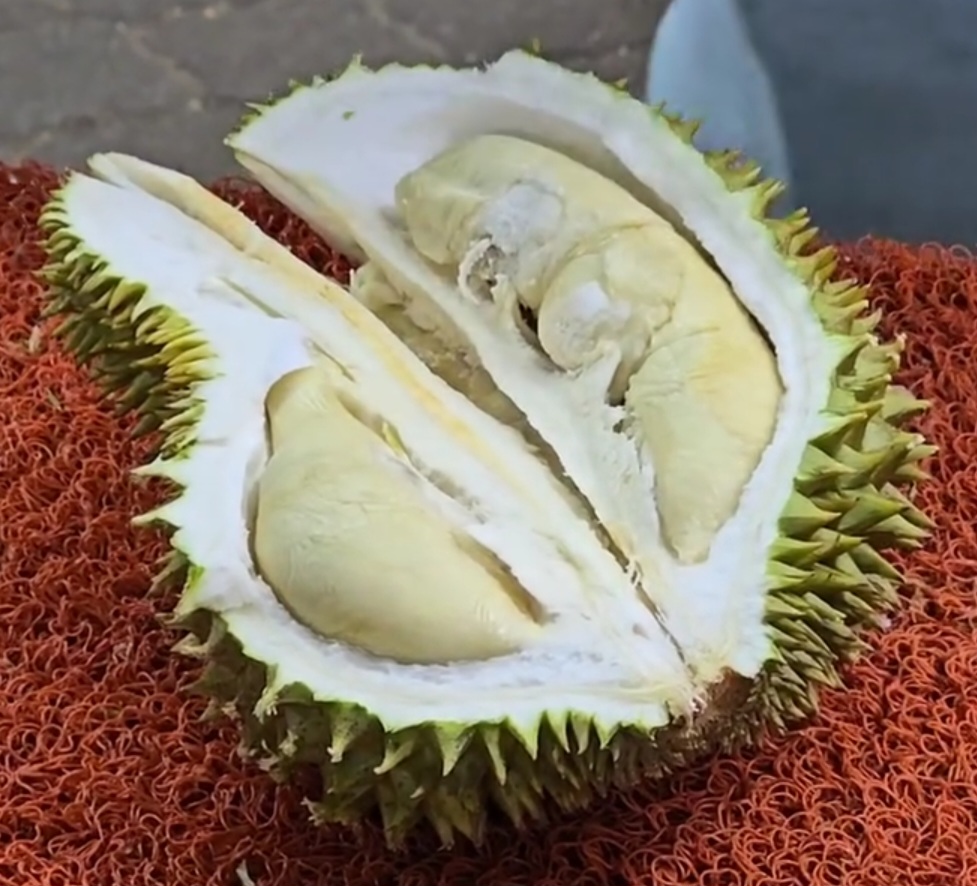
From Johor. 黑珍珠 means Black Pearl; also known as 太原 Taiyuan.
- Seeds classically tadpole shaped, similar to D1 Gang Hai
- White flesh
- Long-ish shape
- Mildly bitter
Glutinous Rice
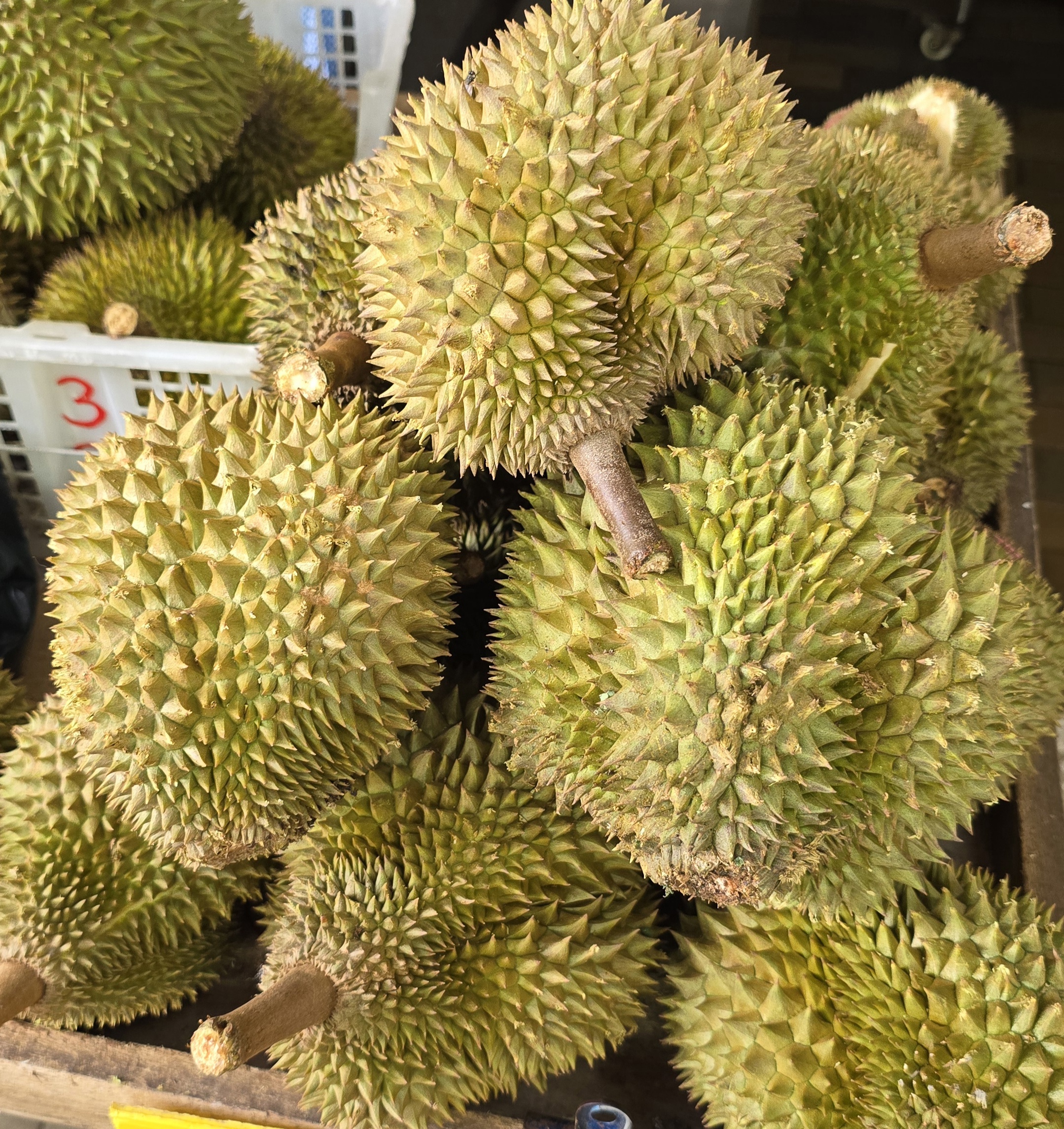
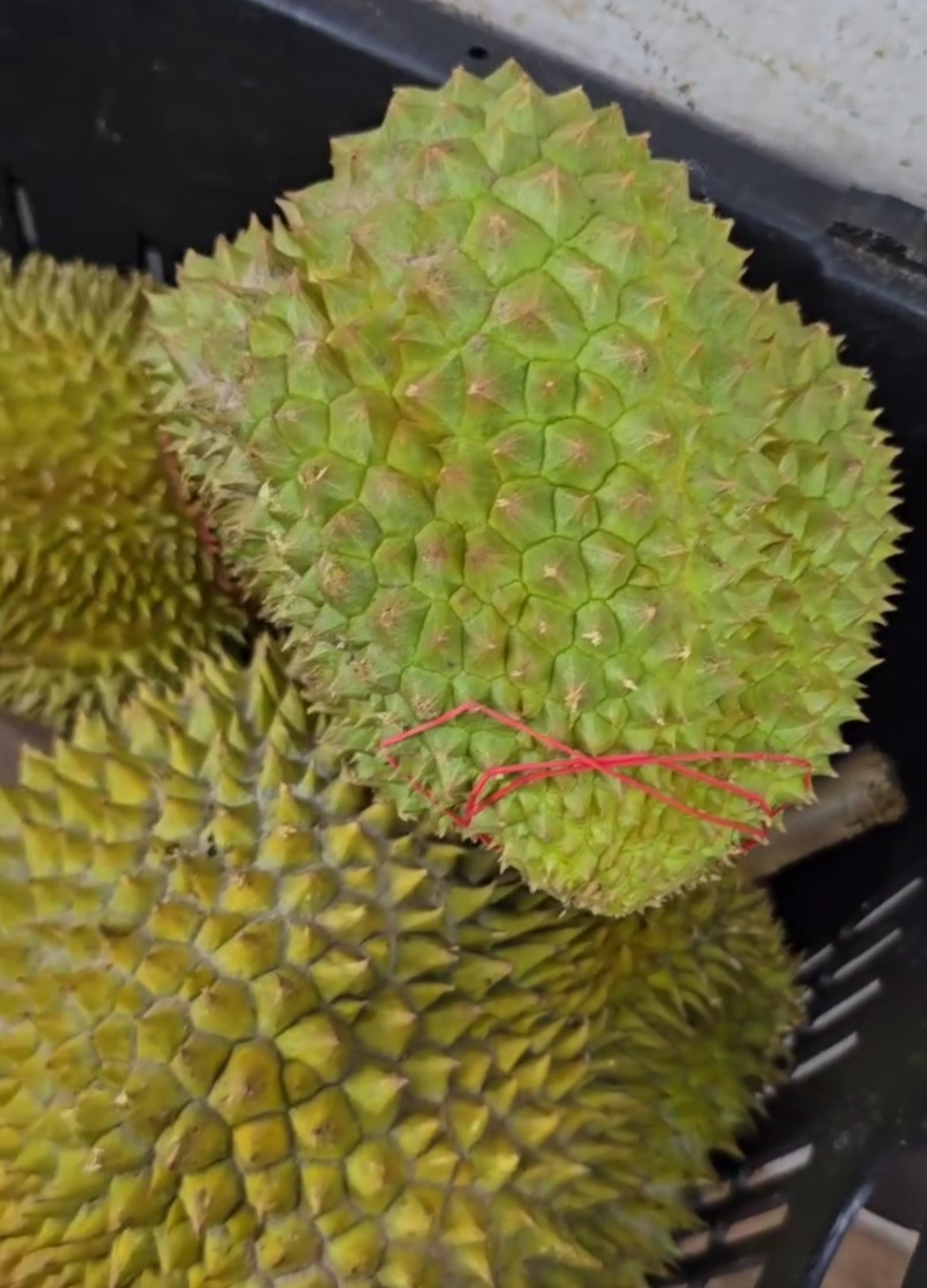
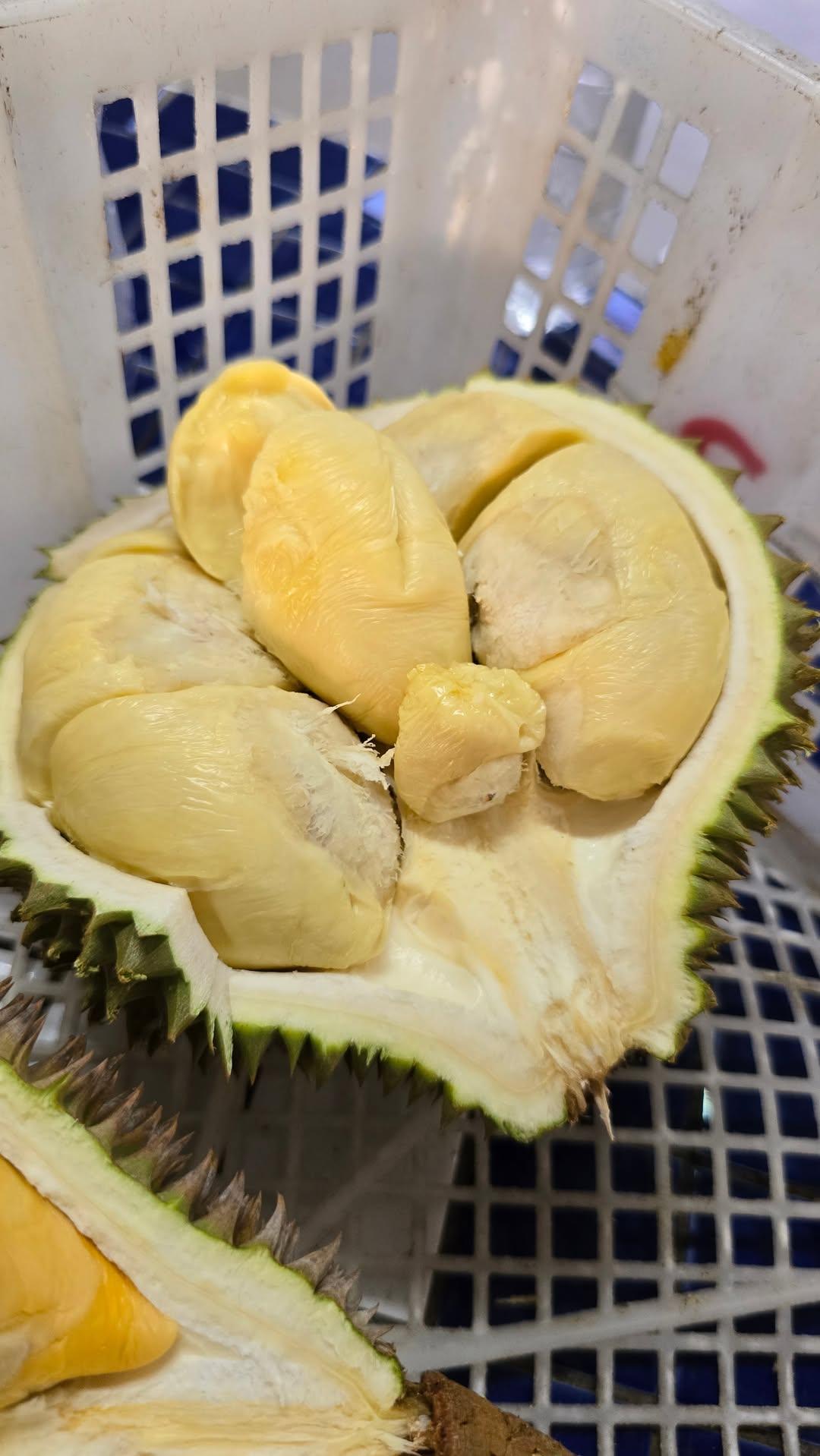
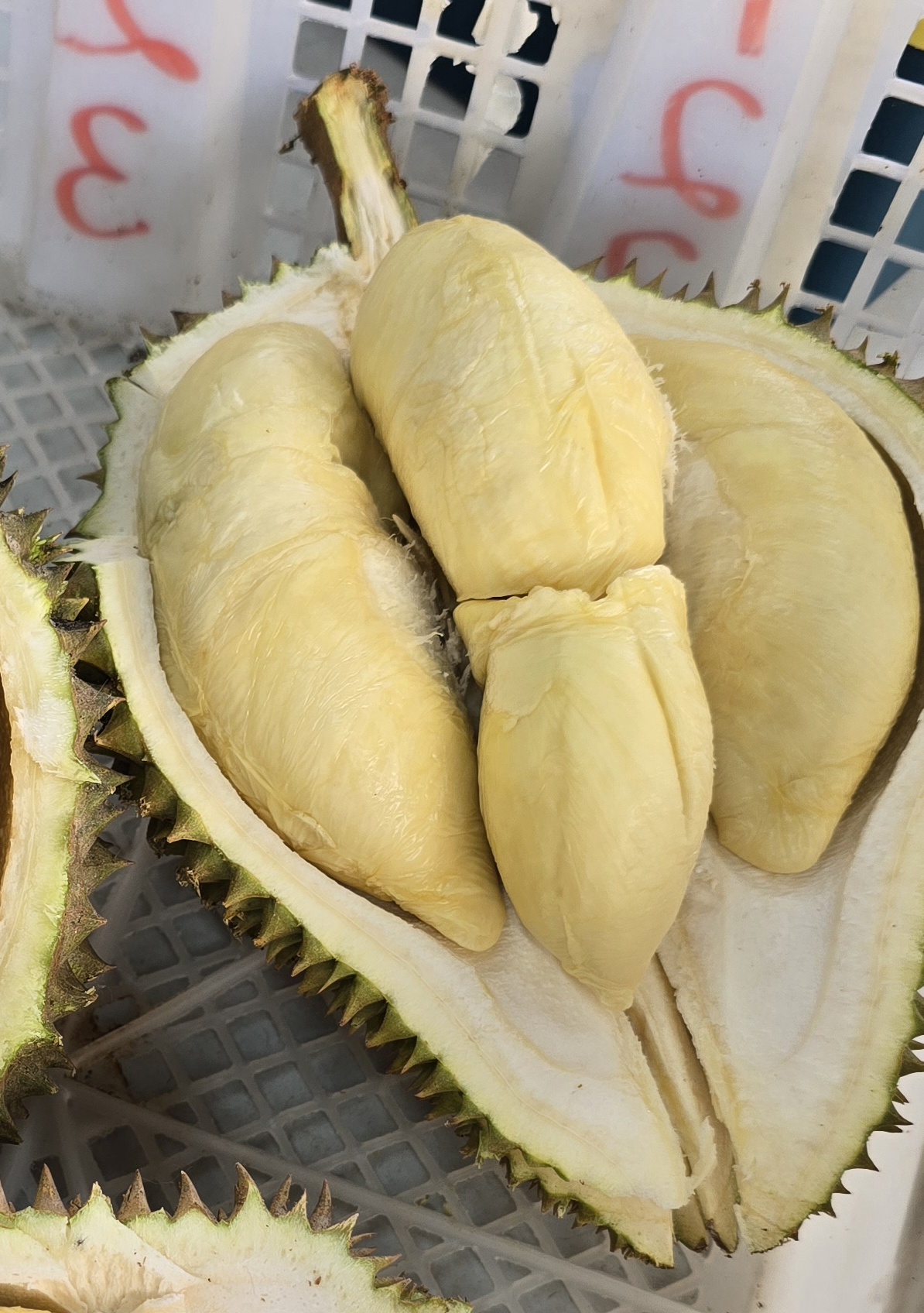
From Johor. 糯米 in Chinese
- White flesh
- Sticky and thick flesh exactly like the name suggests
- Mildly bitter
- Seems to lightly smell and taste of glutinous rice, which is nice
Johor XO
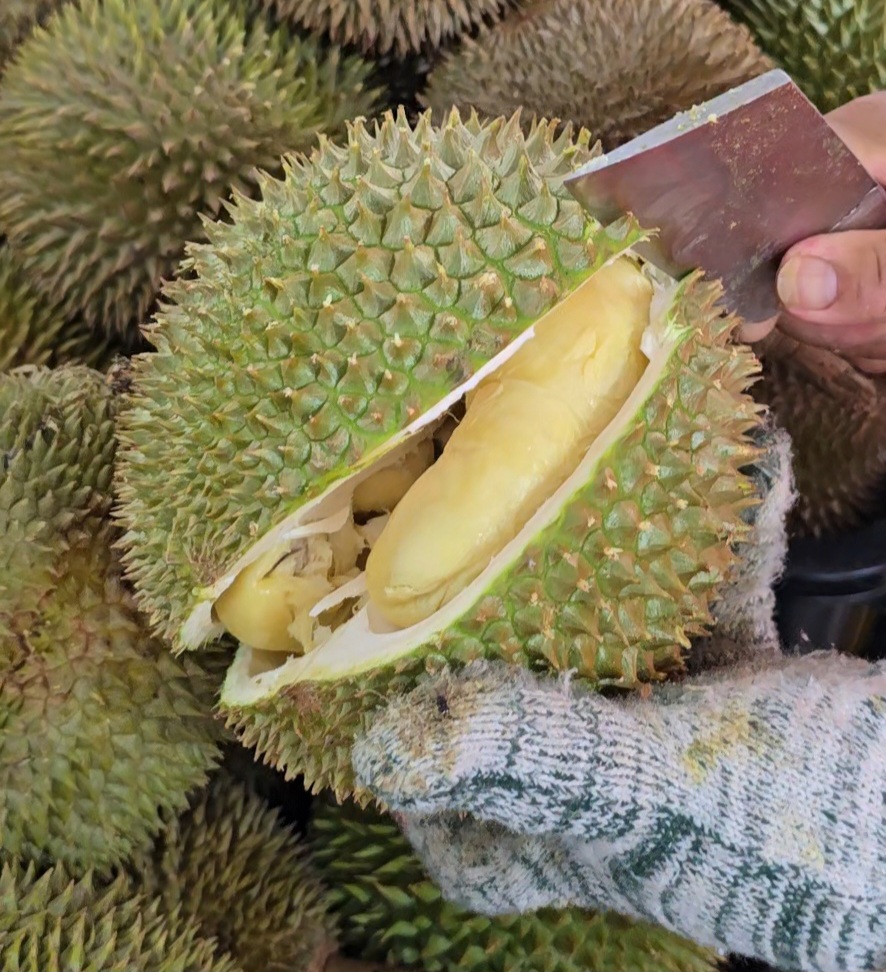
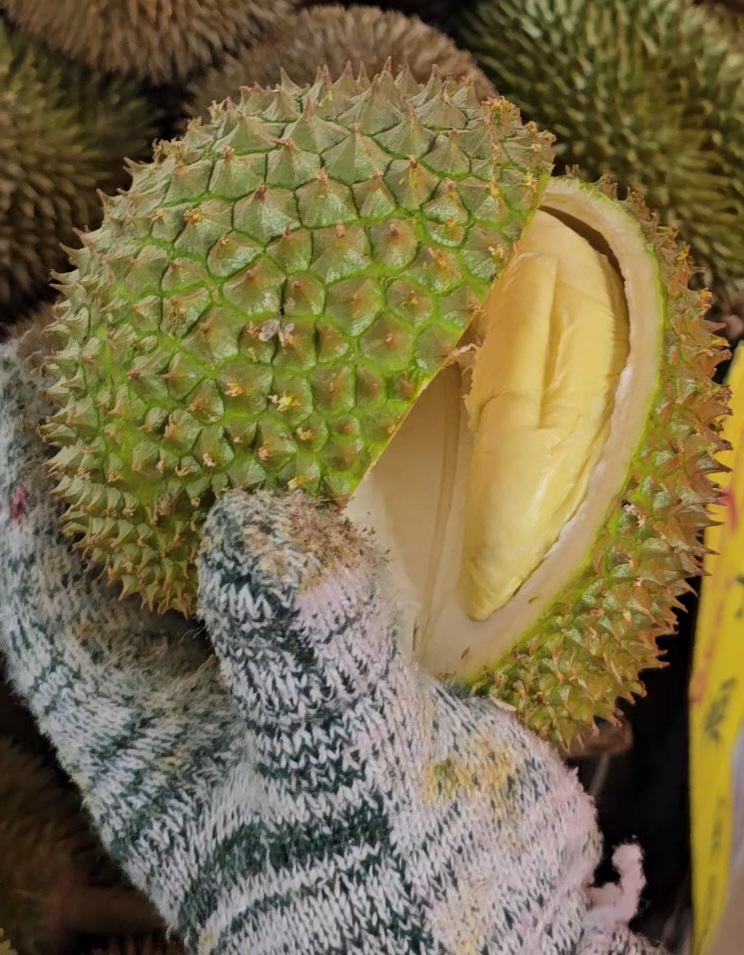
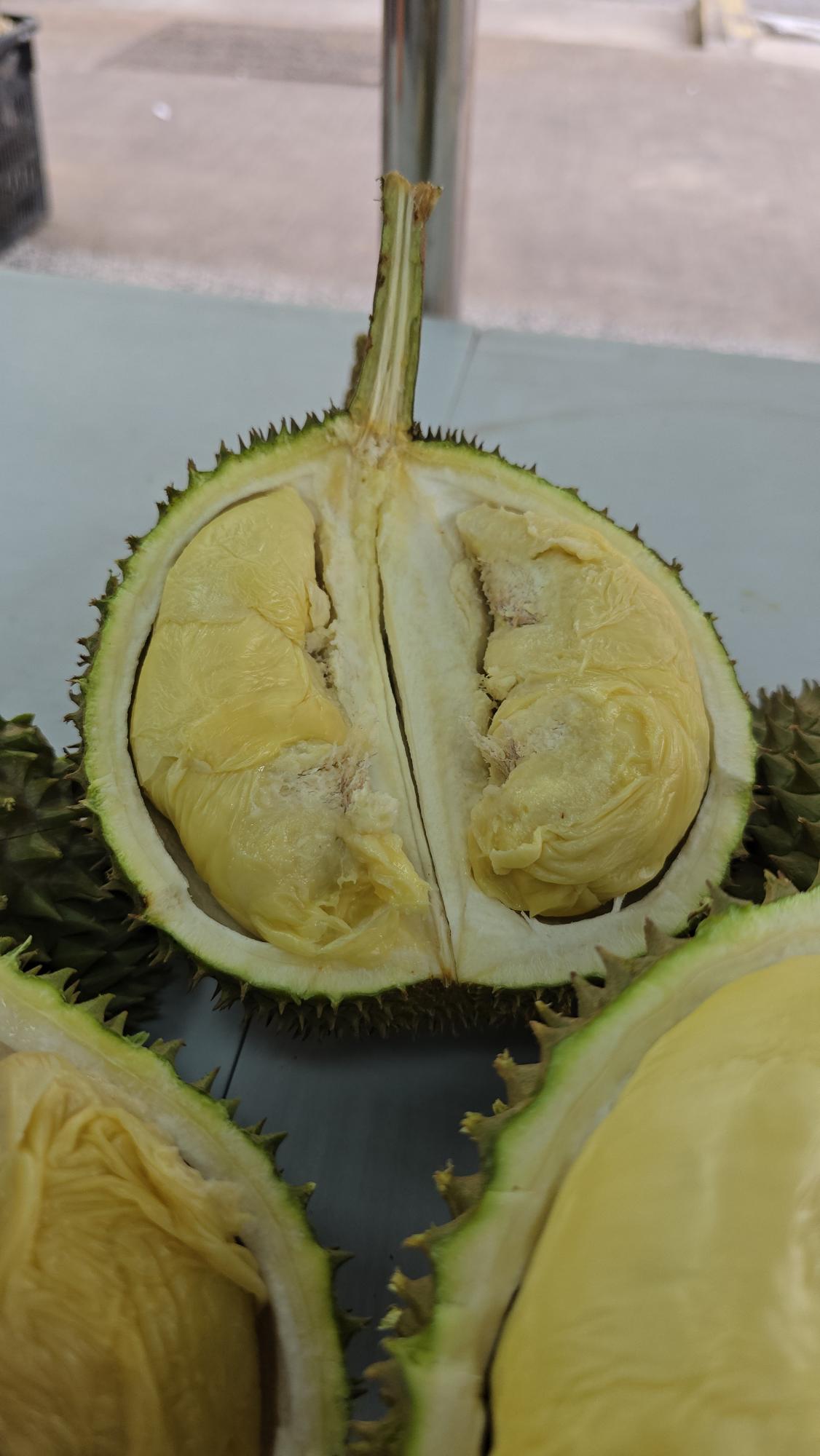
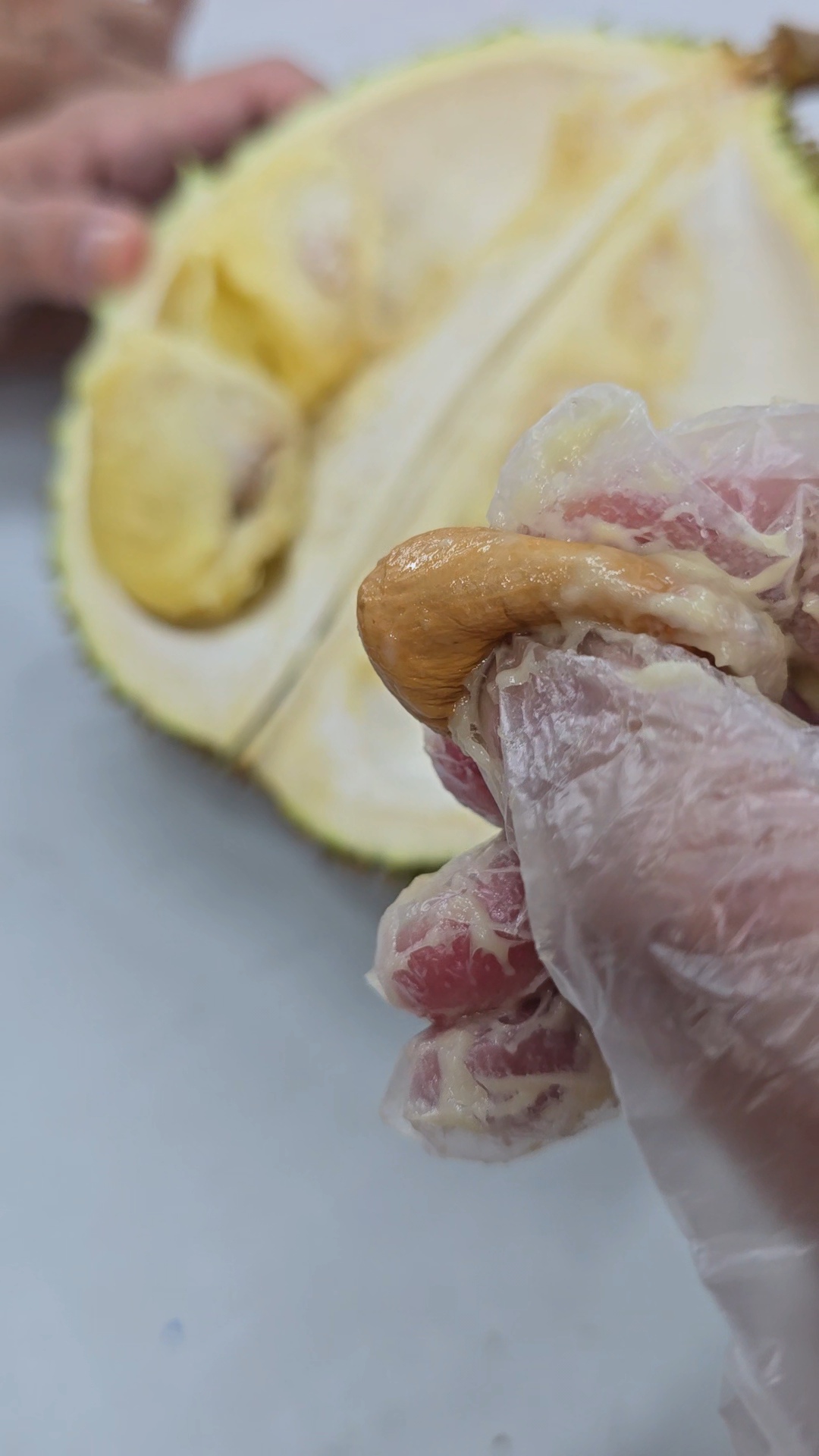
Apparently, true Johor XO is likely a different cultivar from D24 / D24XO. Also known as 六两肉 (means ‘pork neck meat’ which is supposedly tender and has nice texture), and is from Labis Johor. Read more about Johor XO in this longer article: Separate post about D24/XO
- A good Johor XO tastes like sweet alcohol (extremely high fermentation maybe even to the point of umeshu or cider level)
- Egg-yolk runny texture
- Small seeds that are soft and easily squished (probably broken down due to all that ethanol)
Forget Me Not
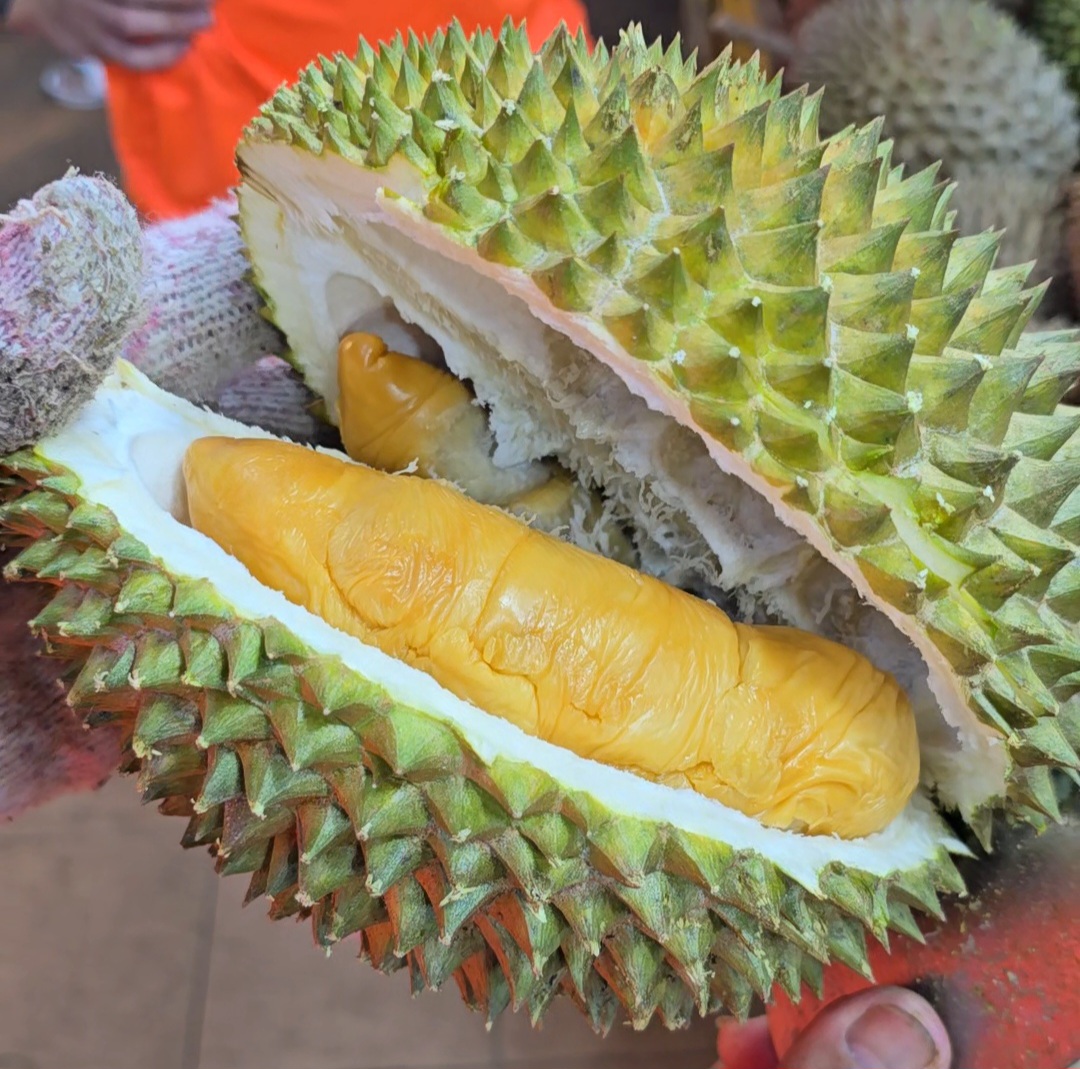
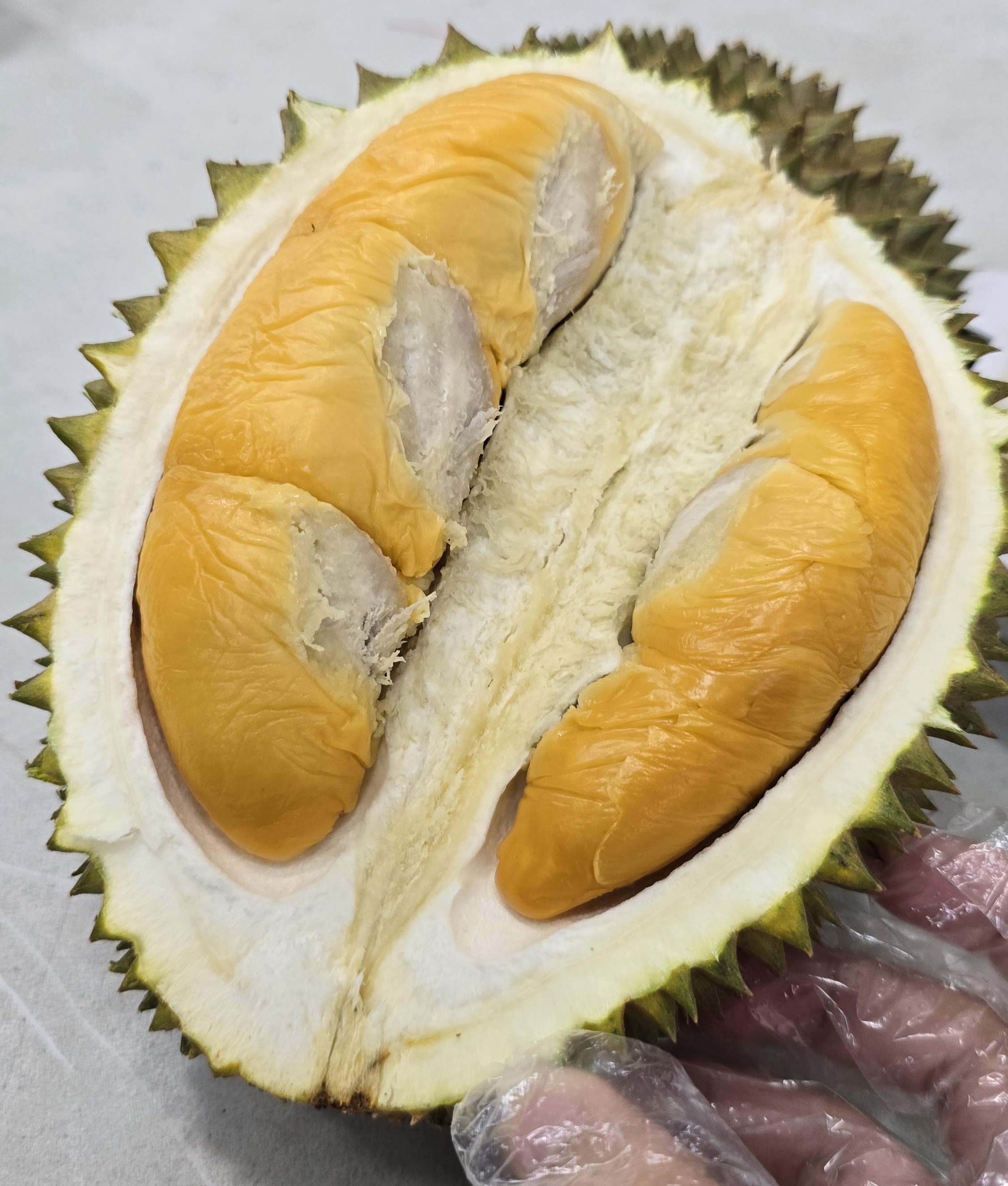
忘不了 in Chinese. Probably from Johor.
- This fruit in particular, some locules tasted like D13, some tasted like black thorn
- Nice light orange colour similar to D13
- Much smaller seeds than D13
Green Skin
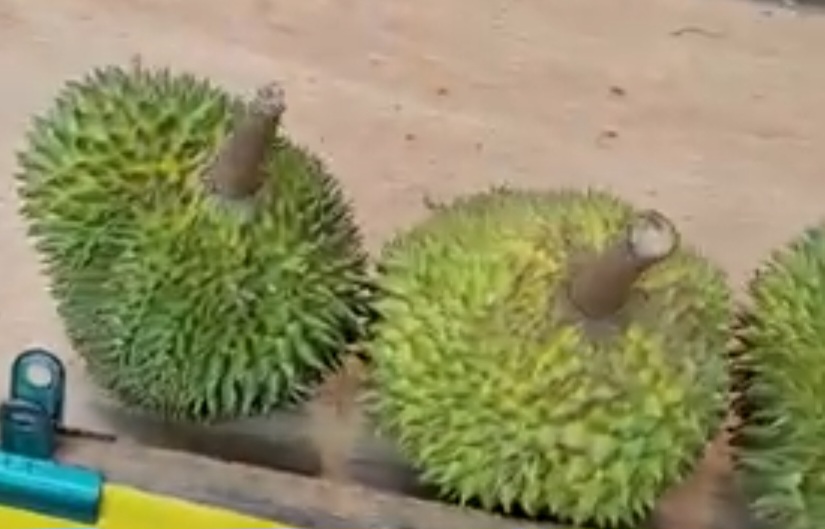
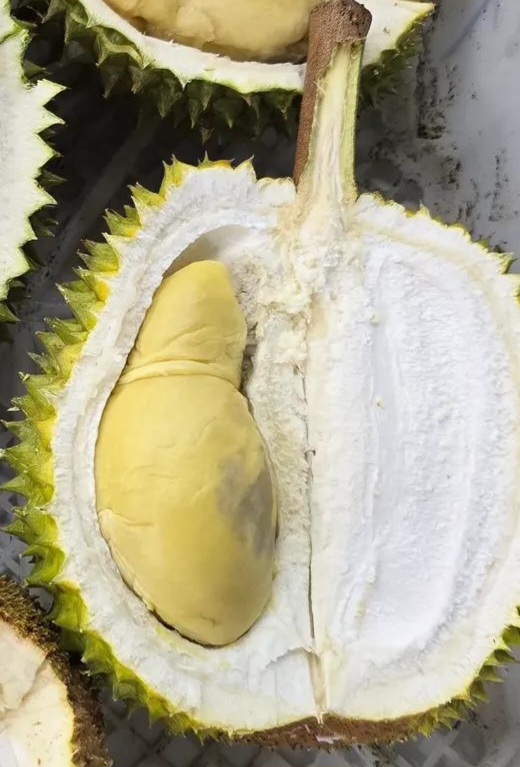
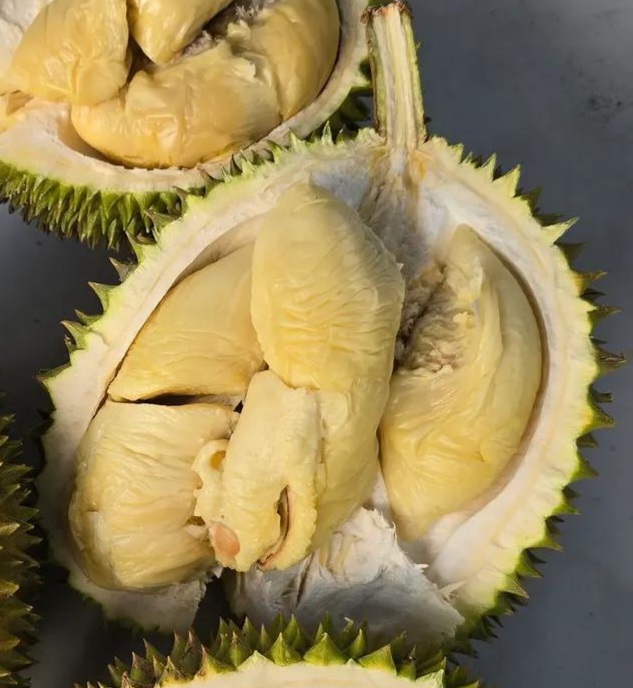
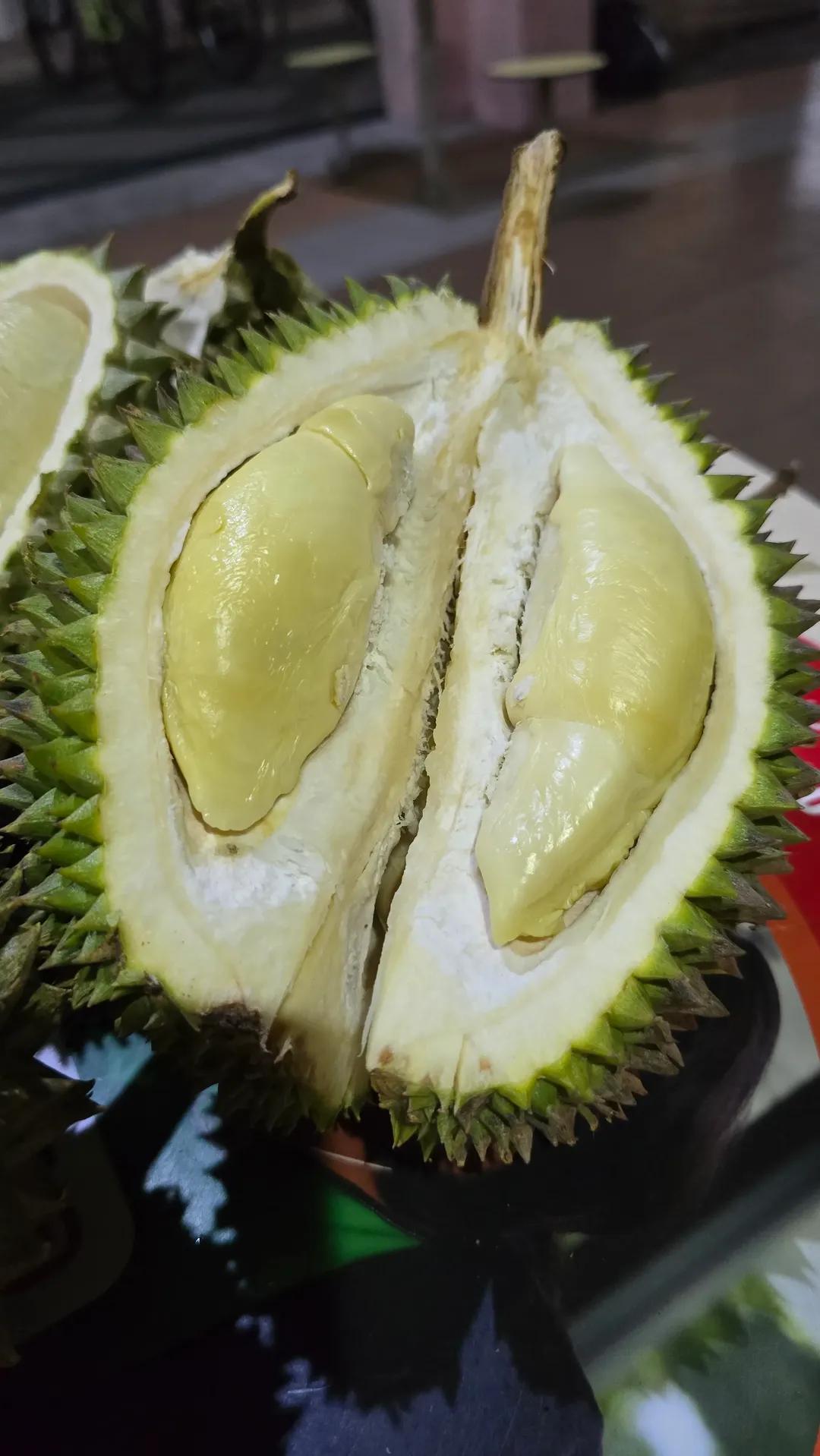
Apparently there are so many types of Green Skin, such as D165 Green Skin 15 from Penang, Green Skin 3, Green Skin Son, etc.
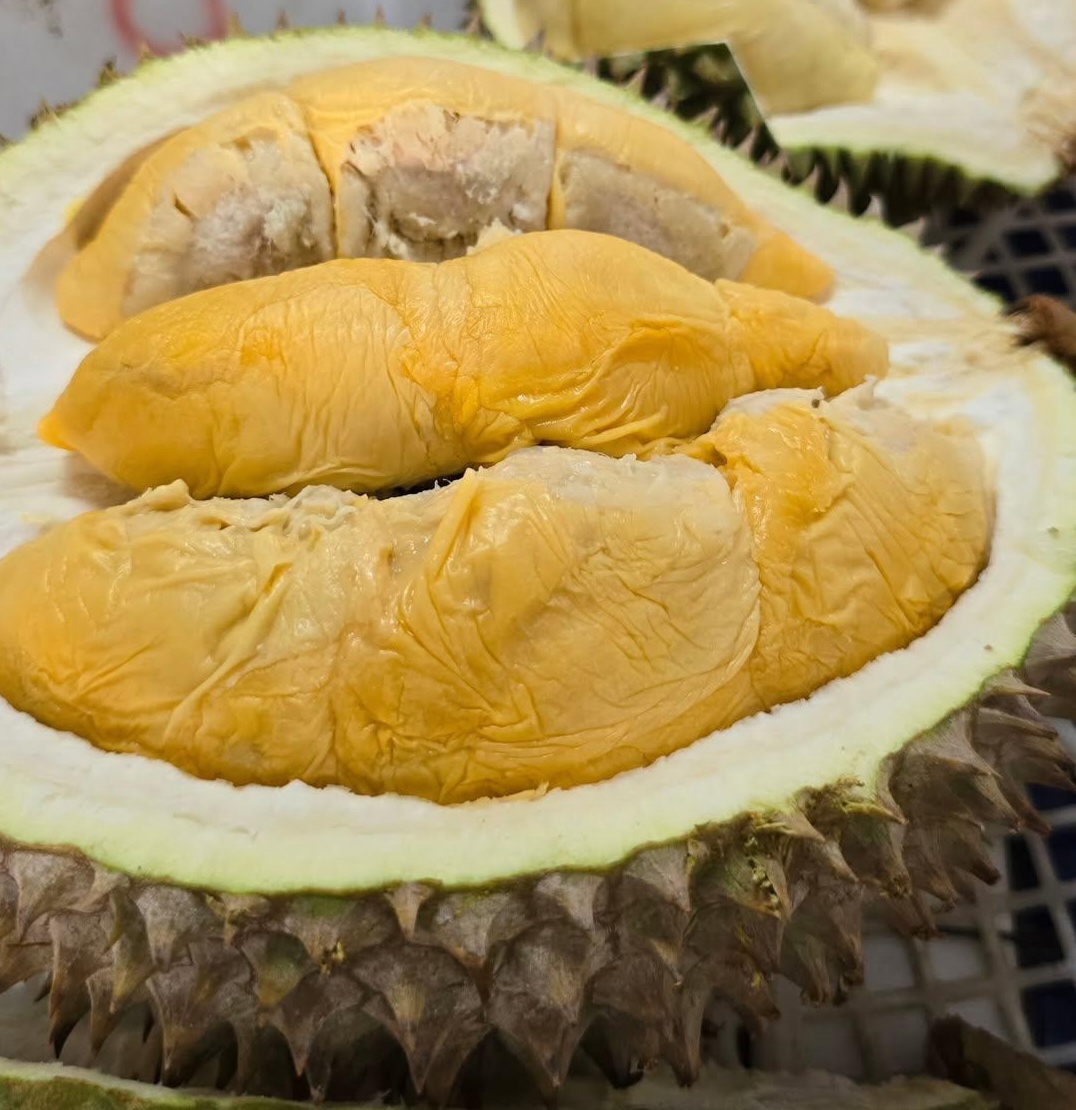
I have not eaten enough to know what exactly are the differences or how to distinguish. So just posting 2 types of Green Skin I’ve had so far, under the non ‘D’ section.
- First 3 pictures belong to a yellow flesh GS with strong bitterness
- Last picture is a white flesh GS that is very mildly bitter, from another seller